

Repatriation initiative: South African government seeks families of freedom fighters buried in Angola
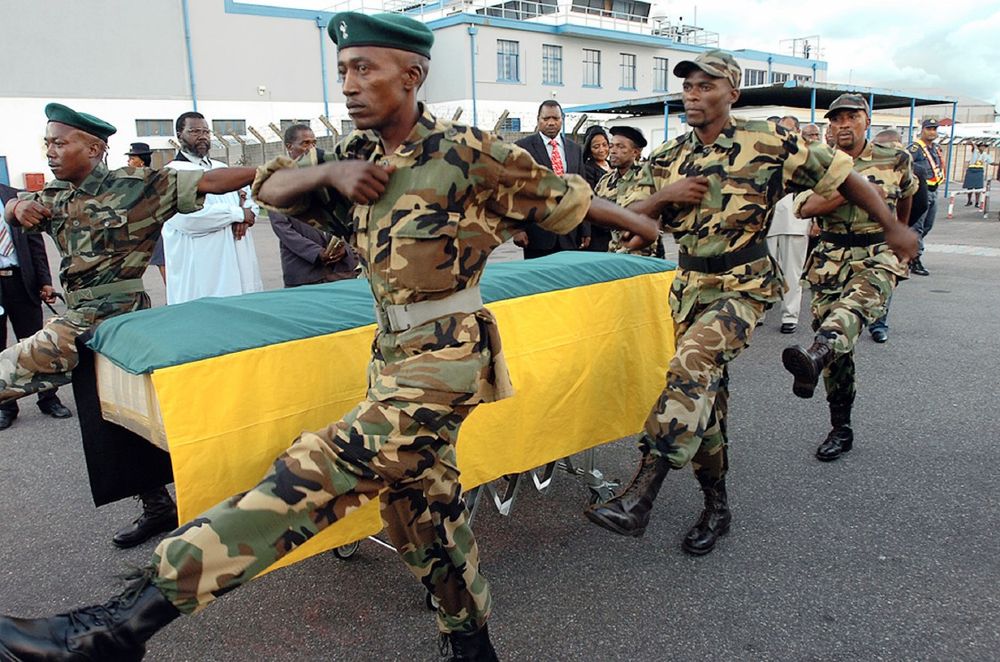

The South African government has launched a major initiative to repatriate the remains of anti-apartheid freedom fighters who died in exile in Angola, calling on families to come forward as authorities begin the complex task of recovering and identifying more than 400 possible graves.
The programme, unveiled at Freedom Park in Pretoria on Friday, marks the next phase of the government’s Exile Repatriation of Human Remains Programme and follows the return of the remains of 42 liberation Struggle veterans from Zambia and Zimbabwe in September 2024.
Angola has become the first focus of the five-year plan because it holds the largest known concentration of South Africans who died during the liberation Struggle.
Minister of Sport, Arts and Culture Gayton McKenzie said the initiative was aimed at giving long-awaited answers to families who had spent decades not knowing where their loved ones were buried.
“There is a woman in this country who was a girl when her brother walked out of the family home. She was told he had gone to study. She never saw him again… Forty or 50 years later, she is an old woman, and she is still waiting,” McKenzie said.
“There are hundreds of families like hers. We are here today to tell them that the waiting is coming to an end.”
Describing the programme as a constitutional obligation rather than a symbolic exercise, McKenzie said: “A country that leaves its dead in foreign soil has not finished the work of becoming free. Bringing them home is not ceremony, it is the completion of a citizenship that was interrupted.”
The repatriation effort stems from a request by military veterans to President Cyril Ramaphosa in 2019 to recover the remains of comrades who died in exile.
The government subsequently adopted the National Policy on the Repatriation and Restitution of Human Remains and Heritage Objects in 2021, while the Cabinet approved a country-to-country implementation model in 2023 and the current five-year implementation plan earlier this year.
McKenzie said Angola was selected because it served as a key base for Umkhonto weSizwe (MK), the ANC’s armed wing, during the Struggle against apartheid.
“The South Africans who died in Angola were, in the overwhelming majority, members and cadres of the African National Congress and its military wing, Umkhonto weSizwe.”
He stressed that the programme is open to all South Africans whose relatives died in exile, regardless of political affiliation.
“We do not ask a mother to justify her grief. If your child died in exile, and we can bring your child home, your child is coming home.”
Families can now apply through the South African Heritage Resources Agency (SAHRA) for exhumation, forensic examination, identification, and repatriation. Applications can be submitted online, telephonically, or in person, and McKenzie emphasised that the process would be free.
“Nothing in this process costs a family a single cent. Government will never ask you for payment,” he said.
Officials estimate that more than 400 possible graves have been identified across Luanda and Angola’s northern, eastern, and southern provinces, but warned that recovery operations will be difficult because of landmines, unmarked wartime graves, poor historical records, and decades of environmental change.
“In Angola, we have identified more than 400 graves for possible recovery. We will not recover everyone, but we will bring home all of those that we possibly can.”
He said DNA testing may be required in cases where documentary evidence is insufficient and acknowledged that some remains may never be found or identified.
Minister of Defence and Military Veterans Angie Motshekga said the initiative was about restoring dignity to those who sacrificed their lives for South Africa’s democracy.
“This work is far more than an administrative exercise. It is a national duty. It is about restoring dignity to those who sacrificed everything for the freedom we enjoy today.”
She said the programme also sought to bring closure to families who had lived with unanswered questions for decades.
“The pain for many families has been compounded by not knowing where their loved ones were buried, how they died, or whether their remains would ever be brought home.”
Motshekga urged relatives of South Africans who died or disappeared in Angola during the liberation Struggle to register with SAHRA.
“Government cannot complete this process without the participation of families. Their knowledge, documentation, testimonies and consent are essential components of the identification process. Every piece of information matters. Every family has a story that can help us bring another South African hero home.”
She added that where physical remains could not be recovered, the government would work with families to facilitate spiritual repatriation ceremonies.
“Our objective is not only to recover remains where possible, but also to provide healing, acknowledgement, and closure.”
ANC Secretary-General Fikile Mbalula said the programme was an important step in completing South Africa’s liberation story.
“We gather this morning at Freedom Park… to launch a programme that has waited far too long. Today we continue, in earnest, the work of bringing home the sons and daughters of South Africa who marched into exile in the 1960s, 70s, and 80s and who never returned,” he said.
Mbalula reflected on Angola’s role in the liberation Struggle, saying the country became home to MK training camps after gaining independence in 1975, and that many South Africans never made the journey back home.
“Not all of them lived to see that day. Some fell in confrontations with apartheid’s proxy forces. Some were lost to disease, to the sheer brutality of exile.”
He appealed directly to affected families to participate in the programme.
Credit: Source link