

Record Resources CEO on Gabon’s Ngulu project: patience, partnerships and the pursuit of scale
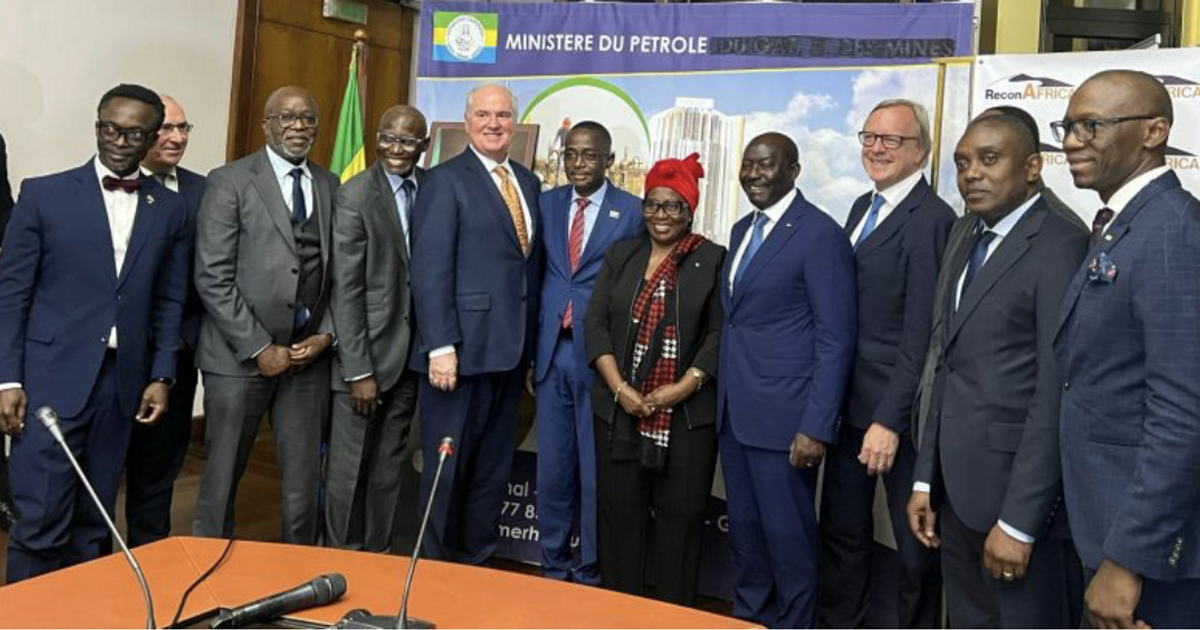
Record Resources Inc (TSX-V:REC) CEO Michael Judson has spent decades navigating the natural resources sector, from mining to oil and gas and international project development. As the company advances its Ngulu oil project in Gabon, Judson says the combination of an experienced leadership team, strong regional relationships and the ability to move quickly gives Record Resources a unique advantage.
In this Q&A, Judson talks about what drew him to the West African oil and gas sector, why he believes small-cap agility is an advantage rather than a liability, and how he thinks about timing in an industry defined by cycles.
Proactive: You’ve assembled a leadership team with decades of international energy experience. What gives you confidence this is the right team to execute in Gabon?
Michael Judson: I owe a great deal of credit to Alain Mizelle for assembling this team. These were his contacts in South Africa. Alain and I first started working together about 15 years ago, and he brought an extensive network and deep experience in the region. He had enjoyed a lot of success there during what were, in many ways, the boom years of the oil and gas industry.
The group Alain assembled includes people from companies I had long admired. Tullow Oil, in particular, was a real breeding ground for talent. Bill Torr and Robin Sutherland both came from Tullow, although Alain did not. I remember watching what Tullow was accomplishing in Ghana during the 2000s and thinking, “This is incredible.” They were making world-class discoveries and helping drive the growth of an entire country. The Jubilee field discovery, in particular, was a major boost for Ghana and its people.
That was my introduction to Tullow. I attended an oil and gas conference in London in 2005, and the company was presenting. I remember listening to one of its founders, John Doran, speak. He was an outstanding presenter—charismatic, funny and incredibly engaging. I came away thinking, “Who is this company?” There was tremendous excitement around Tullow and what it was accomplishing.
Later, Alain and I worked with a group out of Dublin, and once again we found ourselves working alongside former Tullow people. Everywhere we went, we seemed to run into individuals with Tullow backgrounds.
More broadly, the oil and gas industry—particularly in sub-Saharan and West Africa—is a relatively small community. Success requires political relationships, access to capital, good timing and the right technical expertise. Bringing all of those elements together is what enables a company to capitalize on the opportunities that exist.
When you look at Tullow’s success offshore Ghana and the way it has continued to build that business over the years, does that serve as a source of inspiration for you and your team in Gabon? Record Resources is operating on a much smaller scale, so how do you apply those lessons as a small-cap company looking to develop an emerging oil opportunity?
Well, Tullow started from nothing, just as we are. They had a strong team, raised some capital and built the company from the ground up. That showed us it was possible. We knew that if we could put the right pieces together, we could pursue the same path.
Our goal is to build the next Tullow. That’s an ambitious objective, but it’s one worth striving for.
I also like the small-cap space because of the agility it gives us. Companies like ours have to be nimble. It takes a certain kind of entrepreneur and manager to succeed in this business, and one of our biggest strengths is the ability to make decisions quickly.
We don’t have the luxury of endless time, massive budgets or layers of corporate bureaucracy. There are no committees to work through before every decision. If Alain and I see an opportunity, we can get on the phone and make a decision within minutes. That speed and flexibility are real competitive advantages for a company like ours.
Your own career has spanned mining, oil and gas, and international project development. Which lessons from those experiences are most valuable as Record enters Gabon?
You’re learning lessons every day if you’re any good at this business. One thing this business teaches you very quickly is that timing is everything. That’s true in many areas of life, but it’s especially true in natural resources.
A good example is the company that held the Ngulu project in Gabon before us. They were an Australian team with strong technical expertise and good people, but they couldn’t raise enough capital to move the project forward. It wasn’t because the project wasn’t good. They were caught in an exceptionally difficult market, and there wasn’t much they could do about it.
We’re still operating in one of the toughest environments for natural resources that I’ve ever seen. Since around 2010, it’s felt like one prolonged downturn. There are a lot of complex reasons for that, particularly changes in the capital markets, but the result has been an incredibly challenging environment.
More than anything, I’ve learned that timing is even more important than I once believed. You can’t simply decide to stop because the timing isn’t right. You have to keep moving forward, continue building and be ready for the moment when the market turns. When that opportunity comes, you want to be in a position to say, “We’re ready.”
How do you communicate that sense of timing to shareholders?
There was a story from around 2003 or 2004, during one of the first major downturns in the tech sector. Steve Jobs was still alive and at the height of his influence. He was the rock star of that era.
Apple’s stock had been hammered, while mining stocks were soaring. Someone asked him, “What’s going on with Apple?”
His response was something along the lines of, “It’s called a cycle shift. Deal with it.”
I always loved that. It was such a simple, direct way of reminding people that markets move in cycles. Sometimes that’s the truth people don’t want to hear, especially when sentiment has turned against a sector.
You’re building and advancing a project, and you have the team in place, but sometimes the timing just isn’t right. How do you continue operating in that environment, and what can you do to ensure shareholders are still being served?
I compare it to a sailboat. We’re a small sailboat in the middle of a lake, and there’s no wind. You can sit there and admire the sunshine, but the boat isn’t going anywhere because there’s nothing pushing it forward. What you have to do is make sure the boat is ready. You clean the sails, make sure everything is lined up properly and that when the wind arrives, you’re ready to move.
That’s where we are today. There is some wind now, and the boat is moving, but we’re preparing for the bigger gusts that will allow us to really accelerate.
The way to drive what we’re building is through transactions, and we’ve shown time and again that we are very capable of executing deals. That’s what we’ll continue to do. Eventually, the market has to recognize the value we’re creating.
Beyond technical expertise and the ability to execute transactions, what qualities do you believe are most important for building successful partnerships in Gabon?
What matters most are the political and social skills. The value we bring is largely on the political and relationship side of the business.
We manage those relationships carefully, and we understand how to work with all of the different stakeholders involved. That is an art, not a science. It requires experience, judgment and the ability to understand people.
What do you think investors sometimes underestimate about operating successfully in Africa?
I think investors overestimate the political risk. It exists everywhere. Look at the US—if you were operating in certain sectors, who would have predicted the political environment we see there today?
I think many Western companies are not always as attuned to the realities of Africa, and that creates uncertainty. The same applies to a number of other jurisdictions where North American companies often approach opportunities with a degree of hesitation.
The small-cap sector already carries an inherently high level of risk. So when you add a jurisdiction like Gabon, investors often assume the risk increases even further because of political considerations.
The way you manage that is through the risk-reward equation. If you are taking on higher risk, there needs to be a higher potential reward. Gabon offers an economic opportunity in oil and gas that is among the most attractive you can find. It isn’t the only place with significant potential, but the key is ensuring the risk-reward balance works. If the risk is higher, the reward has to be higher as well.
When you look ahead over the next few years, what would success in Gabon look like—not just for the project, but for Record Resources as a company?
If we can get to 20,000 barrels a day from Ngulu in five years, that would be a tremendous achievement. Can we do more than that? I believe we can. We may expand into other jurisdictions beyond Gabon or pursue additional blocks beyond Ngulu, but that is the type of scale we’re aiming for.
Right now, I’m focused on the next milestones. Let’s get the first well at Ngulu producing. Let’s achieve 5,000 barrels from that first well, then another 5,000 from the second well. Those are significant milestones for us, and once we reach them, I’ll have a much clearer view of what additional opportunities we can pursue.
Our planning is very dynamic. It changes constantly based on the opportunities in front of us. We are actively looking at acquisitions and other opportunities that could significantly change the outlook and accelerate our growth beyond what we have planned from a single block.
Ultimately, we’d like to be involved in multiple oil blocks and multiple opportunities. We’re looking at other jurisdictions as well, particularly in West Africa, where Alain’s network and relationships are especially valuable.
The opportunity set in the region is large enough for us to build something substantial.
Credit: Source link