Rates and percentages in their real dimension › Cuba › Granma
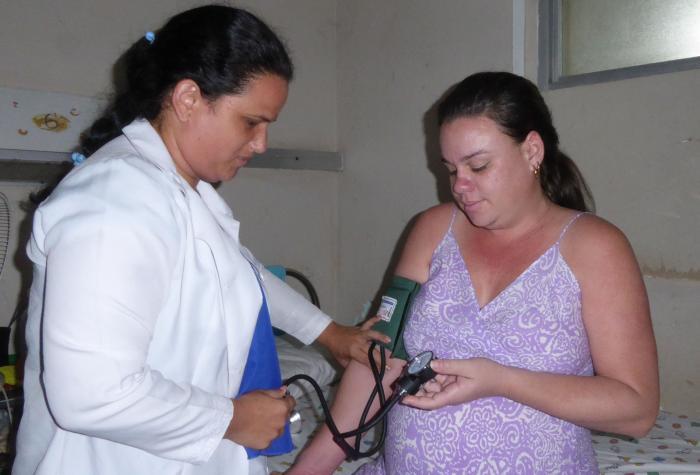

Pinar del Río.– Wendy García speaks without fear, as if she were convinced the worst was over. “I’m calm,” she says. She explains that the doctors will discuss her case the next day and that they will likely schedule her delivery for the end of the week.
The scares that led to her hospitalization 51 days ago, and which have persisted ever since, seem to be definitively behind her. She recounts that it began with “heavy” bleeding and that she was very worried about what it could mean for her and her baby.
At 34, this was finally her first pregnancy, and she was happy until that May night when she had to be rushed to the hospital. There, she was diagnosed with preeclampsia, followed by another bout of bleeding, and then another, and then another… But the doctors and nurses in the Intermediate Care Unit of the Abel Santamaría Cuadrado General Teaching Hospital have spared no effort to care for her.
“Everyone has been wonderful; thanks to them, I’ve made it to the end of my pregnancy.”
The perinatal care unit, identified by the letters MI, is a kind of therapy for pregnant women. Specialists consider it fundamentally important within the vast system that makes up the Maternal and Child Health Program (PAMI) in Pinar del Río.
“It’s a closed service, where the most concerning cases are,” explains Dr. Sulemis Carmona. “Here we have patients with severe hypertension, threatened preterm labor, and other conditions.” That’s why, although everything is calm right now, she warns that “things can get complicated at any moment.”
And these complications, in these times, present additional challenges due to the lack of resources, which constantly forces them to seek alternatives in this sacred struggle for life.
“Of the few resources that come into the hospital, we are always prioritized for the care of critically ill mothers.” “Right now, what affects us most is the antibiotic situation, but even if it’s oral, we always have something for maternal care.”
Dr. María Teresa Machín, head of the PAMI in Pinar del Río, affirms that the results of this important program have been consistent over time. In 2023, the province registered the lowest infant mortality rate in Cuba. In 2025, it achieved this again. In 2024, it ranked second.
However, she acknowledges that the austerity measures to which the country has been subjected, and which relentlessly impact all spheres of life, also affect the performance of PAMI.
The effects range from the shortage of medications to the difficulties in guaranteeing consultations with primary healthcare teams (comprised of pediatricians, general practitioners, obstetricians, etc.) in the most remote areas, due to severe fuel limitations.
“We have been affected, for example, in the prenatal diagnosis of congenital defects, since this is fundamentally based on ultrasound studies, which require electricity,” explains María Teresa.
Given this complex situation, she notes that consultations at the Provincial Genetics Center have been moved to the municipal center (located in a protected area), and also to the Abel Santamaría Hospital.
Furthermore, it has been indicated that the ultrasound equipment in the outpatient clinics will be powered by the photovoltaic systems installed in them in recent months.
Meanwhile, in the maternity homes, where pregnant women with high-risk pregnancies are typically admitted, the head of PAMI explains that they have decided to “go further,” given the transportation shortages, and also admit vulnerable cases and pregnant women living in hard-to-reach areas, anticipating any potential emergencies.
Amid an extremely complex scenario, she recalls that in recent months, all 11 municipalities in Pinar del Río province have been equipped with maternity homes, and that photovoltaic kits have been installed in these homes to guarantee lighting, food preservation, and other basic needs.
On the other side of the MI room, Sinaily Betancourt is already She has been in the service for 27 days, but she knows she still has many more to go. She is 20 years old and comes from El Olivo, a remote community in the municipality of Mantua, more than 100 kilometers from the city of Pinar del Río.
Before becoming pregnant, she already suffered from chronic hypertension, but during her pregnancy, she developed preeclampsia, which required her admission to the perinatal care unit.
A fuel shortage delayed her emergency transfer to the provincial capital by almost 24 hours. “The doctors in Mantua had reported me in the morning, and I arrived here around four o’clock the next morning,” Sinaily recounts.
Since then, her situation has been no less tense. “During my time in the hospital, I’ve had several relapses, but they’ve given me medication, and I’ve improved.”
She’s already 31 weeks pregnant, but ideally she’d like to reach at least 37. Although her family has barely been able to visit, Sinaily and her baby are not alone.
“The nurses or doctors come every four hours and take my blood pressure, listen to my heartbeat, and ask me how I’m feeling. The care has been excellent.”
She says she’s carrying a baby girl, who will be named Camila, and her eyes light up. She knows that on the other side of those walls that make up the MI (Medical Intensive Care Unit), hard times are being lived, that the people who care for her probably didn’t sleep well the night before and that they left their own problems at home to come to work. And it is there that cold statistics take on a human face, and where rates and percentages are expressed in their true dimension.
And it is also there that the consequences of the ruthless policy that the United States government insists on promoting against the Cuban people are laid bare.
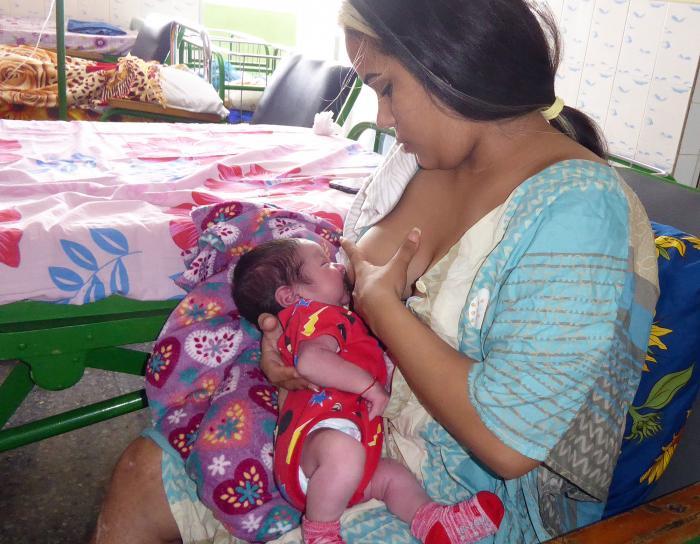
But at the MI, life continues to triumph over death, and also in the neonatal ward, the breast milk bank, the pediatric ward, and in every link of a system that has not stopped, and which, amidst terrible shortages, has been able to achieve indicators on par with countries like Mexico, Argentina, or Brazil.
With the confidence of someone who knows she’s in good hands, Wendy García interrupts the interview for a few minutes to answer a call. “We’re going to meet Bryan soon,” she tells the person on the other end of the line, and smiles in a way that defies description.
Bryan is the son she had longed for for so long, and after several years of waiting, fertility clinic sessions, four bleeding episodes, unstable blood pressure, and nearly two months in the hospital, he will finally be in her arms, thanks to the mother’s boundless will and the dedication of the doctors and nurses who guarantee every pregnant woman and every child, as in Félix B. Caignet’s famous novel, “the right to be born.”