

PKK Threatens to Halt Peace Process with Türkiye
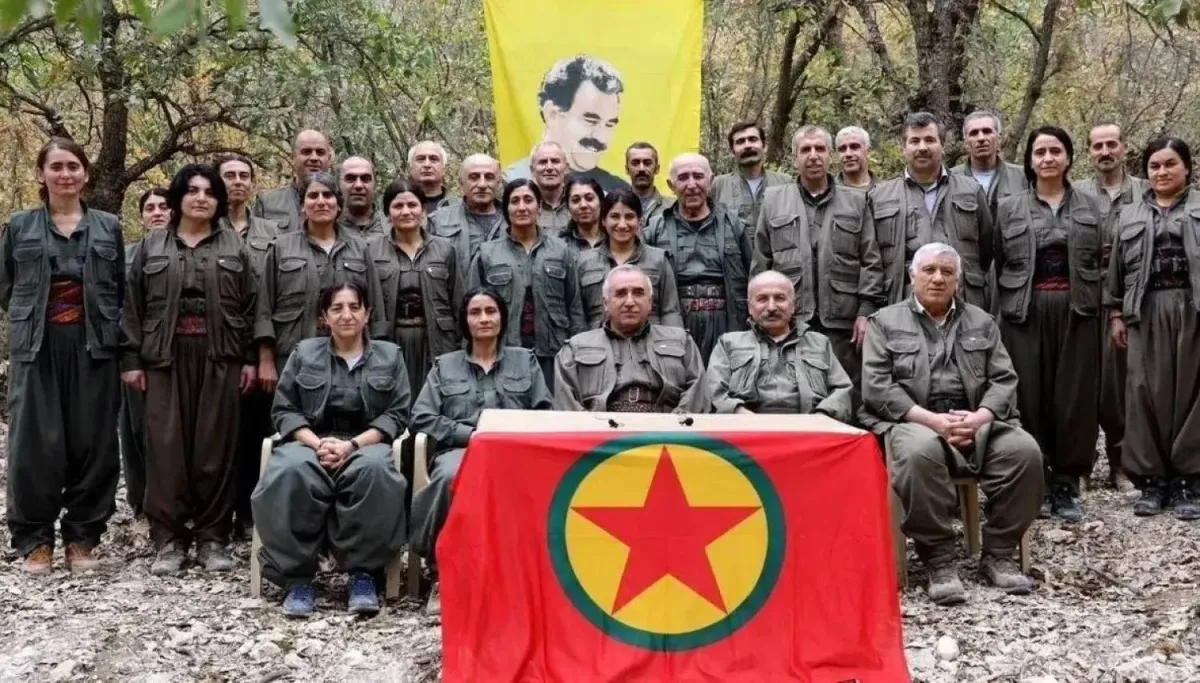
PKK leaders in northern Iraq threatened to halt a peace process with Türkiye centered on the group’s dissolution and disarmament unless Ankara takes concrete steps toward democratic reform.
Cemil Bayik, a member of the Executive Council of the Kurdistan Communities Union (KCK), an umbrella organization that includes the Kurdistan Workers’ Party (PKK), said the initiative, which the Turkish government calls the “terrorism-free Türkiye,” would come to a halt unless democratic measures were introduced.
Bayik discussed the disarmament of the PKK as a condition for moving into the democratic political arena and integrating its members into Turkish society.
He criticized the National Solidarity and Social Integration Law, passed by the Turkish parliament on Aug. 10 and known as the “framework law,” saying it represented a beginning but remained “incomplete.”
Criticism and warning
Bayik said the rationale for enacting the law had not been made clear and that merely stating that terrorism would end had weakened it. He said the law’s purpose would have been clearer had it specified that laying down arms was linked to democratic measures.
“The language used in the law is deeply flawed,” Bayik said in remarks to the PKK-linked Firat News Agency that were carried by Turkish media on Saturday.
“We have made clear on every occasion that this process is not limited to disarmament. It is important to spell out the democratic steps that disarmament requires, because arms will be laid down in order to enter a democratic political arena,” he said.
Bayik said another important issue was the status of PKK leader Abdullah Ocalan and the group’s senior cadres.
Excluding the leadership and a large number of cadres involved in the process from the framework law was a serious problem, he said, adding that the issue must also be resolved for those who would return to Türkiye.
The law, approved by Turkish President Tayyip Erdogan on Aug. 18, provides for deferred sentences, the suspension of prosecutions and the conditional return of PKK members who surrender their weapons.
However, according to information that has emerged, it excludes 230 senior figures who will not be allowed to return and may instead be housed in a safe zone in Sulaimaniya in northern Iraq.
In an explicit warning that the process could be halted, Bayik said: “If the process falters because democratic steps are absent, the responsibility will lie with the Turkish government.
Democracy can provide a solution to the Kurdish issue, and through this law the government implicitly acknowledges these matters.
“If this process does not advance through democratic steps, it will be obstructed, and the government will bear responsibility.”
Bayik said parliament would “undoubtedly” be the decisive institution in resolving the Kurdish issue.
He called for constitutional and legal amendments recognizing the existence of the Kurds, their language, culture and political will, as well as their rights to local self-government, saying lasting peace could not be achieved without them.
Implementation steps
Bayik’s remarks came as work continued to establish four subcommittees approved at the first meeting of the National Solidarity and Integration Monitoring and Coordination Council on Aug. 24.
The council is chaired by Turkish Vice President Cevdet Yilmaz and includes the ministers of justice, defense, interior and foreign affairs, as well as the intelligence chief, the secretary-general of the presidency and the secretary-general of the National Security Council.
Sources in the ruling Justice and Development Party (AK Party) said the four subcommittees — Judicial and Legal Coordination; Follow-up and Monitoring; Social Consensus and Integration; and Disarmament and Strategic Coordination — would be formed, and their working mechanisms would be determined during September.
The sources, however, ruled out granting Ocalan formal status or direct membership in any committee.
They said Ocalan could contribute in particular to the work of the Disarmament and Strategic Coordination Committee because of his important role in the disarmament phase.
The Kurdish side and the head of the Nationalist Movement Party, an ally of the ruling party, have repeatedly called for Ocalan to be appointed as general coordinator for political participation and integration.
At the same time, Turkish media reports said a security mechanism established among Ankara, Baghdad, Erbil and Sulaimaniya would work intensively until the Turkish parliament begins its new legislative session on Oct. 1.
The mechanism will seek to confirm whether the PKK has withdrawn from 72 positions along the Turkish-Iraqi border and whether the Kurdistan Regional Government has been notified about underground depots containing weapons and heavy ammunition.
Turkish intelligence will verify the information.
Under the plan, camps and caves extending to the Qandil Mountains, including those in the Metina, Zap, Avasin, Basyan and Haftanin areas, will be evacuated by Oct. 1.
About 3,800 PKK members at 18 camps will surrender their weapons. Iraqi border guards and Peshmerga forces will be deployed, particularly in areas near the Turkish border, with the Baghdad and Erbil administrations cooperating in those locations.
Türkiye’s Nefes newspaper, citing unidentified sources, said weapons would be surrendered in the towns of Amedi and Kani Masi in Duhok; at the foot of Mount Qandil and in the town of Koy Sanjaq in Erbil; and in the Ranya district and the town of Said Sadiq in Sulaimaniya.