

Organising against the far right in the Highlands
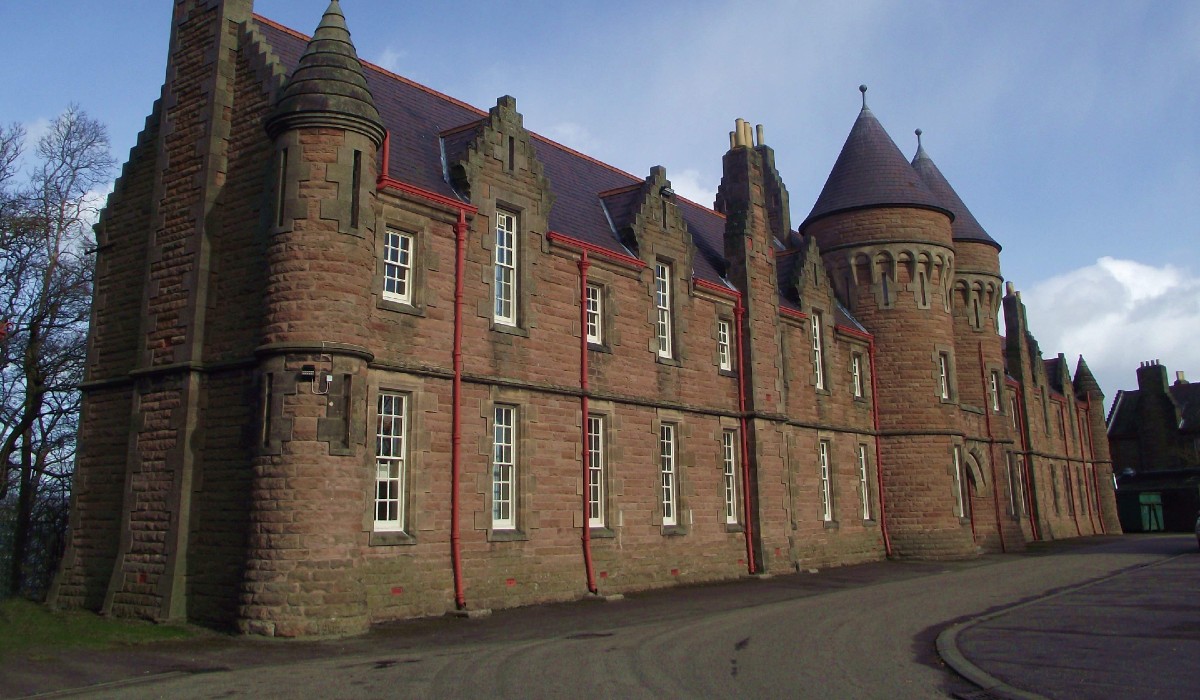
Lewis Akers interviews Matthew Cameron of Highlands Against Hate in Inverness – the first of a series on anti-racism in Scotland
Can you tell me who you are – your background, why you’re involved, what led you to Highlands against Hate, and how long you’ve been in the Highlands?
I’m one of the founders and a coordinating group member for Highlands Against Hate. I’ve been back in the Highlands for about a year and a half, although my family are all from here and I have lived here in the past, so, I’m not a stranger to the community. My journey into Highlands Against Hate comes from being involved in activism and political organising for most of my life – campaigning for political parties, student politics at university, that kind of thing.
I became involved through a friend who introduced me to Highland Palestine. I started organising with them and attending weekly demonstrations at the Town House in Inverness. We began hearing about a far-right demonstration being planned in response to government proposals to house asylum seekers at the former Cameron Barracks.
Do you think the Palestine movement over the past few years helped create the conditions for that kind of organising?
Yes – definitely. It wasn’t the sole cause, but it was a vital medium for bringing people together and rebuilding local political activism, especially outside the central belt of Scotland.
You mentioned that asylum seekers have been settled at Cameron Barracks by the UK Government. Can you tell me what was the response to that locally?
What happened was that a number of far-right agitators – mostly from outside the local area, including places like Peterhead, Aberdeen, Glasgow and Dundee – tried to capitalise on concerns within the community.
To be clear, we don’t think those concerns were unreasonable. People hadn’t been consulted, and they weren’t given any sense of ownership over the decision. There’s also a broader feeling in the Highlands that when the government doesn’t want to deal with something, it gets pushed onto us without discussion.
If local people had been involved – if they’d had a role in helping integrate asylum seekers – I don’t think there would have been the same level of fear. Inverness is known for being welcoming. The Highlands’ motto literally translates to “a hundred thousand welcomes,” and we’ve taken pride in resettling people from Afghanistan, the Congo, Ukraine, and elsewhere.
The issue was that legitimate concern was being exploited by far-right groups. So, within our networks, we organised a meeting and decided to hold a counter-demonstration. That was very well attended, and it marked the beginning of Highlands Against Hate.
And in terms of that feeling that things get ‘dumped’ in places like the Highlands—have the far right been able to take root locally?
I’m proud to say they never established a significant foothold here. At our first demonstration, numbers were roughly equal. But our approach has always been twofold: we’re firm and confrontational toward organised far-right groups, but we’re empathetic toward ordinary people who may be concerned or misinformed.
Most people aren’t committed extremists – they’re worried or confused. So, we engage with them, listen, and explain why refugees shouldn’t be blamed for government decisions. That approach has worked well.
At that first demo, as far-right participants became more aggressive – shouting abuse, making Nazi salutes – many local people distanced themselves from them. By the end, they were reduced to a small core group.
Since then, their numbers have steadily declined, while ours have grown. At one demonstration, we had nearly 300 people to their 30. At another, on Valentine’s Day, we had around 150–200, while they had maybe 20.
Some people argue that counter-protests give the far-right attention. What’s your response?
I think that counter protests are good to directly confront their narratives because if they were allowed to just stand there by themselves, then their views would be unchallenged. People say that we’re giving them air. We’re not – they are not counter protesting us. We’re not inviting them to our city. They would be here whether we went or not. All we’re doing is presenting a more positive alternative of what Highlands is.
Counter protests allow us to allow us to interact with the community. It provides a direct opposition to the narrative of the far right and it allows people to network and find like-minded people so that we can take the activism further than just standing on the street and singing songs.
We’ve seen new groups emerge from this, like Highland Circle who are bringing together people with different views, and students at the University of the Highlands and Islands here in Inverness creating their own anti-racist group. We’ve also built connections with political parties and local organisations – the SNP, the Greens, the Lib Dems, Highland Palestine, Helen Hearts for Palestine, and Highland Pride.
Demonstrations aren’t the end goal – they’re a starting point for broader community organising.
Looking ahead to the Scottish Parliament elections in May, it looks likely that Highlands will elect 2 Reform MSP’s, considering this what are your next steps?
We’re running both physical and online campaigns highlighting what we see as the risks and contradictions in Reform’s platform – particularly around workers’ rights, the NHS, and multiculturalism.
We’re also organising a Unity March—something more positive and celebratory. It’s about highlighting what we’ve achieved, what we stand for, and what comes next. That includes providing direct support to migrant families, supporting food banks, and evolving into a broader community group rather than just a reactive one.
What’s the situation now? Are the far-right demonstrations still happening?
Not really. We never had the same sustained presence seen in some other places, partly because the government’s plans have been unclear.
As of now, there are no asylum seekers in the barracks, and even local officials don’t seem to know what’s happening. The far-right groups have largely faded away—there was even a falling-out among them – and things have been quiet since February.
That’s allowed us to focus more on expanding our work and supporting other groups.
Why did you choose to remain independent rather than become part of a larger organisation?
Matthew: Groups like Stand Up to Racism do excellent work, but we wanted to be broader than just an anti-racist or anti-fascist group. We wanted to support direct aid, training, and community networking. We didn’t want to be limited by a mission statement that was essentially ‘We exist to counter racism in the far right’.
There’s also a strong feeling in the Highlands about local ownership. People don’t want outsiders telling them how to run their communities. We wanted to make it clear that we’re a grass roots group of Highlanders, for Highlanders.
What gives you optimism and hope going forward?
Nationally, while there’s clearly polarisation, not all of it is negative. We’re also seeing increased support for progressive movements. We are seeing largest bump to the Scottish Greens in history. We’re seeing a massive bump in the in UK context to the Green Party of England and Wales. And it’s shown that even if people are becoming more focused, more polarised, not all that polarisation is negative. Some people are being steered away from the institutional parties but are not being steered towards this sort of fear mongering far-right reactionary mentality.
Locally, what gives me the most hope is our student group. They emerged organically – young people, aged 17 to 21, stepping up, leading chants, and standing up to far-right activists. That level of courage and commitment is incredibly inspiring.
What advice would you give to others starting similar groups?
Learn to distinguish between people who are actively hateful and those who are simply uninformed or scared. That’s probably the most important lesson.
I’d like to see more collaboration between grass-roots groups. Right now, connections are often informal—one contact here, another there. We’d like to build stronger, more structured relationships. Essentially, I just want to put the call out to all grass roots anti-fascist anti-racist groups.
Go on our Instagram and give us a message. We would love to be closer with you.
Before you go
More war, escalating authoritarianism, a deepening cost of living crisis – the left faces big challenges.
But resistance is also growing.
Counterfire has been at the heart of the mass movements against war, in solidarity with Palestine, and against austerity. Given the scale of the crisis, we urgently need to ramp up our operations. We need your help to raise £30,000 to make that happen.
Credit: Source link