

NPTAJ Shares Mixed Feelings On School Reopening | RJR News
By Kimone Witter
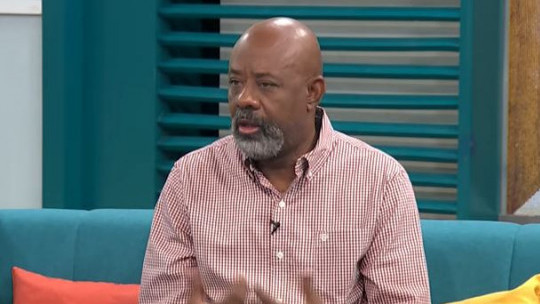
President of the National Parent-Teacher Association of Jamaica (NPTAJ), Stewart Jacobs, says most parents are optimistic about the new academic year, bolstered by improved student performances in the recent Primary Exit Profile and Caribbean Examinations Council assessments.
Mr. Jacobs says, based on feedback received by the association from parents, the strong results indicate that teaching methods are having positive impact.
“The PEP results were a great indicator of what is happening. It’s a clear indicator that our teachers are really passing on the material in a good way to our children. When we look at the CSEC score and the CAPE score and we see the percentages going up in the traditional subjects that usually give a lot of challenges, it shows that the method of teaching is encouraging,” he reasoned.
The Ministry of Education said three of four subject areas for PEP exams exceeded its 70 per cent target, but students continued to lag behind in Mathematics.
Meanwhile, the Ministry said CSEC results showed notable improvement in Mathematics, with 48.7 per cent of students achieving a pass in the subject, representing an increase of 5.6 percentage points over 2025 and 14.2 percentage points over 2024.
English A recorded an overall pass rate of 83.6 per cent.
At the CAPE level, Jamaican students achieved an overall pass rate of 91.7 per cent, with Unit 2 recording an impressive 94 per cent.
Still, the NPTAJ has flagged several challenges facing schools and parents as the new academic year gets underway.
Mr. Jacobs said more schools, particularly in western Jamaica, should have been repaired before students returned to classrooms.
He said contractors should have moved faster to complete outstanding repairs.
According to Mr. Jacobs, schools must be treated differently from ordinary construction projects, given their importance as learning spaces for children.
“We do appreciate the fact that the Minister of Education has stepped in, almost personally, to engage or re-engage the contractors and ask them to understand that this is not just a regular building they’re putting up; it’s a school they’re building. They need to move with more alacrity,” he insisted.
Meanwhile, he noted that parents have faced a seven per cent increase in back-to-school expenses over last year.
“Last year, for example, a primary school child, for the week, it would be just about $9,000. This year, it’s about $11,000. And last year, for a secondary school child, it would be about $15,000; it’s about $17,500 this year. And so that increase does affect those who would be marginalised in terms of their expenses,” he lamented.
On the other hand, the NPTAJ president welcomed the expansion of the Rural School Bus Programme, which he said has cut the cost of transportation and improved student attendance.