

NISHANT UPADHYAY – Burkina Faso and the Return of Political Economy
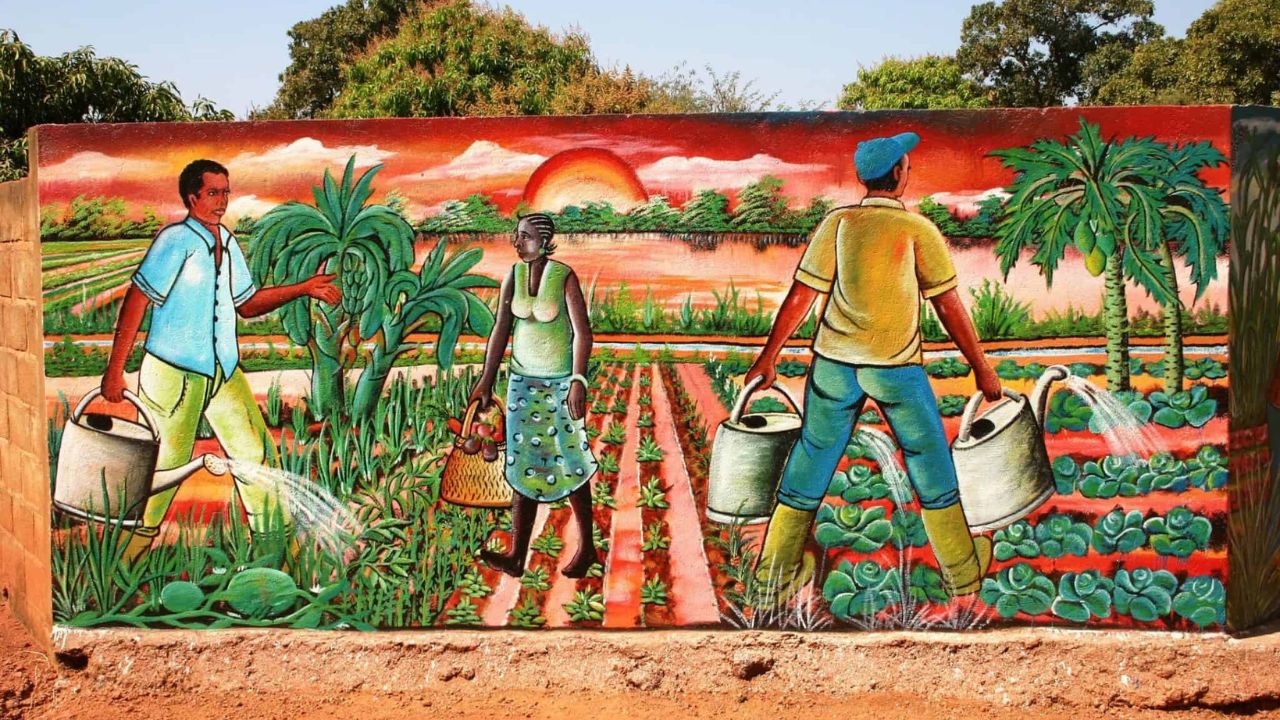
Contemporary global political discourses are often noted for their intense polarization, in which elections are increasingly reduced from choices about governance and ideology to something more banal and ritualistic. They are fought over culture, identity, migration, values, and symbols. One of the emblematic “achievements” of the neoliberal order has been the systematic removal of political economy from the sphere of democratic concern, contestation, and participation. Citizens are encouraged to discuss almost everything except capital and economic power, ownership, resources, and production.
The significance of Burkina Faso’s recent political trajectory – and that of Sahelian states such as Mali and Niger – lies not simply in military coups or the charismatic figure of Ibrahim Traoré. It is instead inherent in challenging what political systems across the globe have sought to depoliticize: Who owns national resources? Who benefits from them? What is economic sovereignty, and how is it related to political sovereignty and nation-building?
The depoliticization of political economy is neither accidental nor merely abstract. One of the central assumptions of neoliberalism and its economic precursors has been that markets are neutral, non-political, and objective arbiters of economic life. Economic decision-making – from the allocation of resources to their distribution – is increasingly relegated to ‘specialists’. As economic historian Clara Mattei has shown in The Capital Order, austerity emerged not as a neutral economic response but as a political project aimed at containing popular demands. Modern economics similarly tends to treat privatisation and resource allocation as technical rather than political questions, removing them from democratic scrutiny and public control.
Within this framework, debt is increasingly presented as an economic necessity rather than a political choice. This tendency has been especially visible in discussions of Africa’s political economy, where European dependence on African mineral wealth is often obscured beneath the language of equal exchange between sovereign states. Such arrangements compromise sovereignty through the maintenance of comprador elites and economic structures that privilege external interests. Political participation – both in the West and in many African states – thus, increasingly concerns consumption, preferences, and recognition rather than extraction, labour, ownership, and production. Citizens remain politically visible as consumers but increasingly invisible as producers.
The politics of Burkina Faso has challenged this order. From Thomas Sankara’s insistence that political independence without economic sovereignty is incomplete to contemporary debates over mining and resource control, the central issue remains the same: who governs the material foundations of collective national life? In this framing, the laissez-faire assumption is challenged by restoring primacy to the political question.
In my recent article, Military Marxism and Africa’s Community-to-Come, I argue – with Adam Mayer’s recent work on Military Marxism at the centre – that one of the defining features of contemporary political developments in Burkina Faso is precisely this return of political economy to the sphere of democratic and popular contestation. The ownership of gold mines, the terms under which foreign companies extract resources, the relationship between national wealth and national development, and the broader question of who exercises effective sovereignty over the economy have once again become objects of public debate and ground-level political mobilization.
Consider the question of mining. For decades, debates surrounding African mineral wealth have often been framed in technical terms: investment climates, regulatory frameworks, market efficiency, contractual stability, and foreign direct investment. These concerns are not unimportant. Yet such language frequently obscures a more fundamental political question: who benefits from the extraction of national resources? In Burkina Faso, this question has increasingly been posed not as a technical matter for economists, development agencies, or international financial institutions, but as a question of sovereignty. The issue is no longer simply whether resources are extracted efficiently, but whether the structures governing extraction reflect the priorities of the Burkinabè people.
This development is politically significant because it transforms citizens from passive observers of economic processes into participants in debates about the organization of economic life. The question is no longer merely how national wealth should be distributed once it has been produced, but who controls the conditions of its production in the first place. In this sense, Burkina Faso has reintroduced a political vocabulary increasingly absent from contemporary politics: ownership, production, sovereignty, and economic power. With the re-politicization of production, people appear not merely as consumers but as political actors, and sovereignty becomes material rather than symbolic. The real significance of contemporary transformations in Burkina Faso lies in their insistence that economic questions are political questions. Much commentary today asks whether Burkina Faso is democratic or authoritarian, liberal or illiberal. These questions may matter, but they may not be the most important ones. A prior question remains: can ordinary people meaningfully shape the economic structures that govern their lives? Burkina Faso does not provide a definitive answer. It does, however, force that question back into politics.
–
This article was first published by ROAPE.
Credit: Source link