

NIIA, LCCI: Nigeria risks wasting China’s zero-tariff offer without industrialisation
By Nkiruka Nnorom
Nigeria’s leading think tank, business chambers and academics have issued a joint warning that the country could squander China’s new zero-tariff policy unless it urgently fixes costs, builds industrial capacity and moves away from raw exports.
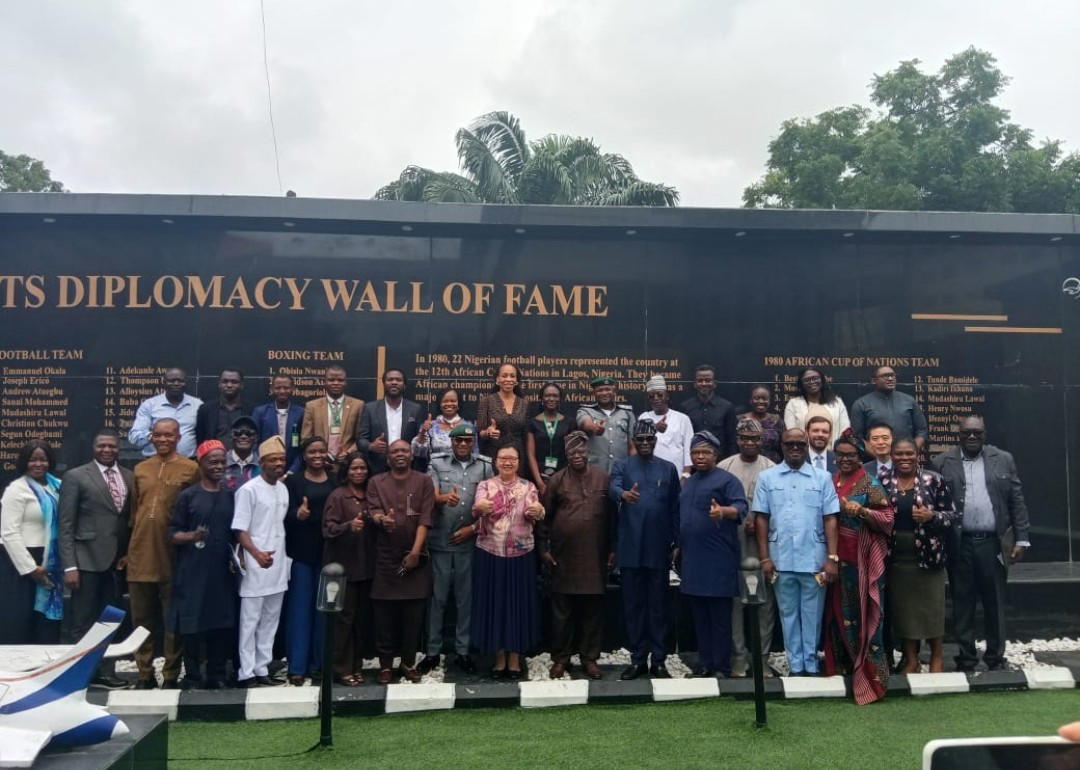
Speaking at a seminar on “China’s Zero-tariff Treatment for African Countries and its Implications for Structural Economic Transformation in Africa”, in Lagos yesterday, representatives of the Nigerian Institute of International Affairs, NIIA, the Lagos Chamber of Commerce and Industry, LCCI, Manufacturers Association of Nigeria, MAN, Centre for China Studies, and other experts said the May 1 policy was “an opportunity, not a gift” that would only benefit countries ready to compete.
While the Director of the Centre for China Studies, Mr. Charles Onunaiju, said “it will be our own failure if this opportunity bubbles,” LCCI’s Dr. Sunnie Michael-Omeiza warned there was “no free lunch anywhere” and stressed the need to cut logistics costs and meet Chinese standards.
Prof. Femi Otubanjo of NIIA added that without diversification and industrialisation, Nigeria risked becoming a “dumping ground” for Chinese goods, while Aderopo Adediyan of MAN, stressed the need for Nigeria to address issues of standards conformity, certification, and regulatory compliance if it must reap the benefits of the zero-tariff regime.
The concerns came as the Consul General of China in Lagos, Ms. Yan Yuqing, announced that performance under the policy had been especially striking with Nigeria-China trade surging to $18 billion in the first half of 2026, H1’26, with China’s imports from Nigeria up 80 percent since the zero-tariff took effect.
The policy, announced by Chinese President Xi Jinping on February 14, took effect on May 1 and covers all tariff lines for products from 53 African countries with diplomatic ties with China.
She noted that Nigeria was now China’s largest project contracting market and second largest export market in Africa and also a key destination for Chinese investment and the second largest trading partner for China on the continent.”
“Just three and a half months after taking effect, the policy’s benefits are already clearly visible,” she said.
Citing immediate gains for Nigerian exporters, she said: “Every hundred tonnes of sesame exported saves $11,000 in costs. Nigeria’s annual export of 7,000 tonnes of cattle-born granules saves nearly $450,000 and on day one of the policy, a single shipment of 23,000 tonnes of Nigeria-liquefied protein was $300,000 in tax savings.”
Prof. Eghosa Osaghae, Director General, NIIA, called for a critical interrogation of China’s zero-tariff policy to ensure it delivers equitable benefits to Africa and does not become a channel for “round-tripping” by Chinese firms.
He described China’s move as a demonstration that in the face of geopolitical shifts, it could be counted on to be pro-Africa, but said that the policy must be assessed against past experience.
“We welcome this because we see it as a response to the more complexifying issues of international trade and investment,” he said, noting that “the tariff has become a major issue” globally following the US tariff war.
He, however, cautioned that Africa must ask fundamental questions: “What is the need for China? What is the need for Africa? So, I think that those are questions that we need to pose, and we must arrive at critical answers that will show that in theory and in practise, this equalisation, this balancing act, is actually an equitable one that will be win-win for Africa.”
Fix costs, standards to benefit from China policy – LCCI
Dr. Michael-Omeiza, Director, Research and Advocacy at LCCI, noted that the opportunity was real but could be wasted if structural problems were not fixed.
He warned that Nigeria must not treat China’s new zero-tariff regime as a gift, saying the real work lies in cutting production costs, meeting standards, and adding value to exports.
“There is no free lunch anywhere. But China is giving you this, and do not be surprised very soon if China also demands for some trade concessions from Nigeria and all of Africa, and that would not be asking for too much.
“We are not going to blame any country or anybody if we refuse or fail to take advantage of this open door. The opportunity has come, but it is now for us to say this is what we must do to make sure this opportunity becomes an instrument of prosperity,” he said.
Zero-tariff won’t help Nigeria without industrialisation – Prof. Otubanjo
Prof. Otubanjo, Research Professor at NIIA, warned that Nigeria stands to gain little from China’s zero-tariff policy unless it diversifies the economy and becomes industrially competitive.
He also warned that the policy could turn Africa into a “dumping ground” if countries continue to export raw materials.
The don questioned the motive behind the policy, saying: “Is the zero policy a great gift? Is it a subtle instrument of Chinese imperialism? Is it political economic imperialism? Who needs this to benefit? Who should benefit?” he asked.
He linked the policy to the wider US-China geopolitical rivalry, noting that “the tariff has become almost a cost kicker in the instrument of the new geopolitical competition.”
Address issues of standard conformity, regulatory compliance – MAN
Dr. Adediyan, Deputy Director, International Cooperation & Advocacy Division, MAN, said: “Access to the Chinese market does not automatically translate into demand for our products. We must still address issues of standards conformity, certification, regulatory compliance and other market-entry requirements.
“Trade means little to our industrial transformation and national development if we are not trading what we produce. We must therefore transition from the export of raw materials to the export of manufactured and value-added products.”
Lack of state capacity, not tariffs, will determine if Nigeria benefits – Onunaiju
Mr. Onunaiju warned that Nigeria could miss the gains of China’s new zero-tariff policy unless it urgently builds state capacity, cuts red tape and moves away from raw exports.
He said the policy was not a gift but an opportunity that would only favour countries that are prepared.
“For emphasis, zero tariff, in my understanding, is not a gift. Whether I believe China or whatever, it’s simply an opportunity. Africa can live with it,” he said.
Onunaiju said the real test was not China’s market access but Nigeria’s ability to respond, warning that “it will not be any Chinese failure. It will be our own failure if this opportunity bubbles.”
Credit: Source link