

Nigeria-Morocco gas pipeline could transform Africa’s trade. Here’s what must go right
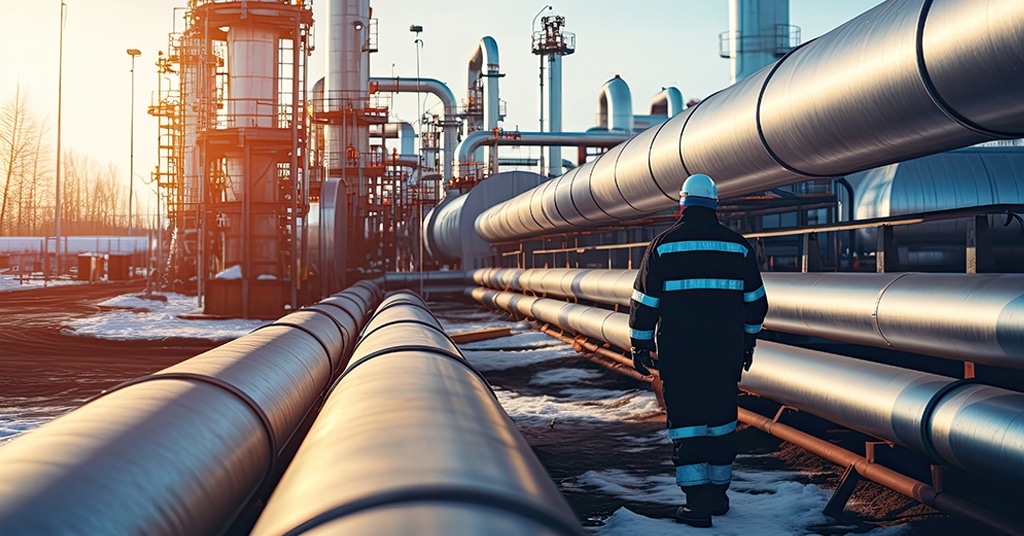
The Nigeria-Morocco gas pipeline has spent almost a decade as one of Africa’s biggest infrastructure ambitions. It is now beginning to look less like a proposal and more like a project that could actually be built.
The biggest step came on July 19, when ECOWAS leaders signed the intergovernmental agreement for the African Atlantic Gas Pipeline. The agreement gives the project a regional legal framework and moves it beyond what was once largely a bilateral project between Nigeria and Morocco. Days later, Morocco confirmed that it was in discussions with the US Export-Import Bank and the World Bank about financing.
The pipeline is expected to stretch about 6,800 kilometres along Africa’s Atlantic coast and carry up to 30 billion cubic metres of gas a year. It is estimated to cost about $26 billion and would eventually connect Morocco to the existing Maghreb-Europe Gas Pipeline and the European gas network.
Those numbers make it an enormous project. But size is not what makes it important.
The bigger opportunity is what happens around the pipeline. If countries along the route use the gas to support power generation, factories and businesses, the project could help make African trade more competitive. If it simply becomes another route for moving gas towards Europe, much of that opportunity will be lost.
The pipeline is only the beginning
Africa does not have a shortage of trade agreements. It has a shortage of infrastructure that makes those agreements useful.
The African Continental Free Trade Area is meant to make it easier for businesses to sell across borders. Yet a company cannot take advantage of a larger African market if it cannot produce goods cheaply or move them reliably from one country to another. Energy is one of the biggest parts of that problem. An unreliable power supply can make a factory expensive to run before transport, customs or financing costs are even considered.
That is where the Nigeria-Morocco pipeline could matter. The project is being developed by Nigeria’s NNPC Limited and Morocco’s National Office of Hydrocarbons and Mines, or ONHYM. Nigeria wants a major new route for its gas, while countries along the corridor could gain access to additional supplies.
Bayo Ojulari, the CEO of NNPC, said the agreement gives the AAGP the “sovereign foundation” required to move from vision to delivery. He said the project is central to bringing about 3 billion cubic feet per day of Nigerian gas to market.

According to Afreximbank, intra-African trade remains relatively small. Total African trade reached about $1.4 trillion in 2025, with intra-African trade accounting for roughly 18 per cent of the total. The opportunity, therefore, is not simply to move more commodities across borders. It is to make it easier for African businesses to produce goods competitively and sell them to other African markets.
The pipeline cannot create that market on its own. It can, however, remove one of the constraints that has held businesses back.
Financing is the first test
The most immediate question is whether the project can raise the money.
At roughly US$26 billion, the pipeline will need a financing structure that can bring together governments, development institutions and private investors. Morocco’s recent discussions with US EXIM and the World Bank show that its sponsors are already looking beyond government funding. According to Youssef Amrani, Morocco’s ambassador to the United States, talks with both institutions are under way.
That distinction matters because political support is not the same as financing.
Lenders will want to know who will pay for construction, who will buy the gas and whether the pipeline can generate enough revenue to cover its costs. They will also want confidence that countries along the route can maintain the agreements needed to operate infrastructure crossing multiple borders.
The July agreement helps because it creates a wider regional framework. But it does not answer those commercial questions. The next important milestone is therefore not another political announcement. It is a financing structure that investors can actually back.
Nigeria has to supply the gas
There is another problem that needs to be addressed. Nigeria needs enough gas to supply the pipeline without leaving its own power plants and industries short.
Nigeria has some of the world’s largest natural gas reserves. But having gas underground is not the same as having enough gas available for export. Production has to rise, processing capacity has to keep pace and the pipelines needed to move the gas must work reliably.
At the same time, Nigeria is trying to use more gas at home. Power generation and industrial users need more reliable supplies, while the country already has existing export commitments.
That creates a difficult calculation for the government. The Nigeria-Morocco pipeline could provide a major new route for monetising Nigerian gas, but only if production expands enough to support domestic demand and the new export market.
Daniel James, an oil and gas analyst, said the issue is not whether Nigeria has enough gas reserves but whether it can turn those reserves into reliable supply.
“Nigeria will need to increase production and invest in the infrastructure needed to process and move that gas. The challenge is doing this while meeting domestic demand and existing export commitments. If Nigeria cannot expand supply, the pipeline risks competing for gas that is already needed elsewhere,” he told Businessfront.
That is why Nigeria’s wider gas infrastructure programme matters. Projects such as the Ajaokuta-Kaduna-Kano pipeline and the Obiafu-Obrikom-Oben pipeline are intended to improve the movement of gas within the country. They are not substitutes for the Nigeria-Morocco pipeline, but they can help connect production to domestic users and the wider gas network.
The real question is therefore not how much gas Nigeria has on paper. It is whether it can produce, process and move enough of it consistently.
The real test is what happens beside the pipeline
The pipeline’s value will depend on what countries build around it.
Gas can supply power plants and provide feedstock for industries such as fertiliser and petrochemicals. But governments cannot simply wait for cheaper gas to attract investors. They need industrial land, reliable electricity networks, roads, ports and efficient customs systems. Businesses also need predictable taxes and regulations before they commit money to factories.
James said those wider conditions will determine how much value countries can extract from the project.
“The pipeline can provide the energy needed to support industrial growth, but it cannot create that growth by itself. Governments need to build the roads, ports, power networks and industrial infrastructure that allow businesses to use the gas productively. If those pieces are missing, countries may gain access to more gas without seeing the wider investment and trade benefits they expect,” he said.
That difference is important. A country can receive more gas and still struggle to build competitive industries if its transport links are poor and its electricity network is unreliable.
The same applies to trade. A manufacturer in Ghana does not gain much from cheaper gas if it remains expensive to move finished goods into Nigeria. A fertiliser producer in Senegal cannot build a regional business if neighbouring markets remain difficult to reach. Energy can remove one cost from the supply chain. It cannot fix the whole chain.
The pipeline needs more than political support
The pipeline will cross a large part of West Africa, making political cooperation and regulation as important as engineering.
Governments will need to maintain agreements on tariffs, regulation, security, environmental approvals and access to the pipeline. They will also need to keep those arrangements stable when governments change. A project of this scale will outlive several political administrations.
The July agreement removes an important institutional hurdle, but the project still has to move through financing, implementation and a final investment decision. NNPC and ONHYM are expected to establish the structures that will oversee the next phase and prepare the project for that decision.
There is also the question of what the pipeline is ultimately designed to achieve.
Europe will be an important market. The connection through Morocco to the existing Maghreb-Europe network gives Nigerian gas a potential route into Europe. But that should not become the only measure of the project’s success.
The stronger case is that the pipeline can serve African markets along the route while also creating another export route. Nigeria gets a new way to monetise its gas. Countries along the corridor get the opportunity to improve energy supply and develop industries. Morocco strengthens its position as a link between West African and European energy markets.
What happens after the pipeline matters most
The Nigeria-Morocco gas pipeline has reached the point where announcements are no longer enough.
The intergovernmental agreement has been signed. Financing discussions have started. The technical work has advanced. The next test is whether those milestones can produce a bankable project, a final investment decision and eventually construction.
But even construction would not guarantee the economic transformation being promised.
The real measure will come years later. It will be whether businesses along the route have reliable energy. Whether factories are built. Whether production becomes more competitive. Whether African companies can sell more to one another.
Africa already has a trade agreement. What it lacks is enough infrastructure to make the promise of that agreement work in practice. The Nigeria-Morocco pipeline could help fill that gap. But its success should not be judged by how much gas it moves. The bigger prize is what African countries are able to build around it.
Credit: Source link