

Nearly 200,000 deportees returned to Haiti amid worsening gang violence
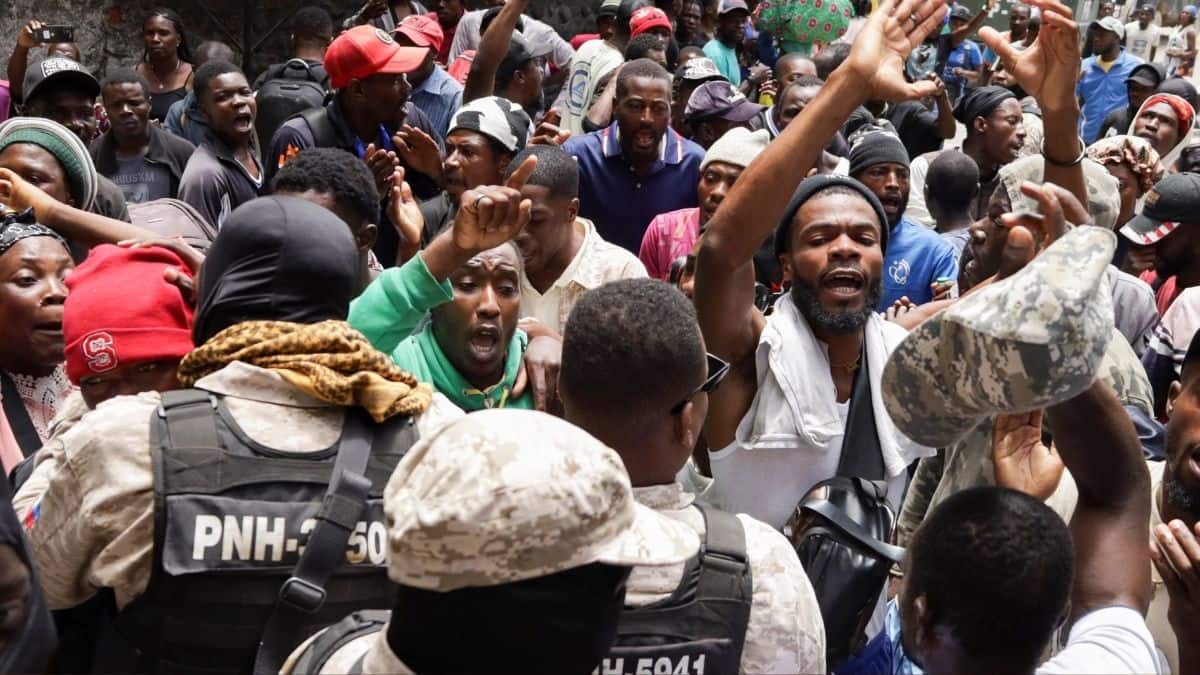
Over 200,000 people were forcibly returned to Haiti in the first eight months of the year as the country faces worsening gang violence and renewed concerns over security ahead of planned elections
Nearly 200,000 people have been forcibly returned to Haiti during the first eight months of this year, a senior UN humanitarian official told the Security Council on Friday, highlighting the growing pressure on a country already grappling with escalating gang violence.
Indrika Ratwatte, the acting assistant secretary-general for humanitarian affairs, said the figure was at least 20,000 higher than during the same period last year.
The latest figures came days after a gang attack near the capital Port-au-Prince killed 47 people, including three boys and two girls. The attack took place in the hillside community of Kenscoff on Sunday, where houses were set on fire and people trying to escape were attacked inside a church.
Gang violence threatens election preparations
Ratwatte briefed the Security Council alongside Carlos Ruiz, head of the UN Integrated Office in Haiti (BINUH). Ruiz warned that preparations for Haiti’s first elections in a decade remain “severely constrained and vulnerable to setbacks” without improved security.
“This latest heartbreaking episode is a stark reminder of the urgent need to further strengthen international security support for Haiti,” Ruiz said.
The Sunday attack came days after Haiti received its first US deportation flight since the Trump administration won a legal battle that ended Temporary Protected Status for around 350,000 Haitians. Another flight carrying migrants from the US and the Bahamas arrived on Thursday.
Haitian security analysts have also warned that the flow of illegal arms into the country is aggravating the conflict, which has claimed more than 21,000 lives since 2022.
The UN estimates that most guns entering Haiti originate from the southeastern United States, although many are trafficked through the land border with the Dominican Republic.
Pressure grows on international security force
Diplomats said the latest attack underscored the need to accelerate the deployment of the UN-backed multinational force tasked with supporting Haitian police in their fight against gangs, whose influence has expanded significantly over the past five years.
Haiti first requested foreign military assistance in 2022, but the deployment was slow to materialise. A year ago, the UN authorised a different and larger force with a more aggressive mandate, known as the Gang Suppression Force (GSF).
The GSF aims to reach a strength of 5,500 troops by fall this year. The Security Council is due to vote on extending its mandate at the end of September.
US urges renewal of GSF mandate
US representative Jennifer Locetta called on the Security Council to renew the force’s mandate.
“The GSF was not created to issue statements from within a compound wall or spend our money while Haiti suffers,” she said, arguing that greater material support from other countries could help Haitian police fight gangs more effectively.
“This attack is precisely why the U.N. authorized Gang Suppression Force’s mission and mandate matters,” she said.
A representative of the Haitian government said Chad, Mongolia and Ivory Coast had agreed to support the force. Discussions were also under way on similar agreements with Sri Lanka, Bangladesh, Jamaica and Guatemala.
Jamaica and Guatemala had already deployed personnel under an earlier version of the force.