

Morocco to Skip Eclipse Prayer Due to Occurrence During Prohibited Prayer Time
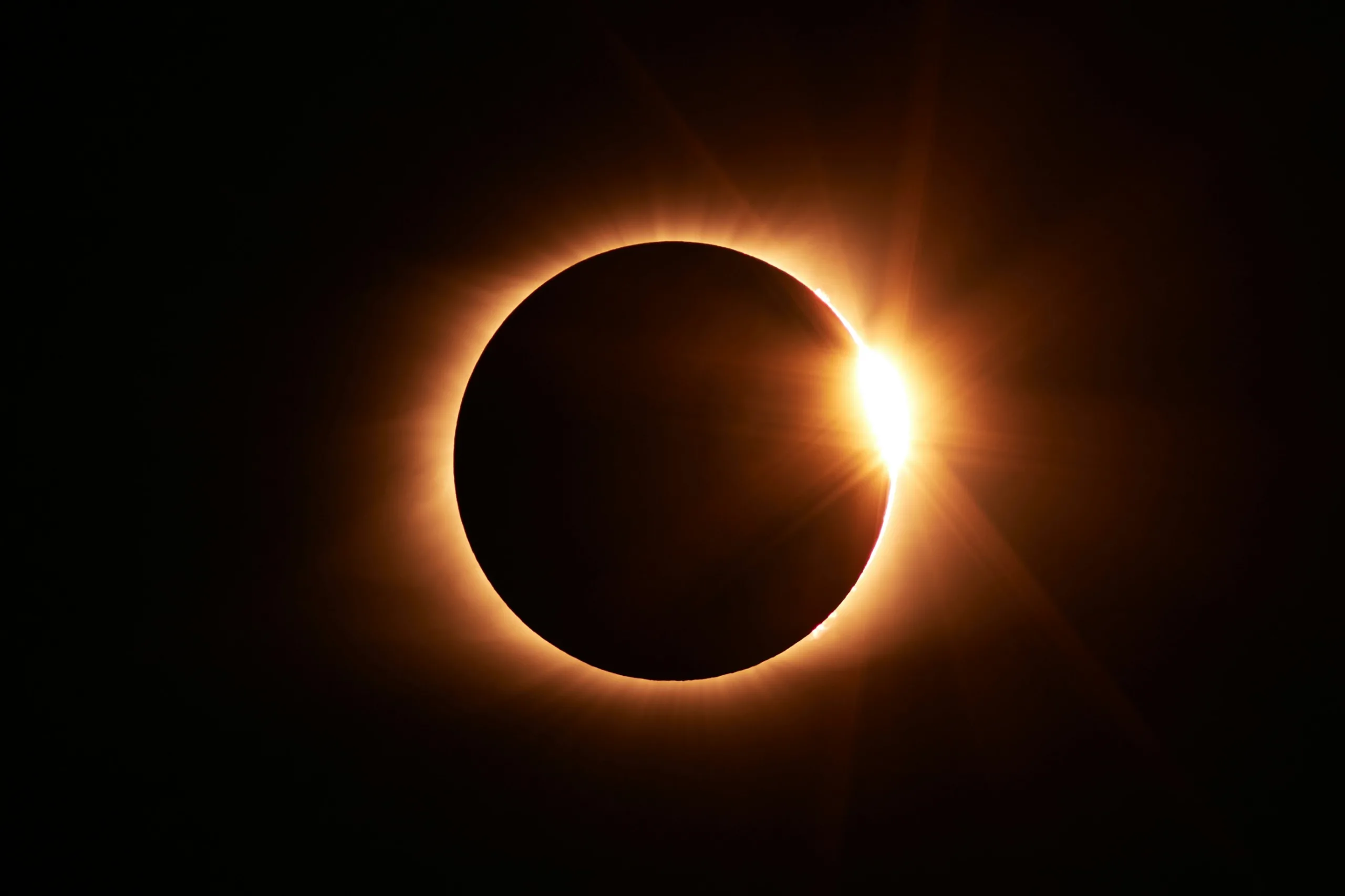
Rabat – Morocco will witness a partial solar eclipse on Wednesday, but no eclipse prayer will be held because of the timing of the phenomenon.
The Ministry of Endowments and Islamic Affairs explained in a statement that under the Maliki school of Islamic jurisprudence, the eclipse prayer is performed during the period when voluntary prayers are permitted, which ends at midday.
Because the eclipse will occur during a period when voluntary prayer is not performed, the ministry said that the eclipse prayer will not be held. Instead, it called on people to turn to supplication and seek forgiveness.
According to astronomers, the eclipse will be visible in parts of Morocco after the Asr afternoon prayer and before sunset.
What is happening in the sky?
A solar eclipse occurs when the Moon passes between the Earth and the Sun, blocking some or all of the Sun’s light from reaching Earth.
Wednesday’s event will be a total solar eclipse in some parts of the world, but Morocco will see only a partial eclipse, meaning the Moon will cover only part of the Sun as seen from the country.
NASA said the August 12 eclipse will cross Greenland, Iceland, northern Russia, the Atlantic Ocean, Spain and a small part of Portugal along its path of totality, while a partial eclipse will be visible across parts of Europe and northwestern Africa.
The eclipse is expected to begin in Morocco in the early evening, with the exact timing and the amount of the Sun covered varying by location. Local astronomical calculations indicate that the partial eclipse will begin at around 6:44 p.m. and reach its peak later in the evening.
During a partial eclipse, the Moon appears to move across the face of the Sun, making the Sun look like a bright disk with a dark section covering part of it.
Doctors’ warning
Although a solar eclipse is a normal astronomical event, looking directly at the Sun during a partial eclipse can seriously damage the eyes.
Eye specialists warn that ordinary sunglasses are not enough to protect against the intense sunlight. Looking directly at the partially eclipsed Sun can cause retinal injury, sometimes without immediate pain or other warning signs. NASA notes that retinal damage can occur without a person feeling it at the time.
People who want to watch the eclipse directly should use special-purpose eclipse glasses or a solar viewer that meets the ISO 12312-2 international safety standard, doctors advise. The American Astronomical Society also advises people to put the protective glasses on before looking toward the Sun and remove them only after looking away.
Credit: Source link