

August 12 Solar Eclipse: Where, When to Watch Across Morocco
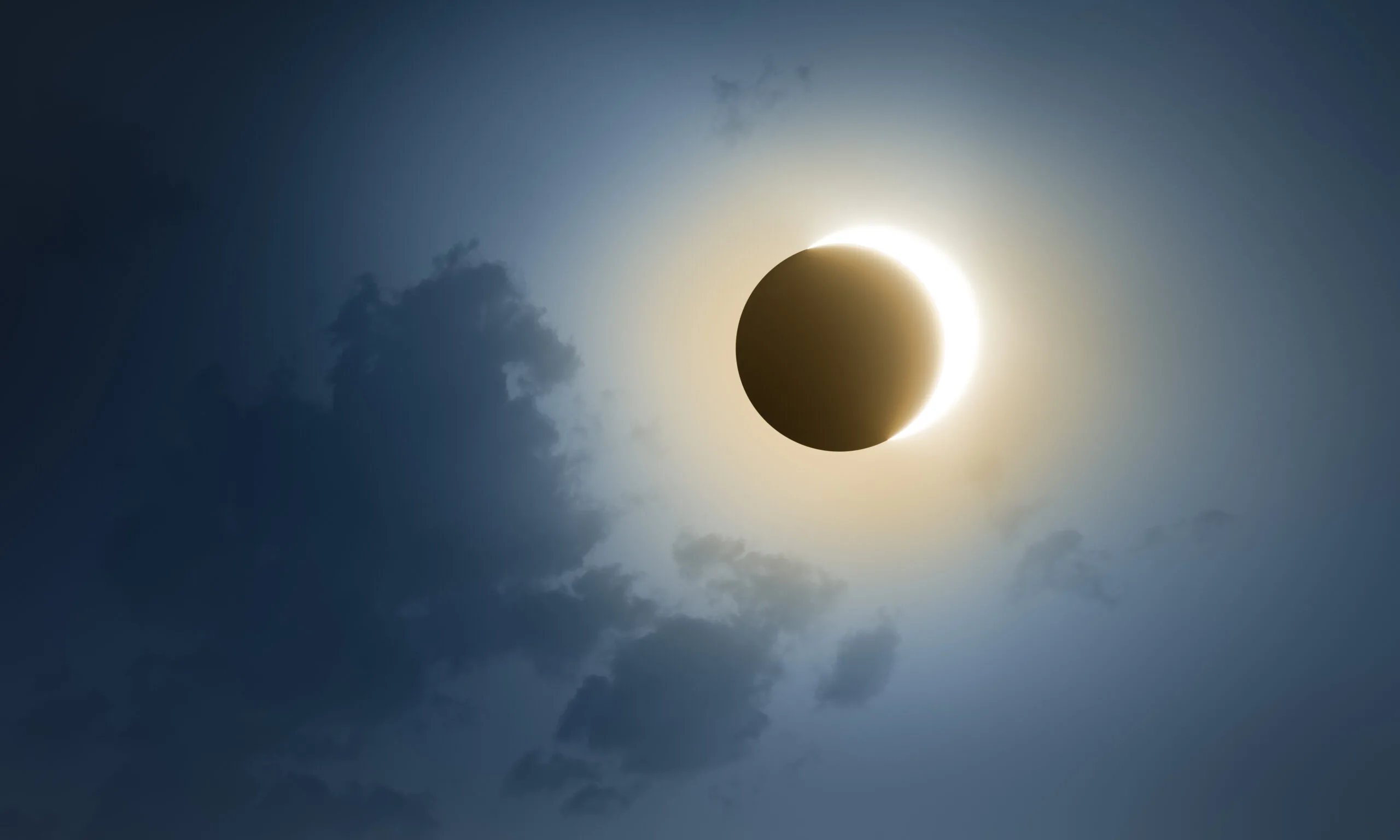
Casablanca – Morocco will witness a partial solar eclipse on August 12. The eclipse will be visible across the country, but northern areas will see the greatest coverage.
The event will begin in Morocco at around 6:44 p.m. local time near Lakhouayyet in the north and end at about 8:40 p.m. near Agadir, according to location-specific eclipse calculations. Because the eclipse occurs late in the day, the Sun will be low in the western sky in many areas and may set while still partly covered.
Tangier will see the strongest eclipse among the major Moroccan cities listed, with about 92% of the Sun obscured. It will begin at 6:44 p.m., reach its maximum at 7:40 p.m. and end at 8:31 p.m., lasting about one hour and 47 minutes.
In Rabat, the eclipse will start at 6:47 p.m., peak at 7:43 p.m. with about 88% coverage, and end at 8:34 p.m. Casablanca will see about 87% coverage, starting at 6:48 p.m., reaching its maximum at 7:43 p.m. and ending at 8:35 p.m.
Fez will have around 90% coverage, from 6:47 p.m. until 8:33 p.m., with the maximum at 7:42 p.m. In Marrakech, about 83% of the Sun will be covered between 6:52 p.m. and 8:38 p.m., with the peak at 7:46 p.m. Meanwhile, Agadir will see around 79% coverage, beginning at 6:54 p.m., reaching maximum coverage at 7:49 p.m. and ending at 8:40 p.m.
Morocco will not experience totality. The Moon will completely cover the Sun along a narrow path crossing northern Russia, Greenland, Iceland, the North Atlantic, northern Spain and a small part of northeastern Portugal.
For anyone watching from Morocco, eye protection is essential. NASA says it is never safe to look directly at the Sun during a partial eclipse without proper protection. Certified eclipse glasses or handheld solar viewers meeting the ISO 12312-2 standard should be used. Regular sunglasses, smoked glass, photographic film and homemade filters are not safe.
People using cameras, binoculars or telescopes also need proper solar filters fitted over the front of the equipment.
The evening timing might also catch people on the road or at the beach. Eclipse glasses should never be worn while driving. Drivers should keep their attention on the road and use a sun visor if the low Sun is in their field of vision.
NASA also advises people who remain outside for extended periods during an eclipse to use sunscreen, wear a hat, and protective clothing to reduce sun exposure.
The eclipse also has a religious dimension, as Muslims traditionally perform Salat al-Kusuf during a solar eclipse. However, the Ministry of Endowments and Islamic Affairs said the prayer will not be held in mosques because the eclipse occurs after Asr, and instead called for supplication and seeking forgiveness.
Credit: Source link