

Morocco Leads Southern Mediterranean in Renewable Energy
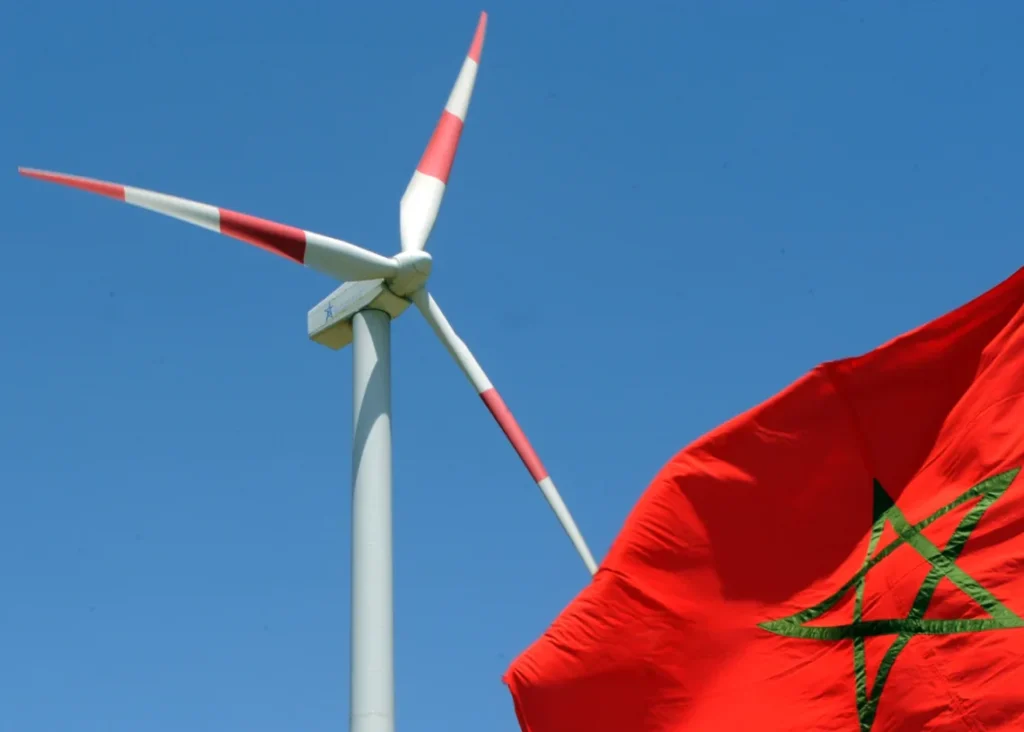
Rabat – Morocco is showing a mixed picture in the green transition, according to a new Eurostat report comparing Morocco with other Southern Mediterranean countries and the European Union.
The country stands out for its strong reliance on renewable sources in primary energy production, but it also remains dependent on energy imports to meet domestic demand.
In 2024, renewable sources accounted for 84.7% of Morocco’s primary energy production. This was by far the strongest renewable share among the Southern Mediterranean countries covered by the report.
Algeria’s primary energy production was based mainly on natural gas, at 58.3%, and crude oil and petroleum products, at 41.7%. Egypt also relied heavily on fossil fuels, with natural gas making up 59.5% of primary energy production and crude oil 32.6% in 2023. Israel was even more dependent on natural gas, which represented 90.3% of its production in 2024.
Morocco’s position was also stronger than Tunisia, where renewables accounted for 16.4% of primary energy production, while Algeria’s renewable share remained very low at around 0.1% to 0.2% between 2015 and 2024.
The European Union had a more diverse energy mix, with renewables making up 48.1% of primary energy production in 2024, alongside 28.2% from nuclear heat.
Morocco’s gains come with an energy dependence problem
The picture changes when looking at the energy Morocco actually uses. The country’s share of renewables in gross final energy consumption reached 11.8% in 2024, its highest level during the 2014 to 2024 period.
Israel increased its share from 3% in 2014 to 8.3% in 2023, while Palestine recorded around 10% to 11% in recent years. Tunisia, after reaching 12.2% in 2020, fell to 5.3% in 2024. The EU reached 25.2% in 2024.
Morocco’s reliance on imported energy has remained a weak point. Eurostat data show that net energy imports increased from 19,457 thousand tons of oil equivalent in 2014 to 21,900 thousand toe in 2024, a rise of 12.6%.
The issue is also linked to the long-running case of La Samir, Morocco’s only oil refinery, which has remained out of operation since August 2015. The refinery’s closure has left Morocco dependent on imports of refined petroleum products rather than domestic refining.
The latest attempt to change that situation faced another setback. On June 16, the House of Councillors rejected a proposal to transfer La Samir’s assets to the state and bring the refinery back under public ownership. The vote came after the Casablanca Commercial Court rejected a roughly $3.5 billion offer from UAE-based MJM Investments in February to acquire the refinery’s industrial assets.
The refinery remains in judicial liquidation, while its future is still being handled through the courts. The Casablanca Commercial Court also extended the period for maintaining La Samir’s activity by four months in May, according to local reports.
Read also: Morocco’s Energy Dependence Back in Focus After SAMIR Revival Bid Fails
Algeria moved in the opposite direction and remained a major energy exporter, recording 90,968 thousand toe in net exports in 2024. Libya also recorded net energy exports over the years for which data were available, while Israel cut its net imports sharply from 15,682 thousand toe in 2014 to 1,083 thousand toe in 2024.
Morocco also recorded progress in water use. Freshwater abstraction fell from 10.2 billion cubic meters in 2015 to 6.7 billion cubic meters in 2021, a 34.4% reduction. Algeria, by comparison, reached 10.4 billion cubic meters in 2024. Jordan saw abstraction rise 19.2% between 2015 and 2023, while Israel remained relatively stable.
At the same time, Morocco’s energy consumption per person increased from 589 kilograms of oil equivalent in 2014 to 643 in 2023, although this remained well below the EU level of 2,888 in 2024
Credit: Source link