

Minerals for peace – or war over minerals in the DR Congo?
What has changed over the decades between Leopold and Trump is the wording (and, fortunately, the methods of coercion): the “fight against the slave trade” has become the need to “stop a machete war”. What remains unchanged is the question of who will control the resources once the dust has settled.
Dependence on mining prevents a way out
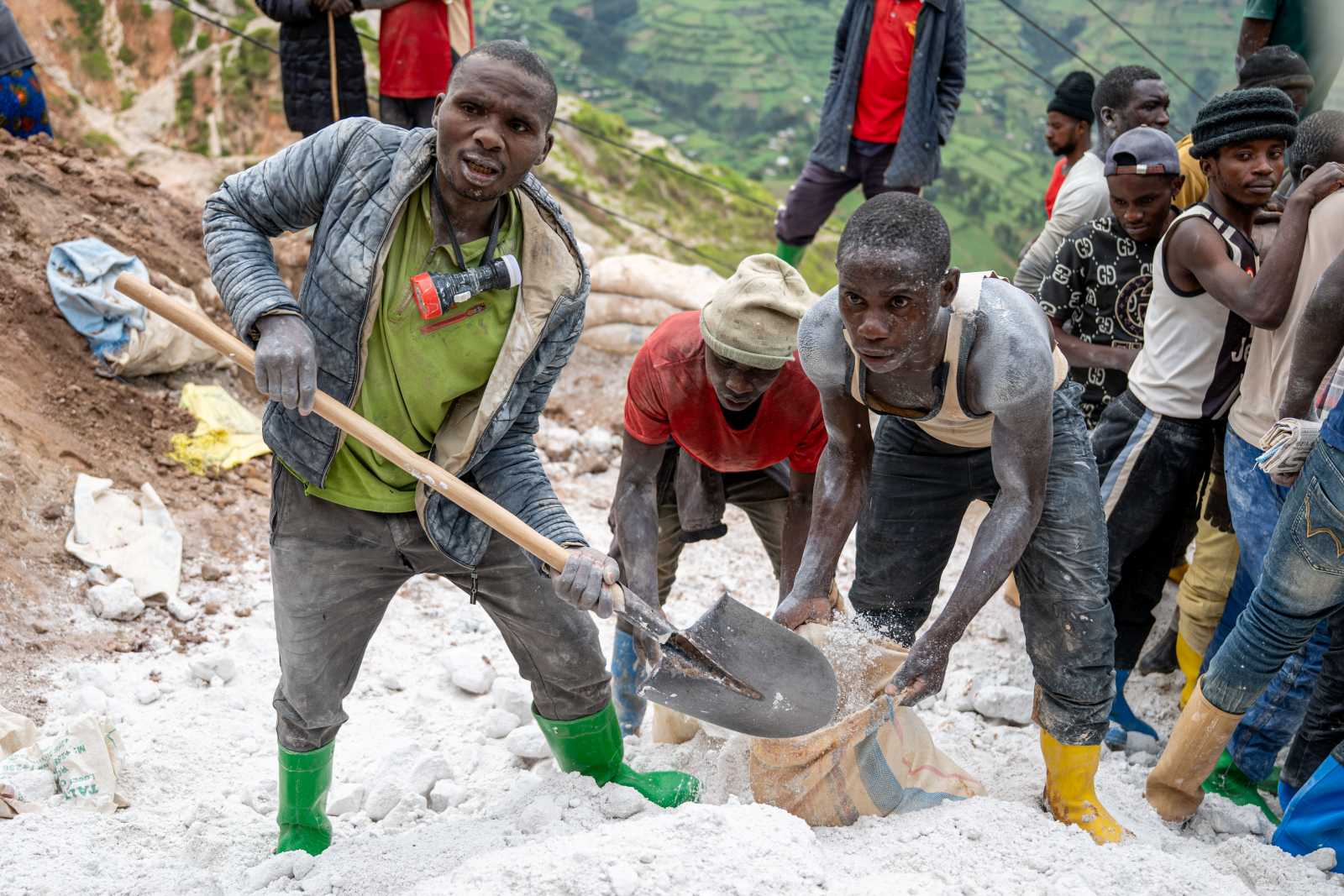
One might wonder why Congolese communities and grassroots movements do not unanimously reject the lies of the extractive industry and those in power who have caused them so much suffering over the decades. In fact, 150 years of exploitative colonialism, followed by decades of predatory governance, have left communities across large parts of the DRC in a structural trap. Mining is not an option they – or their parents or grandparents – have chosen. For many, it is the only thing that protects them from complete isolation and, in the most remote communities, from starvation.
The question that preoccupies these communities – and us as researchers – is whether a future without mining is even possible. Not because mining is a good source of income, but because for many people the alternative is not a diversified economy with a variety of income opportunities: it is hunger and invisibility.
Resource extraction is not synonymous with development. What has happened in the DRC is that around 150 years of deliberate underdevelopment have rendered any alternative structurally inaccessible to millions of people who had no say in shaping the system on which they now depend. This dependence is infrastructural, historical and political in nature. Mining companies and armed groups fill the governance vacuum created by an absent state in different ways: companies build roads on their own terms; armed groups secure loyalty through taxation and protection. Neither serves the communities in the first instance. Both ensure that the communities remain dependent on external actors for access to the most basic necessities of modern life.
Nothing new under the Congolese sun
For the Congolese government, the current instability in the DRC and the motives for signing the “Critical Minerals for Security and Peace’’ agreement brokered by the US go beyond the conflict with the M23. In a regional context marked by a series of coups d’état, fears are growing that a similar situation could be unfolding in the DRC. These concerns are being fuelled by internal protests, territorial battles in the east and an army widely perceived as ineffective. This concern is compounded by the fact that, although the mining sector accounts for more than 95 % of the country’s exports and is estimated to have generated around 30 % of budget revenue last year, the state’s ability to convert this wealth into political stability remains extremely limited.
In this light, the offer to grant the US privileged access to minerals in exchange for diplomatic and security guarantees could be linked just as much to the conflict with the M23 as to the survival of the Tshisekedi regime beyond its two constitutional terms of office. Over the past two years, President Félix Tshisekedi has been preparing a constitutional amendment that could enable him to seek a third term, and the deal with the US serves this ambition. By securing Washington’s support, Tshisekedi gains the external legitimacy and political backing he needs to push through constitutional changes in his own country, as he knows that a powerful ally with an interest in the country’s stability is unlikely to stand in his way.
The US is following a transactional logic whereby democracy is quickly forgotten if it stands in the way of the access of those in power to resources and begins to demand the rights of local communities. If access is guaranteed, however, even an authoritarian regime can seemingly receive all the support it needs to establish and maintain itself.
So far, despite the agreement, the M23 shows little sign of retreating. One wonders whether the DRC will not inherit from its “minerals for peace” deal yet another complex instability, from which a way out could range from extremely difficult to simply impossible.
For the Congolese people, such uncertainties are nothing new. After all, the old myth of “minerals for peace” formed the basis for the DRC’s establishment as a political entity. Disappointment over promises of prosperity is also part of everyday life for the population. In fact, the average Congolese person sees in the news how Congolese minerals are being used in technological marvels around the world. Yet they experience first-hand the reality of a country with one of the lowest Human Development Indices. These lived paradoxes are not mere coincidences of a region suffering from war. They are the predictable consequences of a system designed to extract value from an area rather than invest in it.
Credit: Source link