
Massive power outage hits Cuba as US blockade chokes island
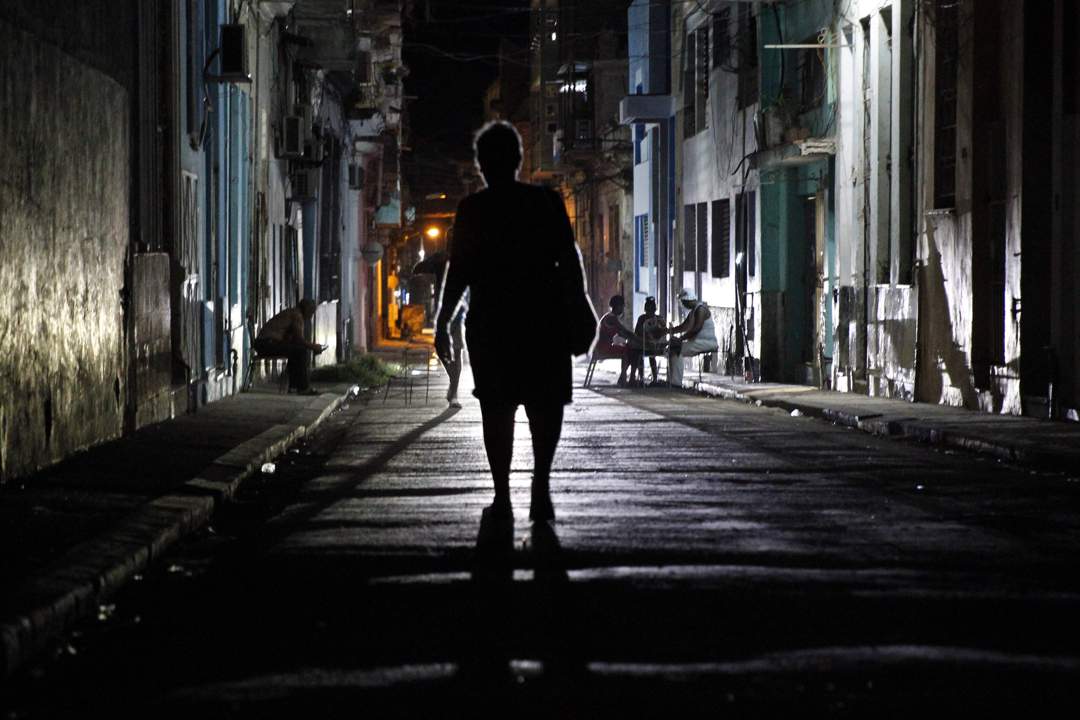
People spend time outside with limited light sources as devastating blackouts continue in Havana, Cuba.
Angelo Mastrascusa/Anadolu via Getty Images
- Cuba suffered a third nationwide power outage of 2026.
- Cuban President Miguel Diaz-Canel directly blamed the US sanctions policy.
- Food, drinking water and medicine are in increasingly short supply.
Cuba on Monday suffered its third nationwide power outage since the start of the year, causing mounting despair in the face of an energy collapse precipitated by a US fuel blockade.
The communist island was already struggling to keep the lights on before US President Donald Trump, in January, cut off its oil supplies, depleting the dwindling supply of fuel for its power plants.
Union Electrica (UNE), the state electricity company, announced a “total disconnection” to the entire island at midday, leaving the communist country’s 9.6 million inhabitants without power while not providing a reason.
It marks the eighth blackout on the island since late 2024.
The lack of fuel “undoubtedly complicates the restoration process”, Lazaro Guerra, director of electricity at the Ministry of Energy and Mines, said on state television late on Monday without giving a timeline for repairs.
READ | Angry Cubans demand electricity as island runs out of fuel amid a US blockade
Cuban President Miguel Diaz-Canel directly blamed the US sanctions policy against the island.
“While the US attempts to trigger social unrest through strangulation by blocking fuel access to Cuba, the UNE is mobilising to reverse the collapse of the National Electric System,” the president said.
He added:
The work being done by electrical workers amidst a genocidal energy blockade is heroic.
This latest blackout comes as the state imposes increasingly draconian power cuts across the country – over 30 hours at a stretch in parts of Havana and over 70 hours in some rural areas – in an increasingly desperate attempt to conserve fuel.
“Living like this is agony,” said Meyboll Font, a 51-year-old self-employed social media community manager.
Font said that her Havana neighbourhood has been surviving on just “three or four hours of power a day”, but that the blackout was worse because “you never know when it (electricity) will return.”
“We have no WiFi, no electricity, we can’t work,” said a young software programmer working for a tourism start-up in another neighbourhood.

Burning piles of garbage fill the streets with smoke during ongoing blackouts and a fuel shortage that has disrupted waste collection services, as seen in Havana, Cuba.
Magdalena Chodownik/Anadolu via Getty Images
Power outages have been a feature of life for years in Cuba, where the electricity generation system, composed mainly of dilapidated Soviet-era plants, is in shambles.
The blackouts and power cuts have accelerated since the fuel blockade began, with authorities citing a lack of fuel to run the generators that prop up the national grid.
Since January, Washington has only allowed one oil tanker, from Russia, to dock in Cuba, as part of a pressure campaign aimed at ending more than six decades of communist rule in Havana.
Trump points to the US overthrow of Venezuela’s socialist president Nicolas Maduro and installation of a Washington-friendly successor as a potential blueprint for what he would like to achieve in Cuba.
Cuba has repeatedly said its political model is not up for discussion and vowed to resist any military invasion.

The US wants former Cuban president Raul Castro in prison.
AP Ramon Espinosa/Pool/Getty Images
The US blockade, coupled with a flurry of sanctions on the Cuban state and foreign companies that do business with it, has nudged a country already mired in a generational crisis closer to collapse.
Food, drinking water and medicine are in increasingly short supply, and some surgeries have been put on hold, prompting the UN to warn of a humanitarian emergency.
Transport on the island has come to a near standstill.
In June, the government unveiled a sweeping package of free-market reforms that, if implemented, would dramatically reduce state control over the economy.
The US State Department dismissed the plans as “superficial smoke signals” and said Trump was holding out for “much more substantial economic and political reforms that would make Cuba investable” and grant Cubans political freedom.
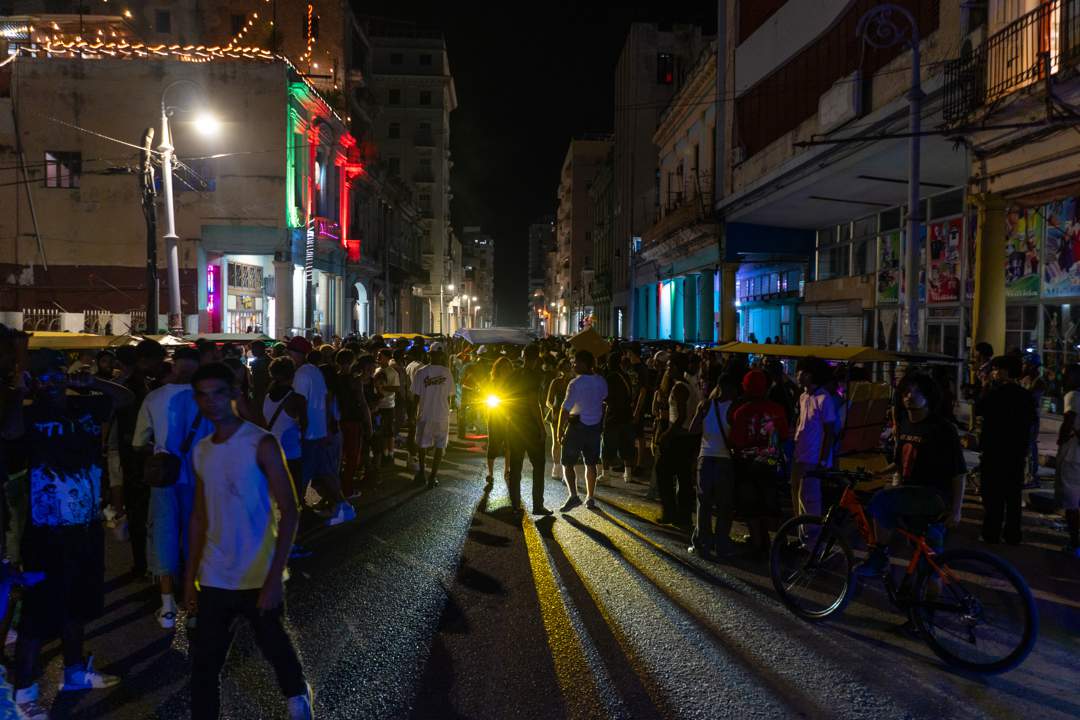
People gather at bars and along the streets as nightlife continues during ongoing blackouts in Havana, Cuba.
Magdalena Chodownik/Anadolu via Getty Images
The two sides have held several rounds of talks, but Cuban Foreign Minister Bruno Rodriguez last week said they had made “no progress” toward ending the impasse.
On Monday, Havana accused Washington of preventing a debate at the United Nations on its oil blockade and sanctions.