

Malian singer Salif Keita cancels South Africa shows over ‘xenophobic violence’
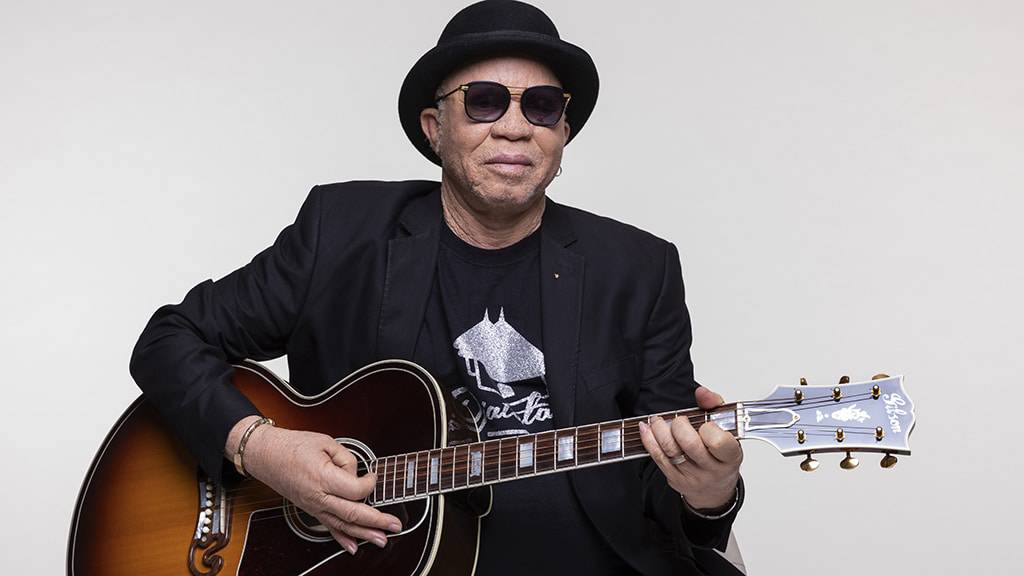
Malian singer and songwriter Salif Keita has cancelled his upcoming commercial performances in South Africa over reports of xenophobic violence against African migrants, his spokesperson confirmed on Wednesday.
The 77-year-old music legend announced the decision in a statement posted on Facebook on Tuesday, saying he could not ignore reports of attacks against migrants amid a series of anti-immigration protests in the country.
“I cannot ignore the reports of xenophobic violence against our African brothers and sisters,” Keita said.
He described the cancellation as a “painful decision”, but stressed that his action was not directed at South Africans or the country itself.
“To be clear, I am not closing the door on South Africa. I am closing the door on violence,” he said.

Keita said the attacks against migrants were incompatible with the South Africa he knew, recalling the country’s history of solidarity with other African nations and its association with the legacy of former President Nelson Mandela.
“When I see migrants being attacked, I don’t see ‘politics’. I see people searching for work, safety, and dignity. That does not match the South Africa I know, the South Africa that stood firm with Mali, and the South Africa that Nelson Mandela built,” he said.
His manager, Carolina Vallejo of One World Records, confirmed the decision to AFP on Wednesday.
Keita did not specify the dates or venues of the commercial performances he cancelled. However, South African media reports said he had been scheduled to perform at the Mangaung African Cultural Festival (Macufe), which is due to take place in September.
‘Closing door on violence’
Keita, widely regarded as one of Africa’s most influential musicians, also recalled his long-standing connection with South Africa and the anti-apartheid struggle.
The singer has a career spanning more than five decades and performed at the 1988 Nelson Mandela 70th Birthday Tribute concert at Wembley Stadium in London, an event held in support of the anti-apartheid movement.
In his statement, Keita drew a connection between that period of solidarity and his decision to speak out against the treatment of African migrants.
He said the same conscience that took him to Wembley in support of Mandela now compelled him to step away from commercial performances in South Africa.
“Colonial borders separate us on a map, but they must never divide our humanity,” he said.
Keita also indicated that his decision was not intended as a permanent rejection of South Africa.
He said he would remain open to performing in non-commercial settings, including townships, where music could contribute to dialogue and healing.
“If there is a stage in a township, I will sing there. If a community needs to be heard, I will listen,” he said.
“When the time is right, I will return, not for applause but for healing, dignity and ubuntu. I step back in love and sorrow,” Keita said, adding that he would sing again when “our shared humanity wins.”
Anti-migrant protests
Keita’s decision comes amid heightened tensions over immigration in South Africa, where anti-immigration groups have staged demonstrations demanding action against undocumented foreign nationals.
Groups including Operation Dudula and March and March have been involved in recent anti-migrant campaigns, with protests and related incidents reported in parts of the country.
South Africa has also witnessed an exodus of migrants in recent months.
More than 160,000 people have left South Africa since late May, including about 1,500 Nigerians.
The departures followed intensified anti-migrant protests and an unofficial 30 June deadline set by fringe anti-foreigner groups for undocumented migrants to leave the country. The exodus has also left some South African businesses, farms and households facing labour shortages.
Keita’s cancellation adds a high-profile cultural dimension to the tensions, with the veteran musician using his withdrawal to draw attention to the treatment of African migrants.
Similarly, this newspaper reported that South African singer Tyla faced backlash in Nigeria after announcing a 22 December concert in Lagos as part of her A*POP World Tour. Angered by reports of xenophobic attacks on Nigerians and other African migrants in South Africa, some Nigerians launched boycott campaigns, while media personality Do2dtun and activist VeryDarkMan called for measures to stop the singer and her team from entering Nigeria. The Lagos date was later removed from Tyla’s tour listings in late July.
The controversy was further fuelled by reports that Nigerian singer Ayra Starr and her team had been denied visas to South Africa for a planned performance, prompting calls for Nigeria to retaliate by restricting South African artistes. However, South African Consul-General Prof. Bobby Moroe said there was no official record of Ayra Starr’s visa rejection and demanded evidence to support the claim.
Discover more from Premium Times Nigeria
Subscribe to get the latest posts sent to your email.
Credit: Source link