

Making Way for the Giant Anteaters of Brazil
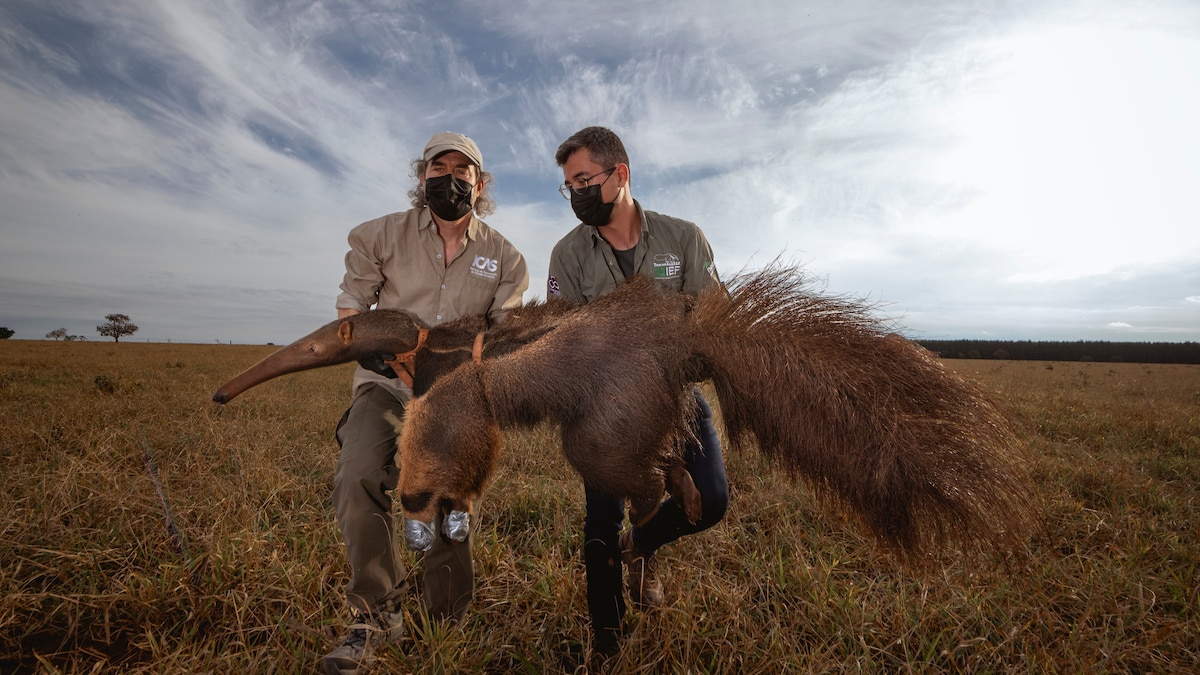
Armed with these arguments, Desbiez and his collaborators have had more success—particularly on BR-262, a major two-lane highway that crosses the Cerrado and the Pantanal, the world’s largest tropical wetland. Crushed animals are so ubiquitous on the notorious road that it’s been dubbed the highway of death, yet this high-speed thoroughfare is rapidly becoming safer. In 2025, the Brazilian Department of Transport Infrastructure and private contractors began retrofitting BR-262 for the sake of wildlife, an initiative that includes more than 100 miles of fencing at roadkill hot spots, 10 new wildlife underpasses, and the modification of dozens of existing bridges and culverts to make them more appealing to animals. Seven new rope bridges will reconnect the forest canopy for howler monkeys and other primates. “With this project, we raise the bar for all sorts of highways in Brazil,” says Fernanda Abra, a road ecologist and National Geographic Explorer who founded ViaFauna, the company that designed the highway of death’s makeover. Abra hopes the plan will motivate other Latin American countries, such as Colombia, Costa Rica, and Mexico, which have lately begun building crossings of their own. “Brazil can be an inspiration for other countries here in Latin America,” she says.
Wildlife crossings and fences alone, for all their virtues, won’t save giant anteaters. They can’t prevent industrial agriculture from overrunning the Cerrado, nor protect wild animals from other threats, like dogs and fires. And some dangerous roads will inevitably remain unredressed. In December 2023, a female anteater was found dead on one of the many unfenced municipal roads in the southeastern state of Minas Gerais—a tragedy compounded by the helpless young pup clinging to her dead mother’s fur. The pup, close to death herself, was transferred to CETAS-Belo Horizonte, one center within Brazil’s growing network of wildlife rehabilitation facilities equipped to care for anteaters, where she was named Cali and fell under the care of Érika Procópio, a veterinarian and rehabber. Cali’s prospects weren’t bright: Her immune system weakened from stress, she developed a fungal infection and lost hair. Improbably, though, Cali hung on, accepting a special cocktail of vitamins, medications, and a blend of goat’s milk and pet kibble—yes, really—formulated by veterinarians. Eventually, she graduated into an open-air paddock and then the wild, where Procópio and her colleagues expect her to thrive and reproduce. “We have very high expectations,” Procópio says.
Jane, the tough young female orphaned by a car, has also flourished amid difficult circumstances. In November 2025, she fled her clear-cut eucalyptus grove and, in the dark of night, ventured onto the same highway that had claimed her mother’s life. Jane survived the crossing and began to walk northeast in search of a vacant territory in which to someday raise pups of her own. As of this spring, she’d covered nearly 20 miles—no small accomplishment in a road-choked world.