

Liberia’s Yellow Machines Test a Bigger Promise | News
Liberia’s ambitious Yellow Machine Program is entering a critical phase, shifting attention from the acquisition of heavy-duty equipment to the more difficult task of developing the skilled workforce, maintenance systems and infrastructure needed to keep the machines operational over the long term.
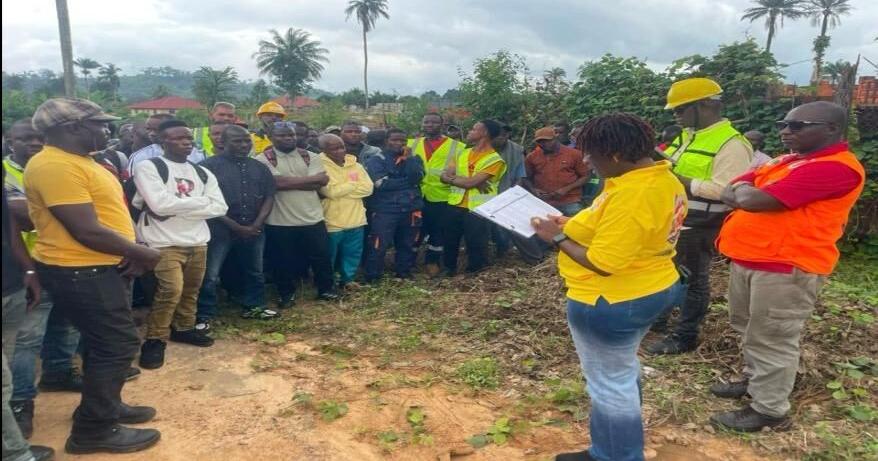
That challenge is becoming evident in Gbalatuah Town, Bong County, where the Ministry of Public Works and the Special Presidential Project Committee for the Yellow Machine Program have commenced a three-day recruitment and practical testing exercise for heavy-duty equipment operators.
The exercise is targeting skilled Liberians, including truck drivers, excavator operators, wheel-loader operators, compactor operators, mechanics, bulldozer operators and other specialists capable of operating and maintaining earth-moving equipment.
The recruitment is intended to identify qualified operators who will eventually manage equipment expected to be deployed across Liberia for road construction and maintenance.
But beyond the immediate recruitment exercise, the program faces a more fundamental question: Can Liberia build the systems necessary to prevent its expensive heavy equipment from becoming idle, poorly maintained or underutilized?
The success of the initiative will depend not only on the number of machines acquired, but also on the availability of trained operators, mechanics, spare parts, fuel, secure storage facilities and predictable funding for maintenance.
Testing Equipment Without the Yellow Machines
Speaking Wednesday, August 26, at the conclusion of the first day of the exercise, Albert Toukolon, Assistant Minister for Community Services at the Ministry of Public Works, said authorities deliberately chose not to use the newly acquired government equipment for the recruitment tests.
Instead, the ministry and its partners are relying on privately owned heavy equipment available in different locations.
Toukolon explained that moving government machinery from one location to another solely for recruitment and testing would be costly and time-consuming.
The approach, however, also underscores the broader demands associated with operating a national fleet of heavy equipment.
Operators must be properly trained and certified, mechanics must be available to service the machines, spare parts must be accessible, and adequate fuel must be provided.
The equipment will also require secure storage, regular preventive maintenance and professional management.
Without those supporting systems, even newly purchased equipment could quickly lose its operational value.
Nearly 144 Applicants in Bong
St. Jerome Larbelee, Deputy Coordinator for Operations of the Special Presidential Committee for the Yellow Machine Program, said approximately 79 people initially applied for the positions in Bong County.
However, following announcements about the testing exercise, additional applicants arrived, potentially bringing the number under consideration to nearly 144.
Larbelee said the committee was determined to give all qualified applicants an opportunity to compete, despite having only three days in each county to conduct practical examinations and interviews.
The objective, he said, is to select the “best of the best.”
The recruitment exercise is also opening opportunities for women to enter technical positions traditionally dominated by men.
Toukolon said several female applicants performed strongly during the first day, although final selections will depend on their technical results.
The emphasis on competence, officials say, is critical to the long-term success of the program.
A road-construction initiative dependent on heavy machinery cannot be sustained through political appointments or connections. It requires technically competent personnel who understand equipment operation, safety standards and maintenance procedures.
Where Will the Machines Be Kept?
Another emerging challenge is the preparation of equipment hubs where the heavy machinery will be stored.
Larbelee said equipment intended for the hub has arrived and that the Armed Forces of Liberia is expected to undertake construction work.
However, additional preparations remain necessary, including clearing the site, establishing a perimeter fence and constructing a security post.
While those tasks may appear administrative, they are central to protecting the government’s investment.
Excavators, bulldozers, graders and loaders are expensive public assets that cannot simply be transported to counties and left exposed.
The program will therefore require clear systems governing where machines are stored, who has authority to deploy them, who maintains them and how their use is monitored.
It also raises questions about the availability of spare parts, fuel financing and the institutional responsibility for equipment that breaks down or remains idle.
Roads as Economic Infrastructure
For Bong County Development Officer Sedekie Kromah, the importance of the Yellow Machine Program extends beyond road construction.
He said improved roads could increase access to health facilities, connect farmers to markets and create conditions for investment and employment.
That argument reflects Liberia’s broader infrastructure challenges, particularly in rural communities.
A reliable road connecting a remote community to a health facility can significantly improve access to healthcare, while farm-to-market roads can reduce transportation difficulties for farmers and improve the movement of agricultural products.
The program therefore has the potential to become an important component of Liberia’s broader economic development strategy.
But that potential will ultimately depend on how effectively the equipment is deployed and maintained.
A machine sitting idle in a compound cannot deliver development. A properly maintained machine operated by a trained professional and deployed according to a transparent national road plan can.
Linking Equipment to Skills Development
One of the applicants, T. Edison Kettor, an excavator operator, described vocational training as an investment in both his future and Liberia’s development.
Kettor said he began practical training in 2016 before attending Booker Washington Institute and completing an internship.
His experience highlights the potential connection between the Yellow Machine Program and Liberia’s vocational education system.
As the government expands its heavy-equipment fleet, the country will need a corresponding increase in trained operators, mechanics and technicians.
This could create an opportunity to strengthen vocational institutions, expand heavy-equipment training and establish apprenticeship programs that allow experienced operators to transfer skills to younger Liberians.
Such an approach could produce a national pool of certified heavy-equipment professionals whose skills remain valuable beyond individual road projects.
Larbelee said millions of dollars have been invested in the equipment, with additional resources being committed to recruitment, testing and deployment.
That level of investment, however, creates an obligation to establish strong systems for protecting and maximizing the value of the public assets.
The program could face a familiar development challenge in Liberia—significant attention and resources at the beginning of a project, followed by inadequate maintenance and funding once the initial political spotlight fades.
To avoid that outcome, authorities could establish transparent equipment inventories, maintenance schedules, operator performance standards and regular public reporting.
County authorities should be able to track which machines have been assigned to them, their operating condition, hours of use and the projects where they are deployed.
There should also be mechanisms for reporting breakdowns, authorizing repairs and tracking the movement and use of equipment.
The Bong County recruitment exercise is therefore more than a three-day employment and skills assessment.
It is an early test of Liberia’s ability to build the human-resource capacity required to operate a growing national road-construction fleet.
The challenge ahead is to build the systems around the machines.
Training without maintenance will not work. Machines without qualified operators will not work. Operators without secure equipment hubs will not work. And road construction without sustainable funding and maintenance will not last.
The government’s success should therefore not be measured simply by how many machines are acquired or displayed during commissioning ceremonies.
The more important measure will be how many remain operational several years from now and how much road infrastructure those machines help create and maintain.
For Liberia, the true test of the Yellow Machine Program will begin after the recruitment teams leave Bong County and public attention shifts elsewhere.
If the equipment remains operational, operators are continuously trained, roads are maintained and communities experience sustained improvements in connectivity, the initiative could become an important pillar of national development.
But if the machines become idle because of inadequate maintenance, fuel shortages, poor management or lack of spare parts, Liberia risks having invested heavily in visible symbols of development without building the systems necessary to sustain them.
The Yellow Machines may be the visible face of Liberia’s road-development strategy. But the real engine of success will be the people, institutions, maintenance systems and long-term financing built around them.
Credit: Source link