

Liberian Rubber Workers Triumphed Against Union Busting
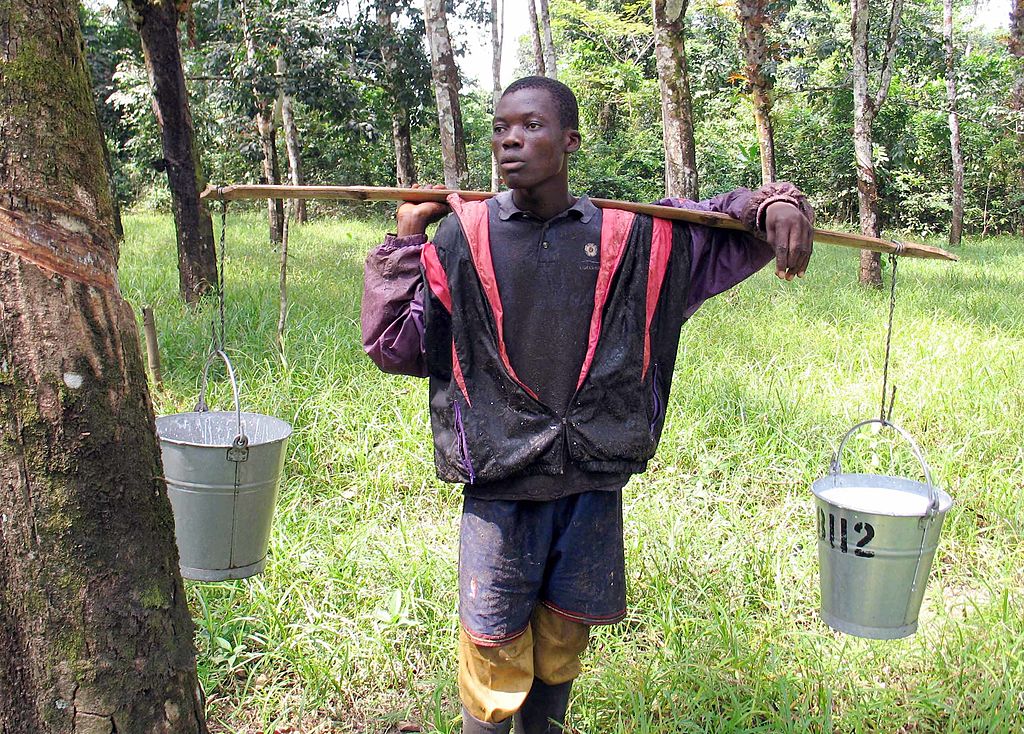
The union hired nineteen external organizers in January 2024 with the sole focus of organizing the four thousand subcontracted workers. Unions from the United States, particularly the United Steelworkers, provided solidarity and support for the organizing effort, including funds, organizing trainings, corporate research, and solidarity videos from US workers.
Facing brutal conditions on the plantation and having already seen the power of the union, the subcontracted workers organized relatively quickly. Workers live in “camps” of run-down, bare-bones housing projects across the plantation, and organizers went camp by camp, summoning all subcontracted workers. For months, organizers trudged across the muddy dirt roads every day to all corners of the eight-mile plantation, talking to subcontracted workers. Within six months, organizers had built an underground organizing committee across the subcontracted portions of the plantation and collected a majority of subcontracted workers’ signatures on a petition demanding union membership. In a race against time to organize the subcontracted workers prior to CBA negotiations scheduled for September 2024, FAWUL submitted a petition to the Liberian Ministry of Labor in August and demanded that Firestone accrete the subcontracted workers into the existing union.
Whereas in many countries the union would know what process to expect upon submitting a union recognition petition, the situation in Liberia was more uncertain. The country’s new president and a new labor minister had just taken office in 2023, and a sweeping new labor law in the form of the Decent Work Act had passed only in 2015. Moreover, due primarily to a brutal history of Western imperialism and exploitation, Liberia is one of the poorest countries in the world, and large corporations often take advantage of the country’s poverty by using money to curry favor with politicians.
On August 16, the Ministry of Labor notified FAWUL that a union election for the subcontracted workers would be held in two weeks, on August 30. On critical election questions, however — such as who would be listed as the employer, the list of eligible voters, specific polling times and locations, and the rules governing the election — the government did not provide specific answers. The union faced the daunting task of preparing the workers for an election without the crucial information it needed, with a nagging worry that perhaps the fix was in for Firestone.
The union’s struggle had become a three-front fight: organizing the workers, pressuring Firestone, and now seeking a fair election from the Liberian government. With increasing urgency, the union made repeated requests to the government for an eligible voter list, polling locations, and election rules, all to no avail. In internal union debates, some workers proposed canceling the election, while others argued that the contract workers were well organized enough to prevail even under extremely unfair election conditions.
Union representatives traveled to the Ministry of Labor office to push for answers just a week prior to the scheduled election but left the meeting in even greater dismay. Most shockingly, the ministry informed the union that a majority of total eligible voters would be needed for the union to win recognition. The union’s expectation, based on prior election experience in Liberia, was that it needed only a majority of those workers who actually voted. Moreover, the ministry stated that it could not provide a list of eligible voters list or poll details yet because the employer had not provided them. Even more than the continued absence of critical information, the implication that the employer would have the right to unilaterally determine the voter list and poll details shocked and outraged the union.
But the union decided to press on. Its attorneys scoured the murky Liberian labor laws, looking for evidence that the proposed election rules did not comply with proper legal protocol. International allies of the union, including labor leaders from the United States, placed calls expressing concern over the undemocratic process. The union held a rally in the middle of the plantation’s central soccer field, bussing in hundreds of workers from across the plantation despite torrential rain. Organizers continued to traverse the plantation camp by camp, motivating the subcontracted workers and informing them that they couldn’t tell them exactly when or where they’d need to vote on August 31, but that they would indeed have to vote.
Credit: Source link