

Liberia Calls for New Global Framework on Poverty Reduction | News
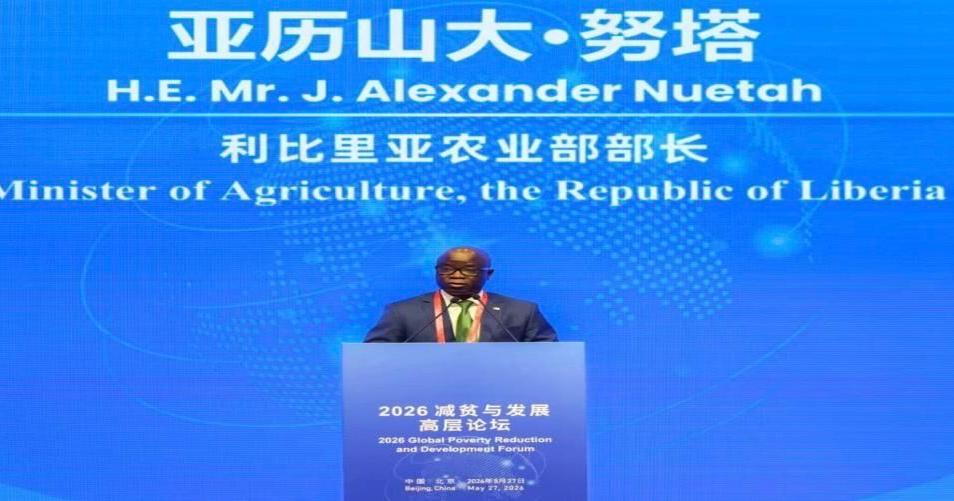
The Agriculture Minister Dr. J. Alexander Nuetah called Tuesday for a “fundamental shift” in global poverty reduction strategy, pressing governments, financial institutions, and the private sector to abandon short-term aid models in favor of long-term investments that create lasting economic opportunity.
Speaking at the First Plenary Session of the Committee of the Global Partnership for Poverty Alleviation and Development (GPPAD) during the 2026 Global Poverty Reduction and Development Forum in Beijing, Nuetah said the international community must move past declarations and deliver “measurable, time-bound actions.”
The GPPAD, launched, is a new international platform jointly established by China, partner countries, and nine international organizations. Its mandate is to strengthen cooperation on poverty reduction, sustainable development, and inclusive economic growth. The 2026 Forum marks the partnership’s inaugural high-level gathering, under the theme “Uniting Global Efforts to Advance Poverty Reduction.”
“What Must We Do Differently?”
Addressing delegates, Minister Nuetah acknowledged global progress but warned that more than 600 million people remain in poverty. Climate change, conflict, inequality, and rising debt burdens are eroding development gains, especially in Sub-Saharan Africa and parts of South Asia.
“While progress has been made, the question before us is no longer whether we should act, but what we must do differently to lift our people out of poverty,” Nuetah said.
Nuetah outlined three critical shifts he said are required to accelerate results: From short-term projects to resilient systems – Build institutions and infrastructure that withstand shocks rather than fund isolated interventions.
From aid dependence to productive investment – Prioritize capital that creates jobs, strengthens value chains, and expands market access.
From national averages to the most vulnerable – Target communities often masked by country-level data to ensure no one is left behind.
“Lasting poverty reduction requires stronger agricultural value chains, improved infrastructure, and investments that create sustainable jobs, particularly for women and young people,” he noted.
The Minister urged increased investment in critical infrastructure, innovative financing mechanisms, and stronger support for women-led enterprises and youth employment. He also emphasized better measurement of outcomes to ensure accountability and impact.
“The tools exist. The knowledge exists. What is needed now is coordination and courage,” Nuetah told the plenary. “Let us make commitments that can be measured, funded, and delivered. Together, we can create a future where no one is left behind.”
Liberia has positioned inclusive agricultural transformation, rural development, food security, and private sector-led investment as central to its national poverty reduction strategy. The country is leveraging its participation in GPPAD to advocate for financing models that align with those priorities.
The 2026 Global Poverty Reduction and Development Forum continue through May 29, with additional sessions focused on climate-resilient agriculture, digital inclusion, and financing for least-developed countries.
Credit: Source link