

Less presence, less protection: the cost of UN peacekeeping cuts
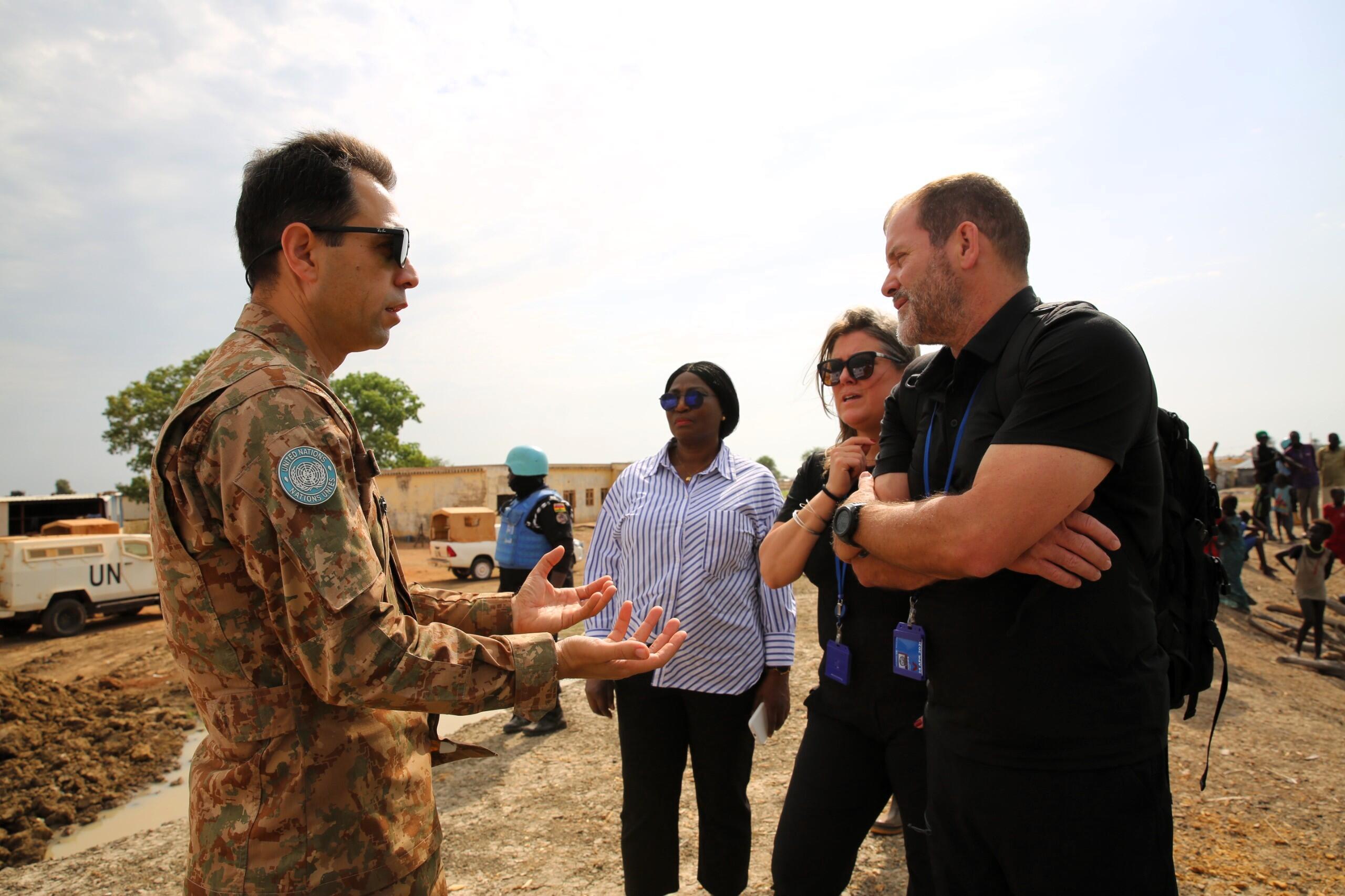
At a recent discussion in Oslo with Norwegian Deputy Foreign Minister, Andreas Motzfeldt Kravik about UN peacekeeping forces, NORCAP experts Lotte Vermeij and Roger Hughes presented some of the findings of their latest report. As part of their NORCAP assignments, they are conducting fieldwork to investigate how budget cuts to UN peacekeeping operations are affecting efforts to protect civilians in conflict zones.
Lotte and Roger’s work is part of NORCAP’s support to UN peacekeeping operations, particularly to strengthen the UN’s efforts to protect civilians, including preventing and protecting against conflict-related sexual violence, and preventing climate change from exacerbating conflict in the countries where the UN operates.
However, what do the cuts mean for the people living in the areas the UN is supposed to protect?
Lotte and Roger have been examining this closely over the past few months. Through field visits and conversations with over 400 colleagues in and around UN operations, they have investigated how the cuts are affecting efforts to promote peace, security, and the protection of civilians.
They have gathered insights from South Sudan (UNMISS), the Central African Republic (MINUSCA), Abyei—the area between Sudan and South Sudan—and the Democratic Republic of the Congo (MONUSCO).
“A lot is changing on the ground,” Lotte Vermeij says.
UN cuts are a security policy challenge
UN peacekeeping operations are one of the tools the international community uses to promote peace and security in conflict zones.
The first UN peacekeeping operation was established in 1948. Since then, more than two million people from over 120 countries have served in UN operations. The UN does not have its own army or police force. Member states provide soldiers and police officers, who serve under UN command. Member states also finance the operations. The UN General Assembly adopts the budgets, and countries are obligated to pay their share.
Today, the UN has 11 active peacekeeping operations. The operations consist of military personnel, police, and civilian staff. Their tasks vary but may include protecting civilians, monitoring ceasefires, supporting local authorities and police, facilitating humanitarian access, and supporting political processes. It is within this system that our experts have examined what happens when the UN has been forced to make drastic cuts.
Andreas Kravik, Deputy Foreign Minister at the Norwegian Ministry of Foreign Affairs, believes this development must be viewed as a security policy challenge. If the UN withdraws from vulnerable areas, it could create more room for instability, extremism, and new conflicts. It could also have consequences for people who are forced to flee.
“This is not a trivial issue. If the UN withdraws and the areas become more vulnerable, that’s hard-nosed security policy,” said Kravik.