

La Grama Makes the Best Colombian Lechona in San José
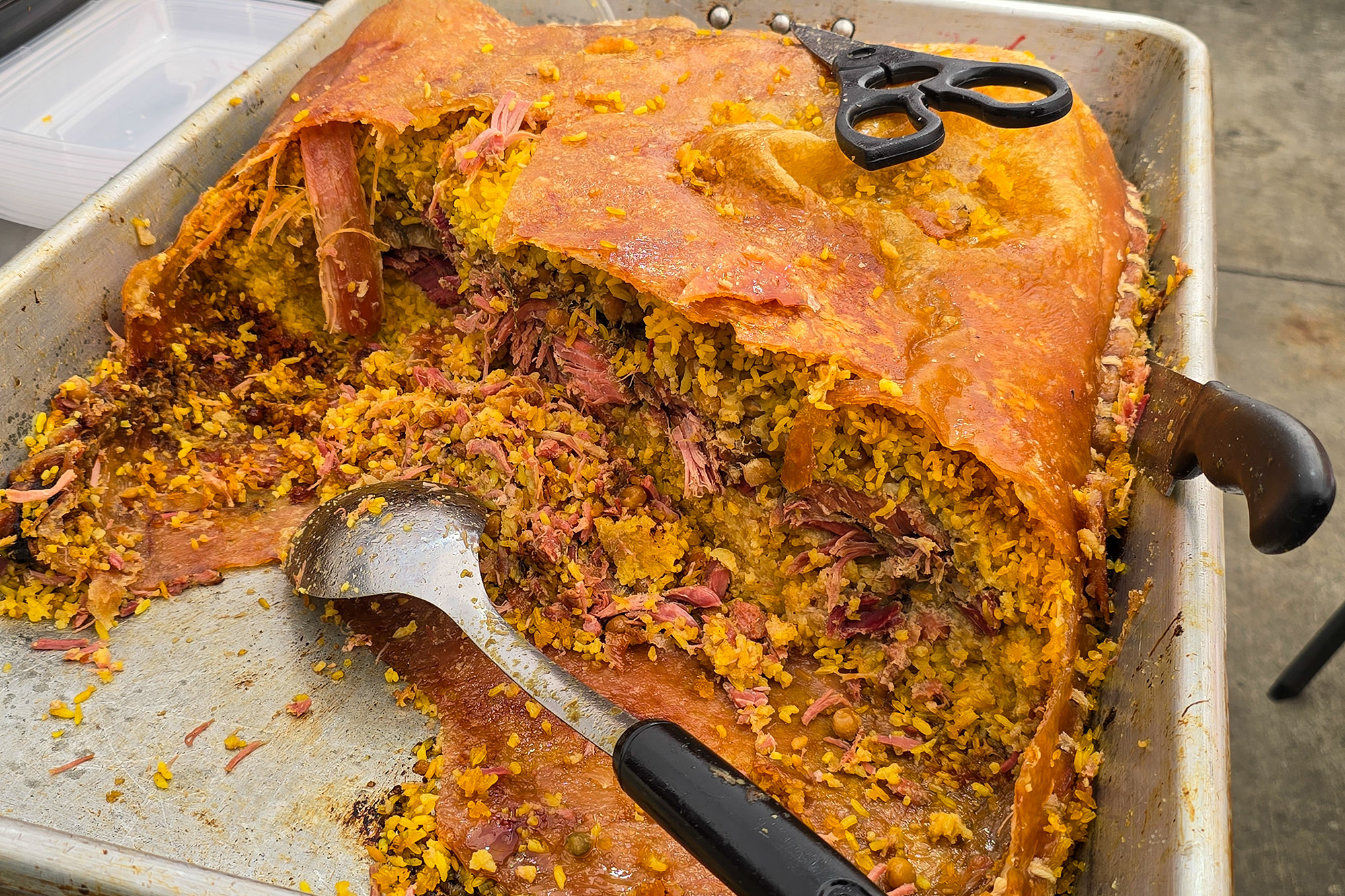
La Grama serves the best lechona in the Bay Area.
A view of La Grama’s lechona, made by stuffing pork, rice and yellow peas inside a pouch made of crispy pig skin. The pop-up is located behind a car dealership in San José. (Octavio Peña)
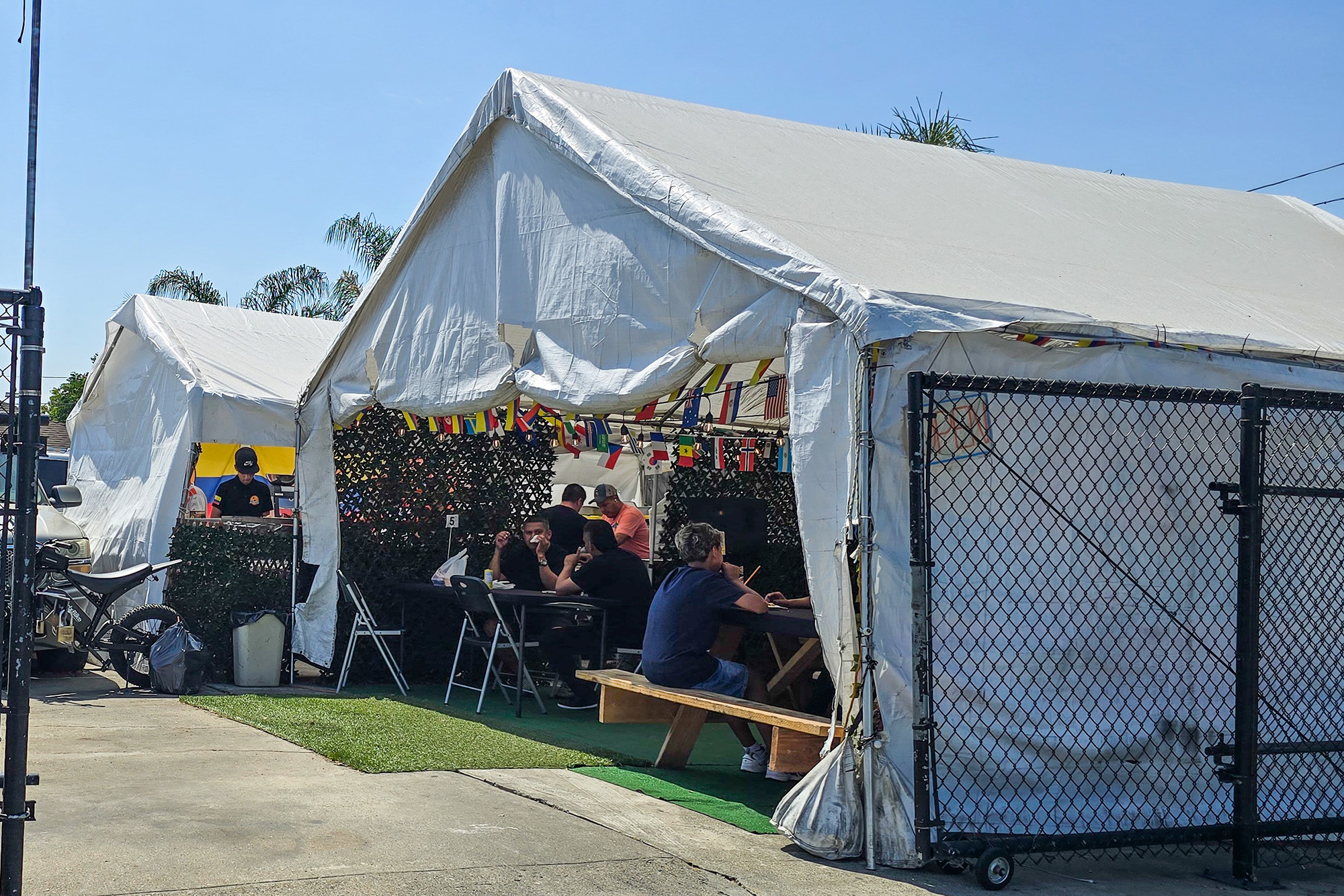
The most exciting food often hides where you least expect it. Say, tucked behind a used car dealership just a few blocks away from the San José DMV. This is where I found La Grama, a pop-up tent serving the best version of Colombian lechona, or crackly-skinned stuffed roast pork, I’ve ever tasted.
The whole operation takes place under a big tent, with the kitchen on one side and a crowded dining area on the other. On my first visit, I had to play a game of musical chairs to snag a seat at one of the picnic tables. All around me, all I could hear was the sound of dozens of people biting into crunchy shards of pork rind.
Owner Augustine Torres moved from Villavicencio, Colombia, to San José in 2022. Together with some friends he knew from back home in Colombia, he started a food truck slinging hot dogs, burgers and picada (a platter of fried meats, plantains and potatoes). Before coming to the U.S., Torres had mostly worked in the cattle industry, but when his associates stepped away from the business, he decided to continue pursuing a food career on his own.
Torres started La Grama in 2023, selling lechona by day and Colombian street food by night. In Colombia, lechona (aka lechona Tolimense), a dish with more than 500 years of history, is often served at weddings and big holiday celebrations. Traditionally, it’s made by stuffing an entire roast pig with rice and yellow peas. Torres mimics the technique to create smaller batches by stuffing everything inside a vessel of crispy pork skin.
“When I first started, I wasn’t making lechona,” says Torres. “I was sourcing it from a friend.”
Eventually, he hired a chef from Colombia to teach him to make the dish over video, developing his own recipe after seven months of experimentation. He begins by marinating pork leg in adobo for two days. Then, rice and yellow peas are stuffed into a giant pouch made by sewing pieces of pork skin together. The whole thing is roasted for eight hours until the skin crisps and the rice and peas get slick from the rendered fat.
Feasting on lechona is a tactile experience. During one visit, I shattered the chicharron with my fingers to dig into the rice and peas. Another time, I used a fragment of skin as a chip and loaded it with filling. Spritzing the whole thing with a lime wedge helps balance out the richness.

It’s safe to say Torres’ lechona has been a hit — he sells 20 trays every weekend. The vast majority of customers are from Colombia, but newcomers to the dish have also wound up enjoying it, Torres says. You can find Colombian lechona, more or less prepared in the same way, in a few spots around the South Bay. At Sabor a la Colombiana, it comes paired with insulsos (steamed corn flour and panela). La Callejera, also in San José, sells an especially flavorful version that’s heavy on the garlic and earthy spices. But La Grama’s version is still my favorite.

Ultimately, Torres aspires to introduce lechona to as many people in the Bay Area as possible. His plans include opening a restaurant someday, but he’s taking things slow. First, he’d like to extend his hours to three days a week and add more charcoal-grilled dishes like punta de anca, burgers and churrascos to the menu. He’s confident, though, that his food will catch on.
After all, he says, “Lechona is the number one pork dish in the world.”
La Grama is open Saturday and Sunday 7:30 a.m.–12 p.m., and also on some Fridays, at 1501 Monterey Rd. in San Jose. Check the pop-up’s Instagram page for the most up-to-date schedule.