

King Mohammed VI Sends Condolences to China and Nepal After Deadly Floods
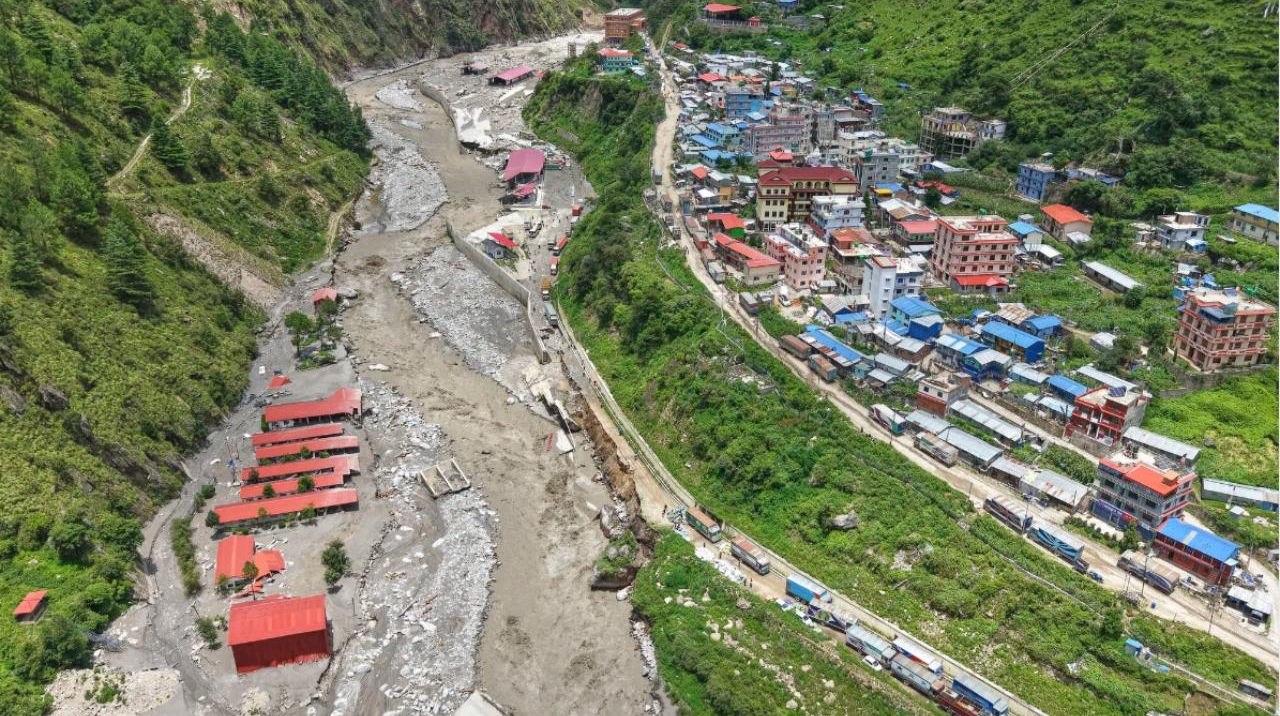
Rabat – King Mohammed VI has sent messages of condolence to the presidents of China and Nepal following devastating flash floods and mudslides that struck areas along the China-Nepal border, killing hundreds and leaving thousands missing.
The King sent a message to Chinese President Xi Jinping, expressing his deep sadness over the disaster and offering his sincere condolences to the Chinese president and people. He also expressed Morocco’s full solidarity with China and his sympathy to the families of the victims.
In a separate message to Nepalese President Ram Chandra Paudel, King Mohammed VI conveyed his heartfelt condolences over the devastating floods and affirmed that Morocco stands with Nepal during the difficult circumstances. He also expressed, on his own behalf and that of the Moroccan people, his sympathy to the bereaved families and the Nepalese people.
The disaster struck on Wednesday in the Himalayan region along the Nepal-Tibet border. A massive torrent of water, rocks, ice and mud swept through valleys in Nepal and Tibet, destroying villages, roads, bridges, and other infrastructure.
Hundreds killed, thousands missing
The death toll continued to rise as rescue teams searched through thick layers of mud and debris.
Reuters reported on Friday that at least 579 people had died in Nepal and seven in China’s Tibet, while 1,924 people remained missing in Nepal and 558 were missing in Tibet. More than 90,000 people were estimated to have been affected by the disaster, according to the Red Cross.
Nepalese authorities have reported different figures as identification and recovery operations continue. The Associated Press reported that more than 3,700 people had been rescued in Nepal, while 3,253 people had been airlifted from affected areas.
Among those missing are hundreds of foreign nationals who were in the region for work, trekking, or pilgrimage. The area is an important route for people traveling toward Mount Kailash in Tibet, a major religious destination for Hindus and Buddhists.
The disaster also destroyed the Gyirong border crossing, an important trade and transit point between China and Nepal. A 21-member Chinese rescue team reached the site on Friday after traveling through forests and across damaged mountain routes. A Chinese rescuer described the area as “nothing but ruins,” according to Reuters.
What caused the floods?
The disaster appears to have begun with a massive rock and glacier collapse in the Himalayas.
Scientists examining satellite images found that bedrock beneath a glacier collapsed, carrying part of the glacier with it. The scale of the collapse was so large that it generated seismic activity equivalent to a magnitude 5.2 event. The falling rock, ice, and water then entered mountain river systems, creating a powerful debris flow that swept downstream through Nepal and Tibet.
Nepalese authorities initially said they were investigating whether an earthquake in Tibet may have triggered the glacial outburst, but officials on both sides of the border had not established a definitive cause.
The disaster has also renewed concerns over the growing risks posed by unstable glaciers and glacial lakes in the Himalayas. Scientists have warned that rising temperatures can contribute to the destabilization of high-altitude ice and rock, although the specific role of climate change in this event remains under investigation.
New flooding threat
The initial flood also created a barrier lake after enormous amounts of debris blocked a river near the border.
The lake became a major concern for rescue teams on Friday after water began overflowing toward downstream rivers. Nepal temporarily suspended rescue operations because of the risk of another surge. Chinese authorities also ordered rescue personnel to withdraw from dangerous areas. Operations resumed after officials determined that the immediate threat had eased.
Nepalese authorities later issued another warning after receiving information that a lake formed near Gyirong in Tibet had burst, with water flowing again toward the affected area. Officials urged rescue workers, security personnel and residents to move to safer locations if necessary.
Chinese authorities have also been closely monitoring the situation. Xinhua reported on Friday that China had deployed 681 firefighters and rescuers, 113 vehicles, and hundreds of pieces of rescue equipment to the Gyirong area. Teams were conducting searches by land and water while drones were being used to survey the disaster zone and monitor the barrier lake.
Chinese President Xi Jinping has ordered stronger monitoring of glacier lakes and landslide risks, as authorities continue rescue operations and assess the possibility of further flooding.
Credit: Source link