
Kenyan truckers threaten to boycott DRC, S. Sudan as insecurity persists
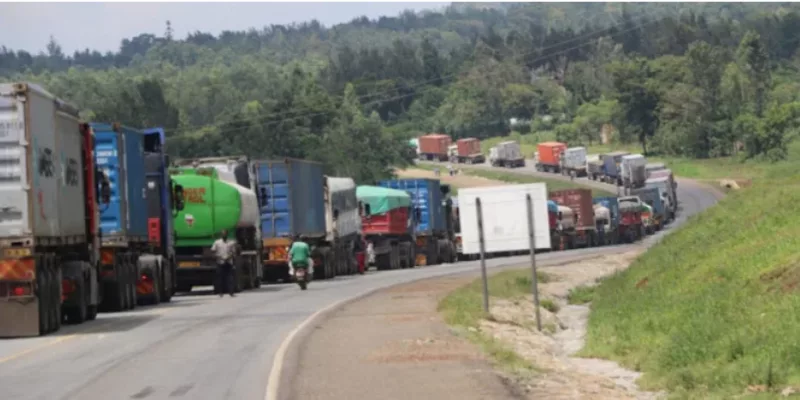

Continued insecurity in the Democratic Republic of Congo
and South Sudan is pushing Kenyan truckers to the brink, with transporters now threatening
to abandon the two critical routes.
They say unless urgent interventions are made to protect
drivers and secure the movement of cargo, they will be forced to terminate journeys
within the Uganda and Rwandan borders.
The warning comes as killings, armed attacks, illegal
roadblocks, extortion and harassment increasingly disrupt operations along the Northern
Corridor, the region’s main trade corridor, raising fears that more
transporters could withdraw from markets that are vital to Kenya’s exports and
the Port of Mombasa.
This, as the Kenyan government moves to overhaul the
Northern Corridor and reverse the growing diversion of transit cargo to
competing regional routes.
Kenyan drivers began grounding vehicles a fortnight ago after
four colleagues were killed by suspected rebels along the Beni-Kisangani route.
Kenya Long Distance Truck Drivers Union official Roman
Waema yesterday said movement remains disrupted, with some trucks parked for
nearly two weeks.
“Our drivers who are in Congo have been forced to park
and wait for almost two weeks now. The situation is not good,” Waema said,
advising drivers yet to enter DRC to avoid the route.
In South Sudan, insecurity also remains a major concern
amid extortion, with drivers also being forced to transport contrabands.
Resolutions reached during a recent meeting between
South Sudan’s Joint Operations Technical Committee, the South Sudan Revenue
Authority and representatives of the East African Community long-distance truck
drivers reveal a long-running dispute over illegal charges, roadblocks, border
controls and security along the Juba-Nimule Highway and other major roads.
One of the key decisions was the creation of a joint
task force to monitor and manage operations along the Juba-Nimule Highway.
The task force
was also tasked with overseeing security measures, controlling illegal
activities and improving coordination between authorities and truck drivers.
The resolutions further directed the immediate removal
of all illegal roadblocks along major highways in South Sudan, while allowing
authorities to designate specific checkpoints for security purposes.
The authorities also agreed to cancel illegal
immigration charges imposed on East African Community citizens and prohibit
fees described as illegal, including manifest fees, traffic fees and collection
activities at specified checkpoints.
For transporters, the resolutions highlight the scale of
the challenges confronting drivers travelling into South Sudan.
However, transporters say commitments made on paper must
now translate into action on the ground.
More than 60 cases involving assaults, extortion,
flogging and other forms of abuse have reportedly been recorded, while foreign
truck drivers are estimated to lose about $500 (Sh 64, 775) in illegal payments
along the 125-kilometre stretch between Aru Junction and Nesitu.
The drivers’ association says at least 10 foreign
truckers have been killed in South Sudan since 2021, while dozens have suffered
gunshot wounds or permanent injuries.
East African Community Affairs Principal Secretary
Caroline Karugu said Kenya had stepped up diplomatic efforts to protect its
truck drivers and traders operating in South Sudan.
She said Kenya and South Sudan have agreed on a
framework to tackle persistent harassment and other trade barriers.
Karugu said South Sudan had also agreed to reduce
security checkpoints, which transporters have identified as major centres for
extortion.
“We were informed that there are more than 11
checkpoints between the Uganda-South Sudan border and the interior. It was
agreed that these checkpoints would be reduced,” she said.
The government estimates that cargo currently takes
about 14 days to move from Kenya to South Sudan, with insecurity, multiple
roadblocks and cumbersome border procedures contributing to delays.
Transporters say the costs are becoming unsustainable.
A truck stuck on the route costs a transporter at least
$247 (about Sh31,998) a day, while cargo owners incur additional demurrage
charges averaging $70 per container per day after the free period expires.
Kenya is seeking to restore the competitiveness of the
Northern Corridor, which handles more than 35.84 million metric tonnes of cargo
annually and accounts for about 80 per cent of Kenya’s transit trade.
The disruption threatens cargo flows from the Port of
Mombasa to DRC, which accounts for 7.2 per cent of transit volumes handled
through the port, making it Kenya’s third-largest transit destination.
Uganda accounts for 83.2 per cent, followed by South
Sudan at 9.9 per cent, while Tanzania and Rwanda account for 3.2 per cent and
2.4 per cent respectively.
The 1,700-kilometre Northern Corridor links Mombasa with
Uganda, Rwanda, Burundi, South Sudan and eastern DRC and is a critical artery
for manufactured goods, food, fuel and industrial inputs.