

João Saldanha: The Man Behind Brazil’s 1970 World Cup Team
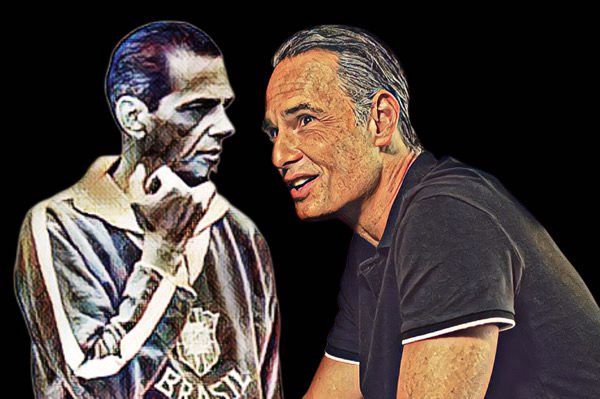
Netflix’s Brazil 70: The Saga of the Three-Time Champions will likely leave many viewers who do not follow football—or who were born decades after the 1970 World Cup—with a simple question: who exactly was João Saldanha, and why is he still remembered more than fifty years after Brazil’s triumph in Mexico?
It is a fair question. After all, the team that won the World Cup was coached by Mário Zagallo. He was the man on the touchline when Pelé, Jairzinho, Tostão, Rivellino, and Carlos Alberto Torres lifted the trophy. Yet it takes only a brief look at the series—or at the history itself—to realize that Saldanha continues to occupy a unique place in Brazil’s collective memory. In many ways, he remains as fascinating as the campaign that made Brazil the first nation to win three World Cups.
The reason goes far beyond football.
To understand who João Saldanha was, it helps to set aside the traditional image of a football manager. He was not simply a coach. He was a journalist, commentator, political activist, intellectual, provocateur, and public figure capable of inspiring admiration and frustration in equal measure. His life intersected with some of the most important and contradictory moments in twentieth-century Brazilian history, which is precisely why his story remains compelling even for those who have never watched a match from that tournament.
Born in Alegrete, in southern Brazil, in 1917 and raised in Rio de Janeiro, Saldanha built a career that seemed improbable even by the standards of his time. Before becoming known as a coach, he established himself as a sports journalist and commentator. He was a keen observer of politics, culture, and international affairs, someone who viewed football as part of society rather than a world apart from it.
That perspective set him apart from many of his contemporaries. While much of sports coverage relied on passion, clichés, and club loyalties, Saldanha preferred analysis. He enjoyed discussing tactics, questioning conventional wisdom, and examining the game through a broader lens. Over time, he became one of the most respected voices in Brazilian football because he seemed to understand that the sport was always connected to larger forces.
But his life extended far beyond the pitch.
Saldanha was a member of the Brazilian Communist Party and never concealed his political beliefs. In a country that would fall under military dictatorship after the 1964 coup, that was not a position without consequences. His name appeared in government security files, and his political activism became inseparable from his public identity.
This is where his story begins to take on almost cinematic dimensions.
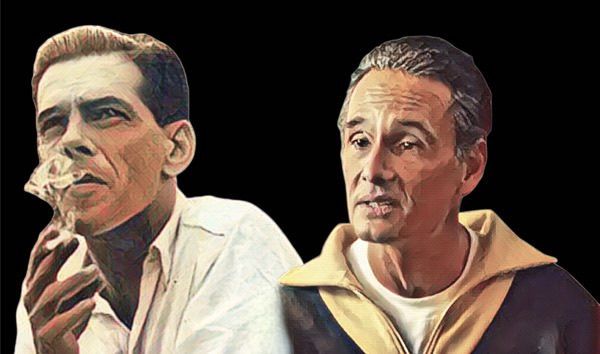
When Brazil suffered a humiliating early exit at the 1966 World Cup, the national team entered a period of crisis. The country needed to be rebuilt, and in 1969, João Saldanha was appointed manager of the Brazilian national team.
The choice seemed risky. He lacked the diplomatic profile favored by football officials and had little interest in softening his opinions. Yet the results were immediate.
Under his leadership, Brazil won every match in the World Cup qualifiers. Six games, six victories. More importantly, he assembled a squad featuring some of the greatest talents in football history. Pelé, Jairzinho, Tostão, Gérson, Rivellino, and Carlos Alberto Torres became the backbone of the team that would captivate the world in Mexico.
But there is another aspect that helps explain why João Saldanha became such a fascinating and controversial figure.
He had a reputation for picking fights.
And not merely in a figurative sense. Throughout his career, he was involved in public arguments, clashes with football officials, confrontations with journalists and several incidents that helped build his image as a volatile and explosive personality. The series itself revisits one of these stories by showing Saldanha coming to blows with a Uruguayan journalist during the World Cup qualifying campaign.
Today, the scene might seem exaggerated or invented to heighten the drama. The problem is that it is entirely consistent with the reputation he had in real life. Saldanha was known for reacting intensely to provocation and rarely backing away from conflict. His personality helped turn him into a captivating figure for journalists and fans alike, but it also created constant tensions behind the scenes of Brazilian football.
It was no coincidence that playwright Nelson Rodrigues helped immortalize the nickname that seemed to describe him perfectly: “João the Fearless.”
The paradox is that the very qualities that made him a charismatic and respected leader also made his position with the national team increasingly difficult. Within a structure dominated by football officials, political interests, and power struggles, Saldanha seemed incapable of avoiding confrontation.
The problem is that he never made it to the World Cup.
Just months before the tournament, he was dismissed.
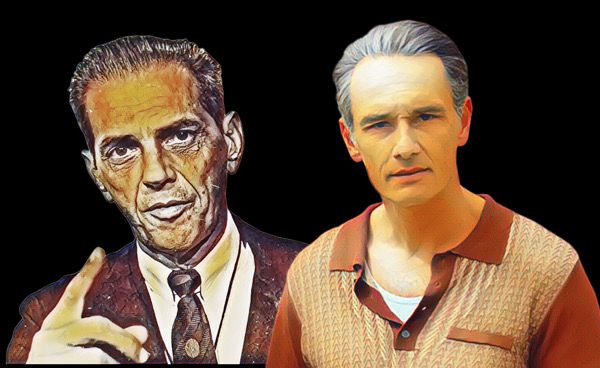
To this day, there is no single explanation for his departure. Some point to tactical disagreements, others to conflicts with football officials, while many historians also see political pressures at work during one of the most turbulent periods in Brazilian history.
It was in this context that one of the most famous quotes in Brazilian football was born.
According to the version that entered popular folklore, when President Emílio Garrastazu Médici attempted to influence matters involving the national team, Saldanha responded:
“The president picks his cabinet, I pick my team.”
Historians still debate whether those were his exact words or whether the phrase evolved over time. Regardless, it perfectly captures the image that endures: a man who refused outside interference and rarely worried about pleasing powerful people.
The historical irony is that the 1970 World Cup would become one of the defining symbols of Brazil’s military dictatorship.
The Médici government heavily promoted the victory as proof of national strength. During a period marked by censorship, repression, and political persecution, images of Pelé and his teammates lifting the Jules Rimet Trophy became part of the regime’s narrative of a united and triumphant nation.
Yet the man who had built much of that team was an outspoken communist.
That contradiction helps explain why João Saldanha continues to attract attention decades later. He occupied an uncomfortable position for everyone involved. He was neither a flawless hero nor a political martyr. He was a complicated figure, often stubborn, frequently difficult, but impossible to ignore.
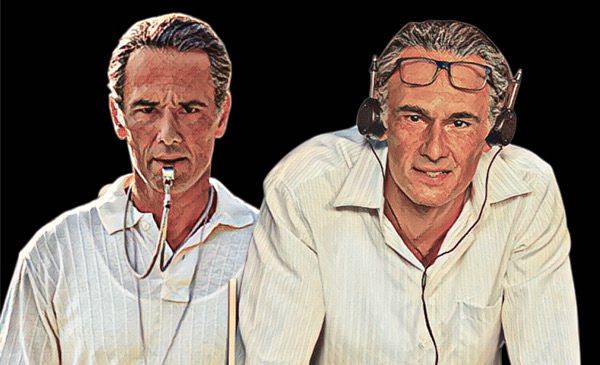
After his dismissal, he followed the World Cup as a commentator. This period becomes one of the most compelling aspects of the Netflix series. Portrayed by Rodrigo Santoro, Saldanha watches from afar as a team that was no longer officially his continues to carry out many of his decisions on the field.
The series presents him almost as a parallel conscience of the tournament. While millions of Brazilians celebrate victories, he comments, analyzes, criticizes, and reflects on a side he helped create.
The production also highlights another essential part of his personality: his sharp wit.
Throughout his career, Saldanha became famous for observations that remain part of Brazilian football culture. Criticizing the obsession with player isolation before matches, he once remarked that “if confinement won games, the prison team would be champions.” Mocking football superstitions, he joked that “if witchcraft won matches, the Bahia State Championship would always end in a tie.”
More than jokes, these remarks revealed a defining aspect of his worldview. Saldanha believed in talent, preparation, and intelligence. He distrusted myths, magical thinking, and empty rhetoric.
Perhaps that is why his story continues to resonate with readers who cannot name a football formation, who have never watched a World Cup final, and who do not follow the sport at all.
João Saldanha is remembered not simply because he played a role in one of Brazil’s greatest sporting achievements. He remains fascinating because he represents something larger. His life brought together politics, journalism, power, culture, dictatorship, media, and sport within a single narrative. Looking at his story means looking at the contradictions of Brazil itself during the 1960s and 1970s.
More than half a century after the triumph in Mexico, the debate over whether Saldanha or Zagallo deserves more credit for the title will probably never be settled. What seems far more interesting is that, in a story filled with legendary players and unforgettable matches, one of its most intriguing characters remains the man who watched the World Cup from outside the dugout.
Descubra mais sobre
Assine para receber nossas notícias mais recentes por e-mail.