

Is Morocco emerging as a new hub for Chinese textile investment?
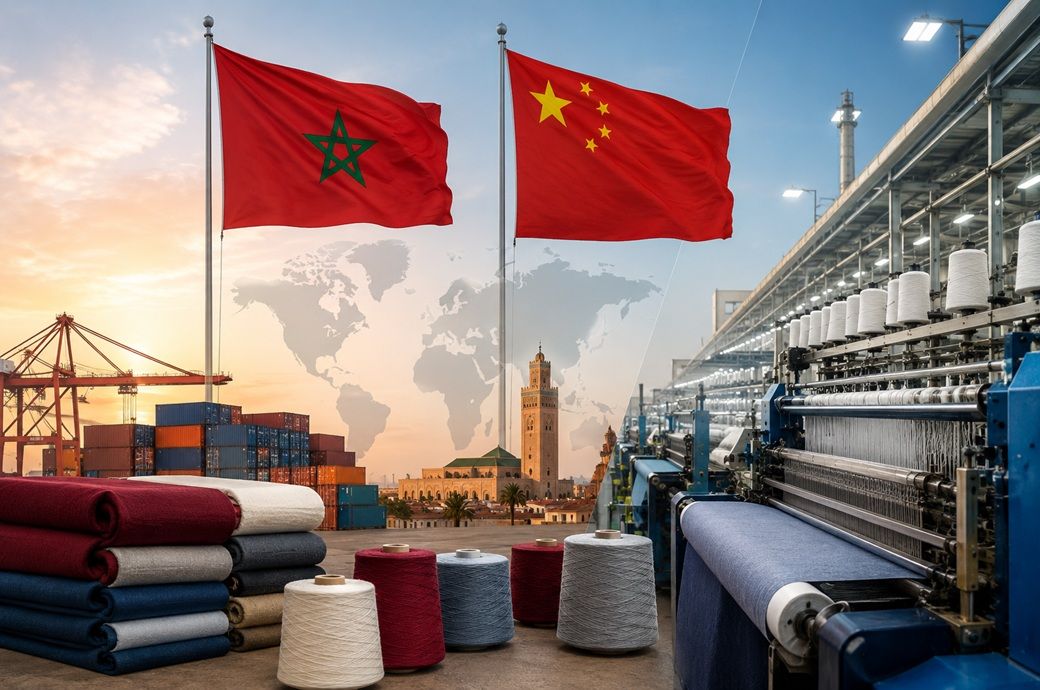
According to the latest media reports, Chinese textile giant Shengtai Intelligent Manufacturing Group is taking a major step towards establishing a green textile manufacturing base in Morocco by securing key regulatory approvals for its planned industrial park.
China’s Shengtai Intelligent Manufacturing Group has secured key Hunan approvals for its planned green textile industrial park in Morocco.
Morocco’s proximity to Europe, trade agreements and textile ecosystem support faster delivery and export-oriented garment manufacturing.
The move points to complementary Chinese capacity closer to Western markets as apparel sourcing fragments.
The company reportedly said its Shengtai (Morocco) Green Textile Industrial Park Project has received an Enterprise Overseas Investment Certificate from the Department of Commerce of Hunan Province, marking a significant milestone for the overseas investment.
The project has also reportedly secured a filing notice from the Hunan Provincial Development and Reform Commission, bringing Shengtai’s ambitious expansion in Morocco a step closer to reality.
It may be mentioned here that Chinese companies have been committing substantial capital to Morocco’s automotive, battery and industrial sectors, attracted by the country’s industrial infrastructure and its access to international markets. Textiles and apparel now appear to be joining this expanding Chinese industrial ecosystem.
However, one might ask why Morocco?
The answer to this lies largely in geography and market access. Morocco is located close to Europe, one of the world’s largest apparel-consuming markets, giving manufacturers a significant advantage in shipping time and supply-chain responsiveness compared with production directly from Asia.
For Chinese textile entities facing rising freight costs, shifting trade policies and growing pressure to diversify supply chains, producing closer to customers can reduce some of these vulnerabilities.
Morocco’s trade agreements are a major draw for exporters, opening the door to Europe and other international markets. Adding to this advantage is an existing textile and apparel ecosystem, particularly geared towards export-oriented garment manufacturing for Europe. The ecosystem reportedly spans knitting, weaving, dyeing and finishing, as well as specialised textile production. While it is not as vertically integrated as the industries in Turkiye or China, Morocco has nevertheless built a broad-based textile ecosystem covering denim, fast fashion, knitwear, home textiles, technical textiles, etc.
Together, these strengths position Morocco as an increasingly attractive nearshoring and export hub.
For Chinese entities, investing in Morocco therefore does not necessarily mean replacing production in China, but rather building complementary overseas capacity by creating an overseas platform for markets where proximity and faster delivery matter.
One cannot also rule out a broader strategic calculation. As global apparel sourcing becomes more fragmented and brands seek suppliers that can offer shorter lead times and diversified production locations, Morocco can serve as a bridge between Chinese industrial capacity and Western consumer markets.
Morocco’s proximity to Europe, trade access and established textile base make it an increasingly attractive nearshoring destination for Chinese manufacturers. If the current momentum continues, textiles and apparel could well become an important part of China’s broader manufacturing footprint in Morocco.
Fibre2Fashion News Desk (DR)
Credit: Source link