

Iraq draws up air defense plan to protect airspace, including oil sites in Kurdistan
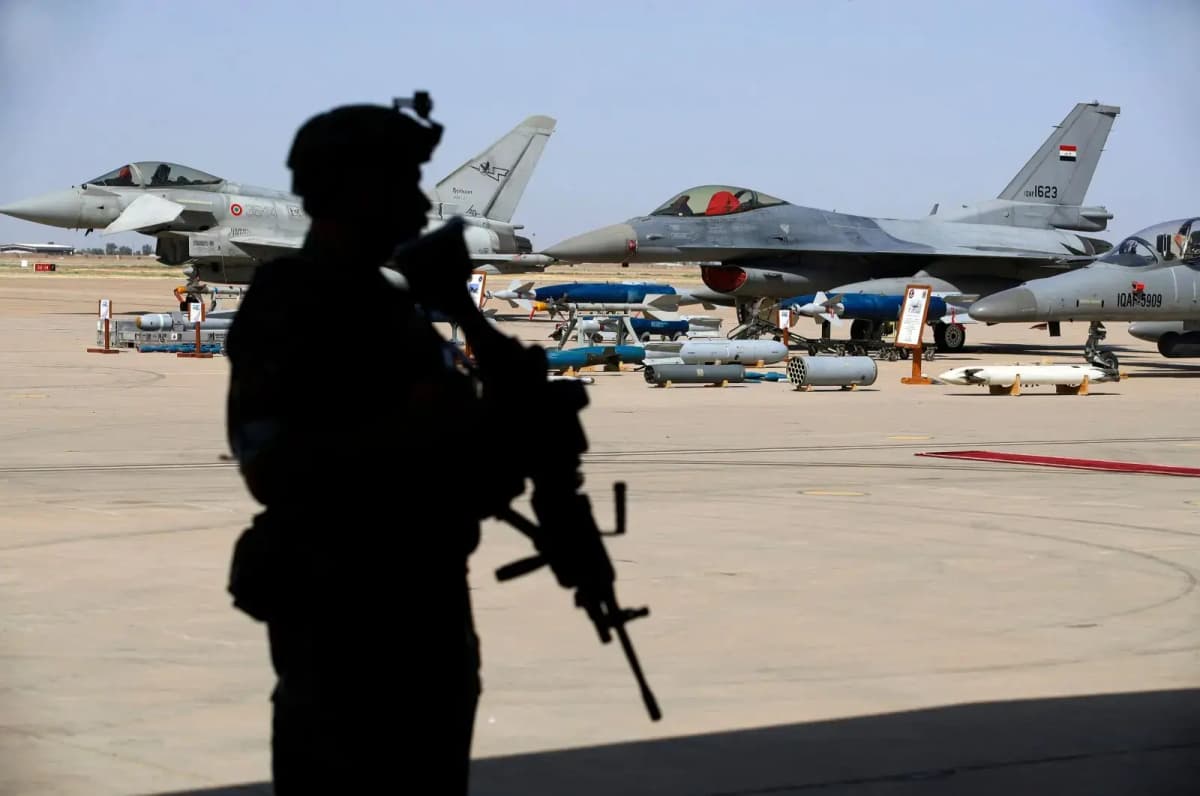
ERBIL, Kurdistan Region – Iraq has drawn up a “tight plan” to safeguard its airspace and protect vital and oil installations, including those in the Kurdistan Region, as Baghdad accelerates efforts to acquire advanced air defense systems amid heightened regional tensions, senior military officials said.
Sabah al-Numan, spokesperson for the commander-in-chief of the Iraqi Armed Forces, told Rudaw’s Shko Omar on Monday that the Air Defense Command had developed “a tight plan to safeguard Iraq’s airspace sovereignty, prevent indirect attacks, and protect vital and oil installations, whether in the Region or in other parts of Iraq.”
“Today, the Air Defense is carrying out a very significant mission and possesses a complete plan and vision,” Numan said.
The accelerated effort follows growing concerns over attacks and violations of Iraqi airspace since the war broke out between the US and Iran in late February. Iraq, including the Kurdistan Region, has also faced the threat of drone and missile attacks by Iran and its aligned armed groups operating within the country.
The attacks targeted US bases, Kurdish opposition groups based in the Region, and energy infrastructure, prompting several international oil companies to suspend operations during the conflict.
Yahya Rasool, spokesperson for the Iraqi Ministry of Defense, told Rudaw that the ministry was working on contracts to purchase advanced air defense systems.
“The Ministry of Defense is actively working on contracts to purchase advanced air defense systems,” Rasool said. He added that the plan had been presented by the army chief of staff to Prime Minister Ali al-Zaidi during his visit to the Air Defense Command in mid-August.
“The Commander-in-Chief instructed that the timeframe be shortened and that steps be taken to acquire reliable air defense systems from reputable, recognized countries,” Rasool said.
In mid-August, Zaidi, in his capacity as commander-in-chief of the armed forces, chaired a meeting with the Air Defense Command to review plans to strengthen Iraq’s air defense capabilities and accelerate the delivery of advanced systems.
The government has shortened an earlier six-year plan to develop Iraq’s air defenses to three years. Numan told Rudaw last month the original plan was scheduled to run from 2026 to 2031.
“The commander-in-chief ordered the establishment of a special fund to finance the air defense sector,” Numan said, adding that the timeline had been reduced “without affecting the technical and technological aspects.”
The accelerated program includes medium- and long-range radar systems, missile forces and advanced command-and-control systems, according to Numan.
“Contracts concluded with reputable international companies are ongoing, in coordination with the finance ministry to allocate the necessary funds to the air defense fund, in order to fully protect Iraq’s airspace sovereignty,” he said.
The Kurdistan Region is expected to benefit from the planned air defense network as part of Iraq’s territory. The systems are also intended to protect strategic infrastructure, including oil and other vital installations across the country.
Iran and Tehran-backed Iraqi armed groups operating under the Islamic Resistance in Iraq (IRI) umbrella have launched roughly 1,000 missiles and drones since the outbreak of the conflict, according to Rudaw tracking through early August.
The push comes as Baghdad prepares for the planned withdrawal of the US-led coalition from Iraq by the end of the month, which will remove some existing air defense capabilities and increase pressure on the Iraqi government to develop an independent system to monitor and defend its airspace.
Iraq’s efforts also follow a series of recent attacks linked to the wider US-Iran confrontation. In late July, the United States and Saudi Arabia struck positions belonging to the Popular Mobilization Forces (PMF) in Baghdad and several other Iraqi provinces. The PMF said at least 20 of its members were killed and 32 wounded, while US Central Command said the strikes targeted “Iran-aligned terrorists” allegedly directed by Iran’s Islamic Revolutionary Guard Corps to attack US forces and Saudi energy infrastructure.