

Iran News in Brief – July 7, 2026
THIS PAGE WILL BE UPDATED WITH THE LATEST NEWS
UPDATE: 8:30 AM CEST
The Tyrant’s Funeral Cannot Bury the Truth

For six days, the clerical regime in Tehran intends to wrap former Supreme Leader Ayatollah Ali Khamenei in the mantle of martyrdom. State-orchestrated crowds, rivers of black-clad mourners, military pageantry, and carefully choreographed displays of devotion will seek to elevate Iran’s Supreme Leader into an icon of Islamic resistance. History demands a very different verdict. Ali Khamenei leaves behind neither a legacy of greatness nor one of statesmanship. He leaves a blood-soaked record of repression, terror, and cruelty that stretches across almost four decades. Behind every carefully rehearsed eulogy stand thousands of shattered families, countless political prisoners, silenced journalists, persecuted women, and innocent civilians whose lives became expendable in pursuit of ideological fanaticism.
The architects of this grotesque spectacle hope the world will remember Khamenei as a defender of Iran. Future generations should remember him as the chief custodian of one of the world’s most brutal theocratic dictatorships. Few episodes illustrate that brutality more starkly than the 1988 massacre of political prisoners. More than 30,000 men and women, many already serving prison sentences, faced summary proceedings in front of infamous “death commissions,” before execution and burial in secret mass graves, simply for swearing allegiance to the main democratic opposition movement—the Peoples Mojahedin of Iran/Mujahedin-e Khalq (PMOI/MEK).
How Iran’s Resistance Units Are Charting the Path to Regime Change
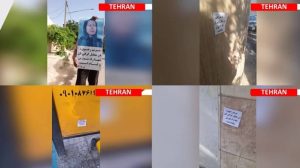
Across Iran, PMOI/MEK Resistance Units are defying the regime’s apparatus of suppression, conveying messages of resistance, and denouncing all forms of dictatorship. On July 5, 2026, these courageous young men and women carried out a widespread campaign of defiance spanning multiple cities across the country, including Tehran, Shiraz, Sanandaj, Bandar Abbas, Sari, Hamedan, Kashan, Azna, Sardasht, and Rudsar. Risking their lives, members installed posters, held large placards, and painted graffiti in public locations. The messages prominently featured slogans such as “Salute to Rajavi,” alongside the emblem of the National Liberation Army of Iran and posters of Maryam Rajavi declaring, “My commitment is an unbreakable pact for the freedom of all the people of Iran.” As the most important organized force within the nationwide uprisings, the Resistance Units continue to ignite the engines of resistance across the country, proving that the Iranian street is highly organized and prepared for change.
These activities are taking place against the backdrop of an accelerating economic collapse. In Tehran, Resistance Units installed placards in multiple locations bearing a stark message: “In the face of the rising cost of bread, the only solution is rebellion and uprising.”
This message directly addresses Iran’s catastrophic economic situation, which state-controlled newspapers are increasingly unable to conceal. On July 1 alone, regime media reported on a collapsing scientific ranking, women vanishing from the labor market, and inflation pushing the middle class into poverty.
Iran: Death and Jail Sentences for Two Women Arrested During January Uprising

Mahnaz Chardouli, who was arrested during the January uprising, has been sentenced by the Tehran Revolutionary Court to death and 10 years in prison.
Her fiancé, Mehdi Nazer, was also sentenced to death, while his sister, Atefeh Nazer, received a 10-year prison sentence. The 15th Branch of the Tehran Revolutionary Court convicted Mahnaz Chardouli on charges including attacking a mosque with Molotov cocktails, participating in unlawful gatherings, and conspiracy against national security, sentencing her to death and 10 years in prison. Her fiancé, Mehdi Nazer, received a death sentence on similar charges.
Atefeh Nazer, Mehdi Nazer’s sister, was sentenced to 10 years in prison in the same case on charges of conspiracy against national security.
However, informed sources stated that on January 11, 2026, when the three were arrested, no public reports documented either a protest gathering or an attack on a mosque. According to these sources, this has raised questions about the evidentiary basis of the case.
Italian Magazine Panorama: Media Hype Around Reza Pahlavi Collided with Iran’s Political Reality
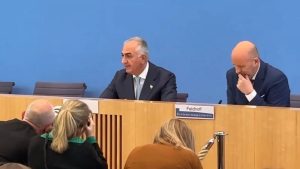
The Italian weekly Panorama has published an analysis arguing that the widespread narrative portraying Reza Pahlavi as the natural alternative to Iran’s ruling regime has failed to reflect the country’s political realities.
According to the publication, the rapid decline in international media attention surrounding Pahlavi demonstrates the risks of constructing political narratives around media visibility rather than developments inside Iran.
Panorama notes that for months Reza Pahlavi was presented through interviews, conferences, official meetings, and extensive media appearances as the figure expected to lead Iran following the fall of the current regime.
According to the publication, this created the impression that Iran’s political future had already been decided and that the son of the country’s last monarch was preparing to assume a leadership role.
Today, however, Panorama observes that Pahlavi has largely disappeared from international headlines. The magazine argues that this sudden silence should prompt a reassessment of the narrative that surrounded him from the outset.
Iran’s Forgotten Generation: Why Millions of Elderly Citizens Are Paying the Price for Decades of Misrule
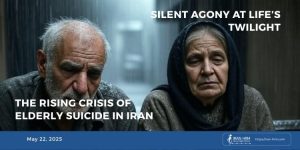
A society is often judged by how it treats its most vulnerable. By that measure, today’s Iran offers a sobering picture.
For millions of elderly Iranians, retirement no longer represents security after a lifetime of work. Instead, it marks the beginning of a daily struggle to afford medicine, food, housing, and basic healthcare. Growing old in Iran has become increasingly synonymous with poverty, chronic illness, and social isolation.
The country’s rapidly aging population is frequently discussed as a demographic challenge. Yet demographics alone do not explain why so many elderly citizens are living in hardship. The deeper problem lies in decades of governance that have consistently placed political and ideological priorities above the welfare of ordinary people.
Recent reports paint an increasingly alarming picture.
According to Iranian media reports citing experts on aging, old age in Iran is becoming inseparable from poverty, loneliness, disability, and declining access to support services. Many elderly citizens suffer from multiple chronic illnesses while simultaneously facing shrinking financial resources and weaker social support networks.
Khamenei’s Funeral: A Billion-Dollar Display of Power That Exposed the Regime’s Growing Isolation
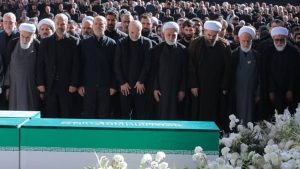
The funeral of former Supreme Leader Ali Khamenei was designed to achieve far more than honoring the regime’s late leader. It was conceived as a carefully orchestrated demonstration of political legitimacy, institutional continuity, and international relevance at one of the most fragile moments in the regime’s history.
Stretching from Tehran to Qom, Mashhad, and even into the Shiite holy cities of Najaf and Karbala, the ceremonies represented one of the largest state-organized mobilization campaigns since the establishment of the regime. Officials claimed that tens of millions of people would participate while hundreds of foreign delegations were invited to attend.
Yet once the ceremonies concluded, a different picture emerged. Behind the spectacle lay unanswered questions about the enormous financial burden imposed on a country already devastated by war and economic collapse. Equally revealing was the limited response from both Iran’s strategic partners abroad and significant segments of its own population.
Rather than demonstrating unquestioned strength, the funeral ultimately highlighted many of the vulnerabilities the regime sought to conceal.
Why a U.S.-Iran Deal Won’t Save the Regime from Its Deepening Internal Crisis

The possibility of renewed negotiations between Tehran and Washington has once again fueled speculation that another diplomatic breakthrough could stabilize the Iranian regime. History, however, suggests otherwise. Even if the two sides reach a temporary or even long-term agreement, the regime’s greatest threat no longer comes from international isolation. It comes from within.
For decades, Western policymakers have viewed Iran’s crises primarily through the lens of sanctions, nuclear negotiations, and regional security. Yet the events of 2026 have exposed a different reality. The regime now faces a profound domestic crisis rooted in declining legitimacy, intensifying factional conflict, economic deterioration, and an increasingly organized society that no longer accepts the status quo.
A diplomatic agreement may postpone confrontation abroad, but it cannot reverse the political dynamics unfolding inside Iran.
The assumption that sanctions relief or normalized relations with the United States could guarantee regime stability misunderstands the nature of today’s crisis.
Iran’s leadership is confronting challenges that no foreign agreement can resolve simultaneously.
British Couple Imprisoned in Evin Prison Remain on Hunger Strike

Lindsay Foreman and Craig Foreman, two British citizens imprisoned in Tehran’s Evin Prison, are continuing their hunger strike in protest against their detention conditions and being denied contact with their family.
According to HRANA, the Human Rights Activists News Agency, Lindsay has been on hunger strike for 49 days and Craig for 58 days. The physical condition of both has reportedly deteriorated. Lindsay has lost more than 14 kilograms, while Craig has lost about 16 kilograms.
Lindsay Foreman is suffering from severe weakness, dizziness, body tremors, low blood sugar, and fluctuating blood pressure. To reach the prison clinic, she must walk a long route that includes a corridor and about 30 steps. She has not received a medical checkup for about 10 days.
The two prisoners have been denied access to essential medication, eyeglasses, books, and hygiene supplies sent by the British Embassy, despite the prison clinic and ward officials having confirmed receipt of these items.
Craig and Lindsay have only been allowed to communicate with their lawyer. They are still not permitted to contact their family members, their children, or even each other.
Dastgerd Prison in Isfahan: The Massacre of Prisoners and the Urgent Need for International Action
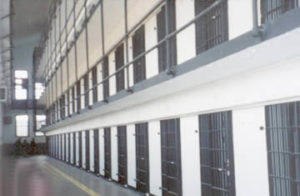
Based on testimonies gathered from eyewitnesses, former detainees, and families of prisoners, the events of March 31, 2026 at Dastgerd Prison in Isfahan constitute grave violations of the right to life, the absolute prohibition of torture and other cruel, inhuman, or degrading treatment or punishment, the right to medical healthcare, the families’ right to know the truth, and the right to an independent and effective investigation.
According to compiled accounts, the crisis at Dastgerd Prison was triggered when projectiles struck a military barracks located directly behind the prison complex, as well as parts of the prison facility itself. However, what transforms this incident into a severe human rights crisis is not merely the explosions and subsequent fire, but the state authorities’ catastrophic and violent response to the prisoners.
Inmates who fled their cells amidst thick smoke, dust, fire, and the imminent fear of structural collapse were not evacuated to a safe zone; instead, they were met with containment, armed blockades, live ammunition, birdshot, tear gas, brutal beatings, and subsequent punitive isolation.
Behind the Slogans Against Trump: Is Tehran’s Menace Driven by Military Might or Domestic Crisis?
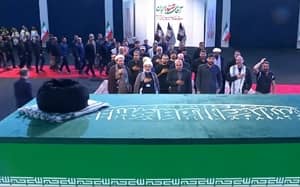
An analysis of the regime’s internal documentation reveals that Tehran’s handling of international issues is less a maneuver of strength and more a structural effort to divert public attention from deep political and economic fractures within the country.
The artificial overcrowding of Tehran’s streets and the giant billboards promising a “harsh revenge” against Donald Trump conceal a key truth. Western observers who view these scenes as a sign of military might overlook an important decoding; confidential documents and realities on the ground demonstrate that this wartime posture is not an offensive strategy, but rather a defensive tool to camouflage a deeper crisis. Behind these cross-border shouts, strictly internal calculations are underway, revealing how the ruling establishment aligns all its equations with the metrics of containing the primary threat to the Islamic Republic—a threat lurking not in Washington, but in the heart of Iran’s alleys and streets.
MEK Supporters in Bucharest Protest Iran Regime Executions with Book Table & Photo Exhibition
Bucharest, Romania – July 4, 2026 – Supporters of the People’s Mojahedin Organization of Iran (PMOI/MEK) organized a photo exhibition accompanied by an information stand to protest the Iranian regime’s escalating use of the death penalty, particularly against political prisoners.
The event called for the complete abolition of capital punishment in Iran and the immediate release of all political detainees, especially those facing imminent execution. Organizers also urged that senior regime officials be held accountable before an international tribunal for crimes against humanity.
Lugano: MEK Supporters Hold Exhibition Condemning Executions in Iran, Urge Action Against Iranian Regime
Lugano, Switzerland – July 4, 2026: Supporters of the People’s Mojahedin Organization of Iran (PMOI/MEK) set up a book table and photo exhibition to protest the execution of PMOI political prisoners, along with protesters arrested in January 2026. The event also expressed solidarity with the “No to Execution” campaign.
The exhibition backed the NCRI President-elect Maryam Rajavi’s “No to Executions” campaign, calling for its global expansion. It also reaffirmed the call for a secular, democratic republic—rejecting both theocracy and monarchy.
Gothenburg Rally Expresses Support for NCRI and Calls for a Democratic Republic in Iran
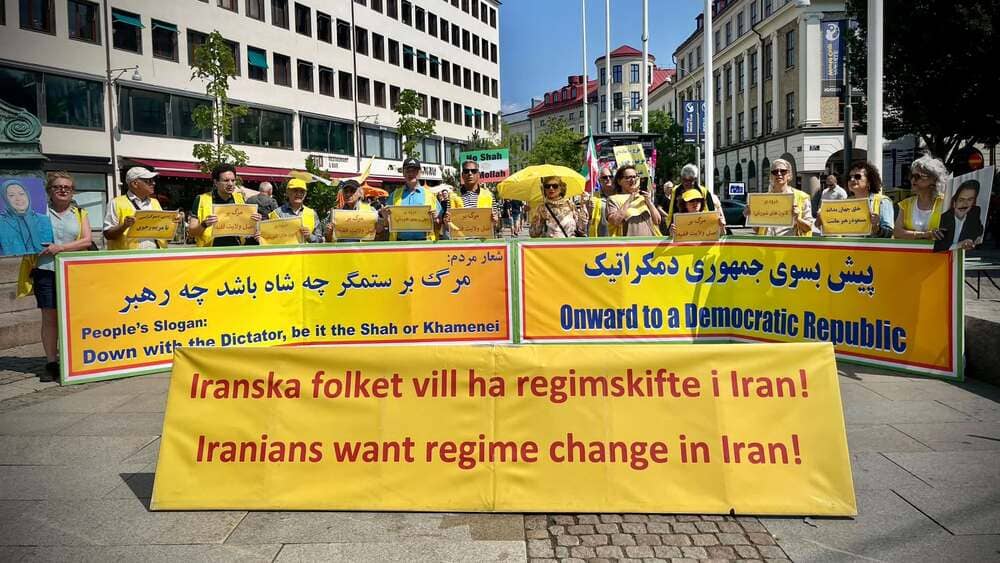
Gothenburg, Sweden — July 4, 2026 — Supporters of the People’s Mojahedin Organization of Iran (PMOI/MEK) gathered in Gothenburg to call for the establishment of a free, democratic republic in Iran and to express their opposition to the country’s ruling clerical regime.
Participants rejected both the former monarchy and the current religious dictatorship, asserting that Iran’s future should be determined through a democratic alternative. They underscored the need for a political transition founded on democratic values and voiced support for the Ten-point plan proposed by Maryam Rajavi, President-elect of the National Council of Resistance of Iran (NCRI), describing it as a framework for a peaceful transition and the establishment of a democratic republic.