

International Youth Day 2026: Sudan’s Next Generation
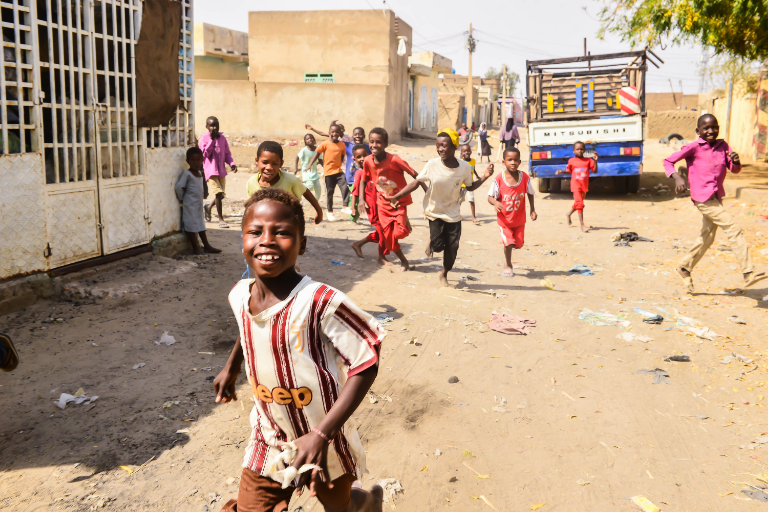
Every August 12th, the world pauses to recognize young people as partners in building a better future. But for Sudan’s youth, International Youth Day 2026 lands in the middle of one of the largest, most under-reported humanitarian crises on earth. This year’s global theme, “Different Contexts, Common Aspirations,” could not be more fitting. Sudanese teenagers and young adults want exactly what young people everywhere want: an education, a job, safety, and a voice in the decisions that shape their lives. What they’re getting instead is war, displacement, hunger, and interrupted schooling on a scale the world has rarely seen.
This blog looks at what International Youth Day 2026 means for Sudan’s next generation, why the international community’s “common aspirations” framing matters right now, and what practical, on-the-ground support can do to help young Sudanese reclaim their futures.
What International Youth Day 2026 Means for Sudan’s Youth
International Youth Day was established by the UN General Assembly to spotlight the challenges and potential of young people worldwide. The 2026 observance is organized around three connected priorities: Global Solidarity, Shared Challenges, and Youth Innovation. It also places specific attention on youth in Least Developed Countries, Landlocked Developing Countries, and Small Island Developing States, which are categories that describe much of Sudan’s current reality, where structural barriers, climate vulnerability, limited economic opportunities, and digital divides continue to shape young people’s lives, according to the UN’s 2026 concept note.
The UN’s accompanying commentary is direct about the stakes: young people everywhere are asking for quality education, decent work, meaningful participation, and a sustainable future, even as their day-to-day circumstances differ wildly. Nowhere is that gap between aspiration and circumstance more visible than in Sudan, where an entire generation is trying to grow up in the middle of active conflict.
Organizations like GAIN are using this year’s observance to highlight what’s possible when young people are treated as consumers, changemakers, and workers rather than passive beneficiaries.
>> Related Post: What Organizations are Currently Providing Aid to Sudan?
The Reality Facing Sudan’s Next Generation in 2026
Sudan’s civil war, now well into its fourth year, has created what UNICEF calls the world’s largest child displacement crisis. The numbers are staggering:
- 33.7 million people (roughly two-thirds of Sudan’s population) need humanitarian assistance in 2026, and 17.3 million of them are children, per UNICEF Sudan’s April 2026 situation report.
- Over 9.1 million people have been internally displaced (one of the highest figures globally).
- More than 5 million children have been forced from their homes since the war began, which is the equivalent of roughly 5,000 children displaced every day, according to a UNICEF press statement, often more than once.
- An estimated 4.2 million children are expected to suffer acute malnutrition in 2026, including more than 825,000 cases of severe acute malnutrition, which is a 13.5 percent increase from 2025, per UNICEF Australia.
- In Darfur alone, of roughly 3.9 million school-aged children, 3.3 million are out of school, according to UNICEF USA’s Sudan Child Alert.
>> Related Post: How Can I Effectively Donate to Charities Supporting Sudan?
Common Aspirations, Uncommon Obstacles
Education Interrupted
Since fighting broke out in April 2023, formal education across large parts of Darfur and Kordofan has essentially ceased. While 65% of schools countrywide were reported open again by January 2026, 7.9 million children remain out of school, according to the Geneva Global Hub for Education in Emergencies. For a generation that will one day need to rebuild Sudan’s institutions, hospitals, and economy, every missed school year compounds a national loss that will outlast the conflict itself.
Livelihoods on Hold
Africa’s youth population (around 532 million people aged 15 to 35) is the largest and fastest-growing in the world, and Sudan’s young people are part of that demographic wave. But war has gutted the entry points into stable work. The UNDP notes that destroyed infrastructure, disrupted education, and a lack of vocational training are severely limiting youth employment and economic independence, even as displaced families cautiously begin returning home. Rebuilding pathways to work isn’t a “nice to have”; it’s central to whether Sudan’s next generation can support itself and its country long-term. Africa Relief’s partners support this kind of capacity-building through programs like career development support for young professionals.
Health and Nutrition Under Siege
Malnutrition, disease outbreaks, and the collapse of healthcare infrastructure disproportionately hit children and adolescents. Reliable access to clean water, sanitation, and emergency medical care is often the difference between a young person surviving this crisis and becoming one of its casualties. Programs addressing water, sanitation, and hygiene and emergency healthcare services are foundational, not optional, to protecting Sudan’s youth.
>> Related Post: Which Organizations are Providing Medical Aid/Healthcare in Sudan?
Global Solidarity Starts With Local Action
The UN’s 2026 theme insists that recognizing different contexts should strengthen, not diminish, global solidarity. That’s a meaningful call, but solidarity only matters if it translates into resources reaching young people where they actually are: displacement camps, under-resourced clinics, and communities cut off from formal aid corridors.
This is where donor support and grassroots humanitarian organizations become essential. Investing in young people during a crisis isn’t just charity. It’s a direct investment in the systems (health, education, food security) that Sudan will need the moment peace becomes possible. Every meal delivered through a hunger relief program, every child vaccinated, and every young person given access to training keeps a small piece of Sudan’s future intact.
SAPA’s Role in Protecting Sudan’s Next Generation This International Youth Day 2026
SAPA is one of the organizations translating “global solidarity” into direct, measurable action for Sudan’s youth. As a humanitarian, physician-led nonprofit, SAPA has built its programs around the same needs highlighted by this year’s International Youth Day theme: health, nutrition, education, and opportunity.
In 2025 alone, SAPA’s network supported over 750,000 patients with medical care, screened 300,000 children for malnutrition, treated 250,000 children under five, and vaccinated 90,000 children, all while supporting 95 healthcare facilities and 1,800 healthcare professionals across Sudan. That work continues through several interconnected programs:
FAQs
1. When is International Youth Day 2026?
International Youth Day is observed globally on August 12, 2026, as it is every year, per the UN’s official event page.
2. What is the theme of International Youth Day 2026?
This year’s theme is “Different Contexts, Common Aspirations,” recognizing that while young people’s realities vary by country, their hopes for dignity, opportunity, and a sustainable future are remarkably similar, as outlined by UN DESA.
3. Why is Sudan relevant to International Youth Day 2026?
Sudan is home to the world’s largest child displacement crisis, with over 5 million children forced from their homes and 17.3 million requiring humanitarian assistance, making its youth population central to this year’s focus on shared global challenges.
4. How many Sudanese children are out of school right now?
Roughly 7.9 million children remain out of school as of early 2026, even after some school reopenings, according to the Geneva Global Hub for Education in Emergencies.
5. What are the biggest challenges facing Sudan’s youth today?
Interrupted education, malnutrition, displacement, limited access to healthcare, and a lack of employment or vocational training pathways are the most pressing issues, compounded by ongoing conflict.
6. How does malnutrition affect Sudan’s children in 2026?
An estimated 4.2 million children are expected to experience acute malnutrition this year, including over 825,000 cases of severe acute malnutrition, a sharp rise from 2025 levels.
7. What organizations are helping Sudan’s youth during this crisis?
Groups such as UNICEF, UNDP, and grassroots humanitarian organizations like SAPA are providing healthcare, nutrition, water and sanitation, and career development support to young Sudanese affected by the conflict.
8. How can I support Sudan’s next generation on International Youth Day?
You can support direct relief efforts, such as SAPA’s Save a Life in Sudan campaign, which funds emergency healthcare, hunger relief, and clean water programs reaching young people and families.
9. Why does youth employment matter for Sudan’s recovery?
With Africa home to the world’s fastest-growing youth population, building employment and vocational pathways now ensures that Sudan has a skilled, capable generation ready to rebuild the country once stability returns.
10. What does “Global Solidarity” mean in the context of International Youth Day 2026?
It refers to the idea that sustainable development is a shared international responsibility that supporting young people facing the greatest barriers, like those in Sudan, requires cooperation, funding, and sustained attention from the global community, not just local actors.
Related
Credit: Source link