

Inside Cuba’s Worsening Power Crisis: What South Florida Families Should Know Right Now
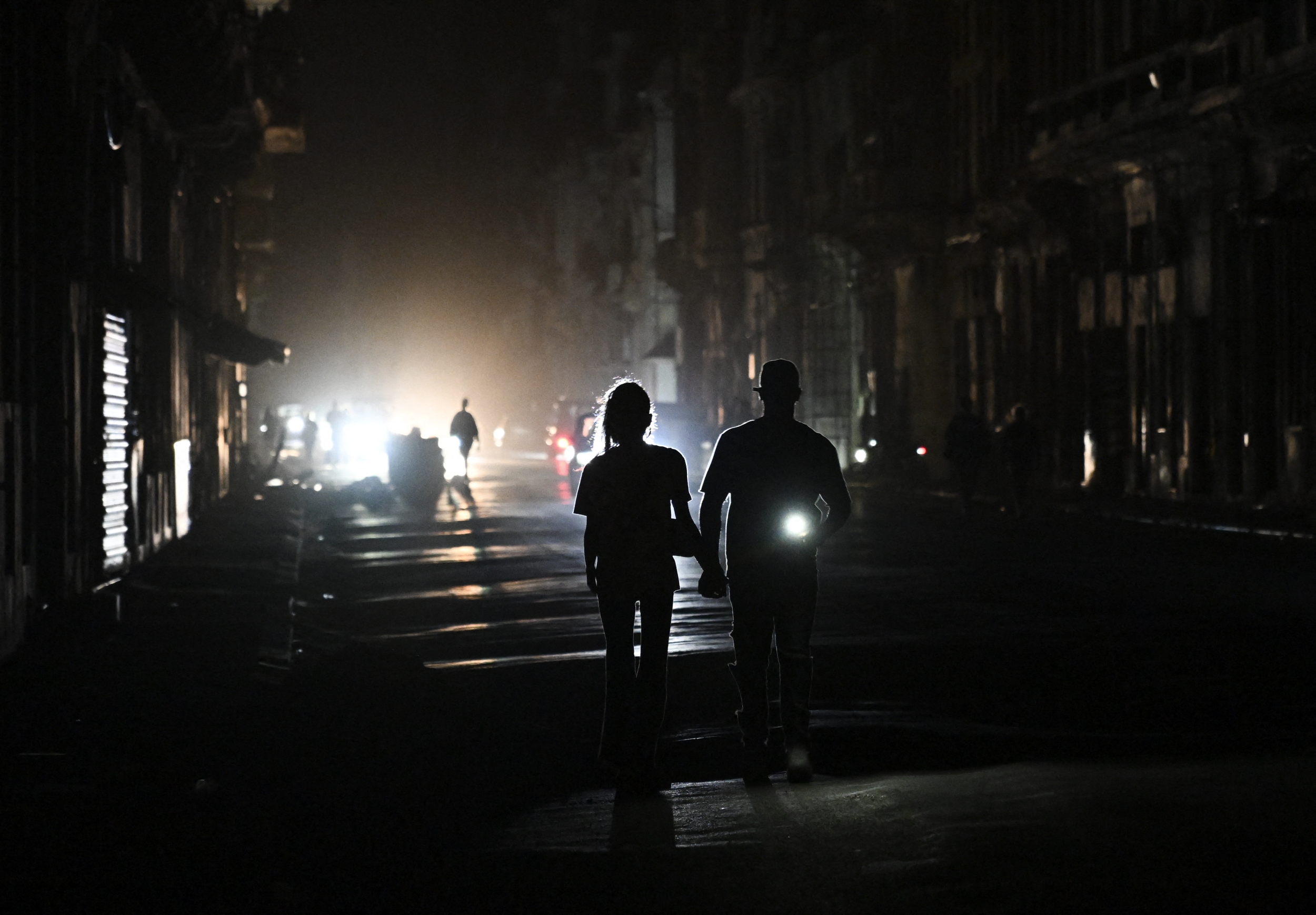
by Yamil LAGE / AFP via Getty Images
A missing 2,000 megawatts sounds abstract until it becomes a busy signal. That is what Cuba’s state utility told the country to expect for Friday night, and for Cuban families scattered across Hialeah, Little Havana and the rest of Miami-Dade, the number translates instantly into something familiar: another evening of unanswered calls, unread WhatsApp messages and a wait to find out whether relatives, and the cell towers that depend on the same failing grid, have come back online.
A Shortfall That Keeps Beating Its Own Predictions
The state-run Unión Eléctrica put Friday’s numbers plainly: only 1,330 megawatts of generation against 3,300 megawatts of expected demand, a gap large enough to strand most of the country once the dinner-hour peak hits. It would have been grim news on its own, but Thursday had already broken its own forecast first. Planners had penciled in a deficit in the low 2,100s; instead the shortfall climbed to 2,267 megawatts by 8:40 p.m., pushed there when a generating unit at the Cienfuegos plant and another at Felton both dropped out of service within hours of each other, extending an outage that lasted the full day.
An Aging Fleet Running Out of Parts and Fuel
Behind the megawatt math sits a physical breakdown that has become routine. Six thermoelectric generating units are currently sidelined for repairs or scheduled maintenance, spread across the Mariel, Felton, Renté, Santa Cruz del Norte and Nuevitas plants — most of them decades-old machinery held together with cannibalized parts. On the smaller-scale side, 106 diesel-powered distributed-generation units sit idle for lack of fuel, and both floating power barges anchored in Havana Bay are similarly out of commission. Solar has quietly become the system’s one growth story, with panels delivering north of 5,000 megawatt-hours on Thursday alone — useful at noon, irrelevant once the sun goes down and demand spikes.
Miami’s Nightly Wait for the Line to Connect
For relatives on this side of the Straits, a forecast like Friday’s triggers a familiar routine: redialing a number that won’t connect, checking a message left on “sent” for the third time, and hoping the outage passes before morning. Cuba’s cellular network runs on the same overtaxed grid, so a blackout on the island frequently doubles as a communications blackout in South Florida. By the government’s own count, some communities on the island, per statements from Energy Minister Vicente de la O Levy, have not had dependable service in over three months. During the country’s back-to-back grid collapses in early August, he told the public his teams were “overcoming all kinds of difficulties, with a total energy siege” — a line that offered little comfort to households counting outages in days rather than hours, and one that lands just as heavily on relatives dialing in from Miami.
A Political Fight That Predates This Week’s Forecast
Blackouts of this scale keep sharpening, rather than settling, an argument that has run through Miami politics for years: whether choking off cash to Cuba would hasten the government’s collapse or simply punish the people caught inside it. Republican Congressman Carlos Giménez has pressed the Treasury Department to end both remittances and flights to the island, arguing the government survives on dollars that flow through South Florida; in his letter to the department, he wrote that “the murderous dictatorship in Cuba is on life-support.” Fellow South Florida Republican Mario Díaz-Balart has echoed that position at a Miami-Dade press event with Cuban exile groups, framing the current moment as the closest the region has come to real change on the island. That stance runs directly into what many Cuban American households actually do when the lights go out: send more, not less, so relatives can cover diesel, batteries or spoiling food before it’s too late.
When Sending Money Starts to Feel Unsustainable
Even so, 2026 has brought a documented shift in the opposite direction, with a rising number of Cuban expatriates in the U.S. and Spain publicly pushing back on constant requests for money. One expatriate voice driving that shift goes by @lourdesmcr online; she left Cuba more than 30 years ago and posted a widely shared video this week telling fellow emigrants that remittances shouldn’t be treated as a bottomless obligation. She said she stands firmly behind “those who set boundaries and refuse to be exploited” when it comes to money sent home, adding that migrants who burn through their own savings and health helping relatives ultimately leave everyone worse off. Her comments echo similar public statements from other Cuban women earlier in 2026, a trend that runs alongside, though separate from, this week’s blackout forecast — a reminder that even before Friday’s numbers came in, remittance fatigue was already building.
A Narrowing Air Bridge
Air travel tells a parallel story of options quietly closing off. Canadian carriers have abandoned the island almost entirely: Transat A.T., the Montreal-based parent of Air Transat, disclosed this week that suspending its Cuba flights since February has drained roughly US$84 million from revenue over three fiscal quarters, with no return date on the calendar. American Airlines, by contrast, continues flying the Miami–Havana route, even after trimming its schedule over the past year — keeping open one of the few remaining direct paths Cuban American families have for visits, cash carried by hand, and supplies that no wire transfer can replace.
No Fix on the Calendar
Officials in Havana pin the crisis on a U.S. embargo they say has cut off fuel shipments and replacement machinery; outside analysts counter that plants built in the 1970s and 1980s were simply left to age without the overhaul they needed, and are now breaking down quicker than technicians can patch them. Both explanations can be true at once, and neither gives Miami families a date for when the calls will simply go through.
© {{Year}} Latin Times. All rights reserved. Do not reproduce without permission.