

Inside Bulawayo’s multicultural music scene and Zimbabwe’s new sound

When most people think of Zimbabwe’s music industry, Harare is often the first city that comes to mind, and rightly so. As the nation’s capital, it drives the country’s arts landscape. But roughly 260 miles southwest lies Bulawayo, a city with its own history and creative ecosystem. Together, the two cities represent important aspects of Zimbabwean music.
Bulawayo also has a relationship with South Africa, shaped by historical migration, shared Nguni language roots, and decades of cultural exchange. The migration began in 1823, when King Mzilikazi kaMashobane migrated from present-day KwaZulu-Natal, South Africa, and settled in Matebeleland, Zimbabwe, around 1840. Although the South African border is hours away, that cultural connection is palpable.
Due to these connections, artists from Bulawayo often navigate a unique set of assumptions. Within Zimbabwe, mainstream music spaces have traditionally centered around Harare. Outside of Zimbabwe, because isiNdebele shares close linguistic roots with isiZulu, audiences who hear Bulawayo musicians performing over contemporary regional rhythms such as Amapiano, Afro-pop, and House may assume they are South African.
Rather than viewing these regional ties as a limitation, contemporary artists are using Bulawayo’s multicultural reality as a creative advantage. Moving between isiNdebele, Shona, and other regional languages, artists like Calvin Mangena, Vuyo Brown, Awa Khiwe, and Mzoe7 are reaching audiences across borders while staying connected to home.
In the Footsteps of Lovemore Majaivana
Zimbabwe’s musical history is filled with artists whose work transcended regional boundaries. Legends like the late Oliver Mtukudzi built careers around storytelling that resonated across the country, demonstrating the unifying power of Zimbabwean music.
Alongside that national legacy is Lovemore Majaivana, whose work became foundational to Matabeleland’s musical identity. From the 1970s, Majaivana demonstrated that songs performed in isiNdebele and steeped in local experiences could connect with audiences across Zimbabwe. Classics such as Salanini Zinini and Golide remain influential examples of Ndebele folk music today.
Majaivana eventually stepped away from the music industry and relocated abroad, leaving behind a legacy that continues to influence artists from the region.
Calvin Mangena: The Ndebele Prince
For 25-year-old Calvin Mangena, popularly known as The Ndebele Prince, navigating identity isn’t about fitting into strict categories. It is about embracing the full range of Southern Africa’s musical influences.
When listeners hear his softened isiNdebele vocals over Afro-pop and contemporary arrangements, they sometimes assume he is South African, even comparing him to Blaq Diamond. Rather than rejecting that connection, Mangena sees it as a reflection of shared cultural influences.
“IsiNdebele is similar to isiZulu, and generally I don’t blame people who think I’m from South Africa because my music is inspired by some South African sounds,” Mangena explains. “I grew up listening to Bhekumuzi Luthuli, Sjava and then later on Blaq Diamond and Aubrey Qwana. These are some of the artists that have shaped my own preferences. They made me fall in love with that kind of music. So, I don’t always blame people for assuming that I’m South African and I do take it as a compliment.”
Mangena rejects the idea that musicians from Bulawayo need to conform to one defined sound.
“There is no Bulawayo sound, and I try not to box myself and say this is the sound I’m going for. Categorizing music like that can destroy creativity,” he says.
Instead, he sees the city’s diversity as a creative advantage.
He tells OkayAfrica, “Being an artist from Bulawayo is a vibe. For me, I’m that artist who likes to experiment. It’s an advantage to me that Bulawayo has this multicultural identity. When I create, I take pieces from different sides and try to come up with something that everyone can relate to. I use that as a tool and a weapon, and it works for me.”
Vuyo Brown’s Multi-Colored Canvas
For 34-year-old vocalist and songwriter Vuyo Brown, capturing Bulawayo’s identity is not about creating a rigid musical formula. As a contemporary Christian artist who moves across genres, Brown views different styles as outlets for expression rather than boundaries.
“Bulawayo is a culturally colorful place. It has all types of ethnic groups and is very welcoming,” Brown says. “All those different people that I grew up being exposed to, shaped who I am and how I approach my music.”
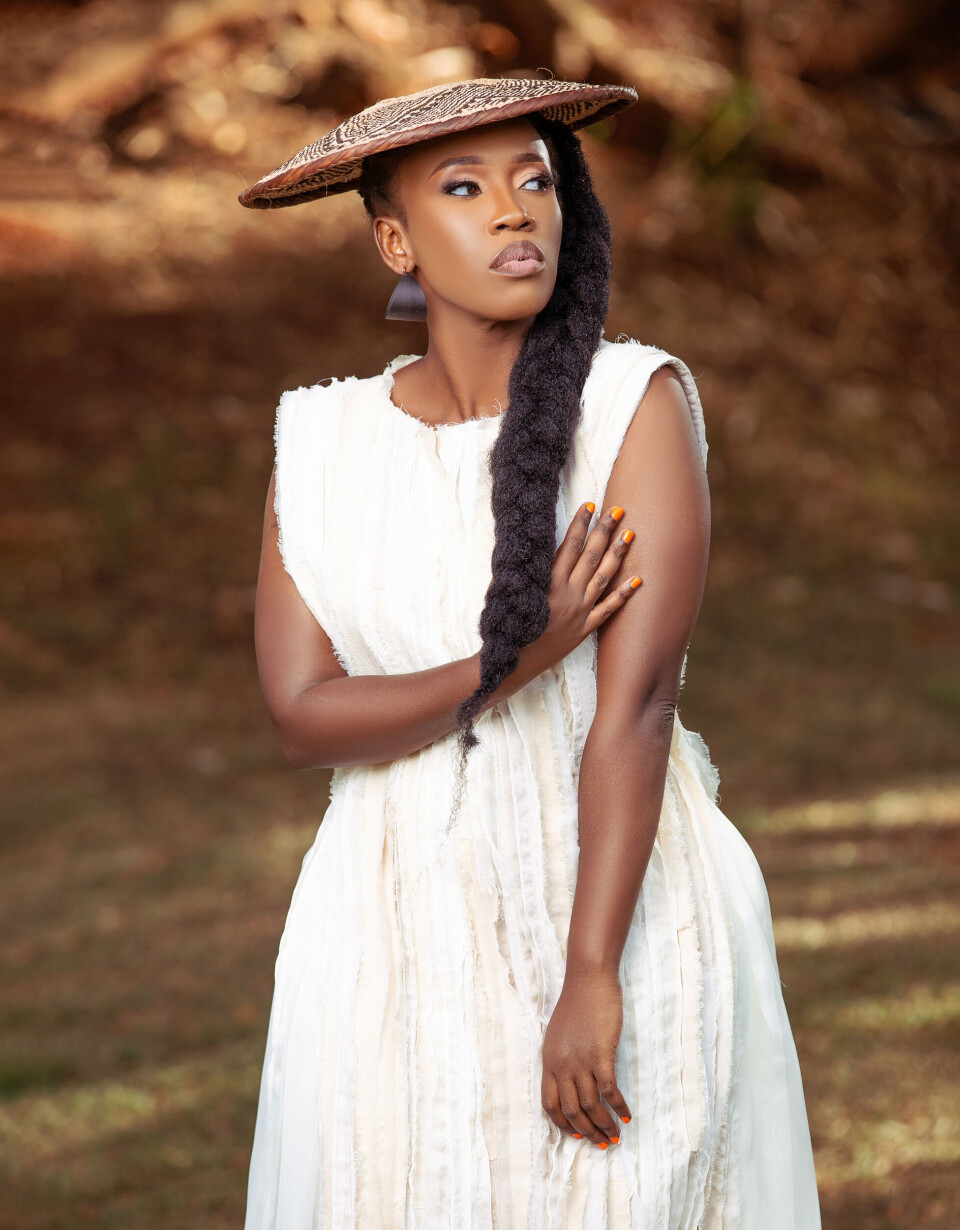
Language plays a major role in that identity. Growing up in Bulawayo means navigating multiple languages, including isiNdebele, Shona, and regional languages such as isiXhosa, which has historical connections to both South Africa and Matabeleland.
“The exposure to these different languages feeds into my music,” she says.
This fluid cross-border connection is evident in her hit song Ndikuxolele, written in isiXhosa, a language with origins in South Africa but widely spoken and understood across Zimbabwe, particularly Matebeleland.
While audiences often search for a defining sound from the city, Brown believes Bulawayo’s diversity makes that difficult.
“I think in Bulawayo we are yet to have a sound. I know that people are crying for it,” she says. “The sound for a place can only exist if it’s repeated. Bulawayo artists are as diverse as the people of Bulawayo. Everyone is coming in with who they are, and our diversity can also work against having one sound, but having one sound is also limiting.”
For Brown, the city’s sound is found in its everyday environment.
“When you walk around the streets of Bulawayo, you hear Zimdancehall from one shop, you hear an Amapiano song in another, you hear a traditional song somewhere else,” she says. “That’s because of our strong cultural connections with South Africa, but also the influence from the Mashonaland region. The privilege of being from Bulawayo is that we are able to move through genres.”
Her own music reflects that openness.
“The music that I write has to introduce the person listening to a reality outside their own,” she says. “I’m always interested in anything that is outside of my reality.”
Awa Khiwe: The Voice of the Village Girl
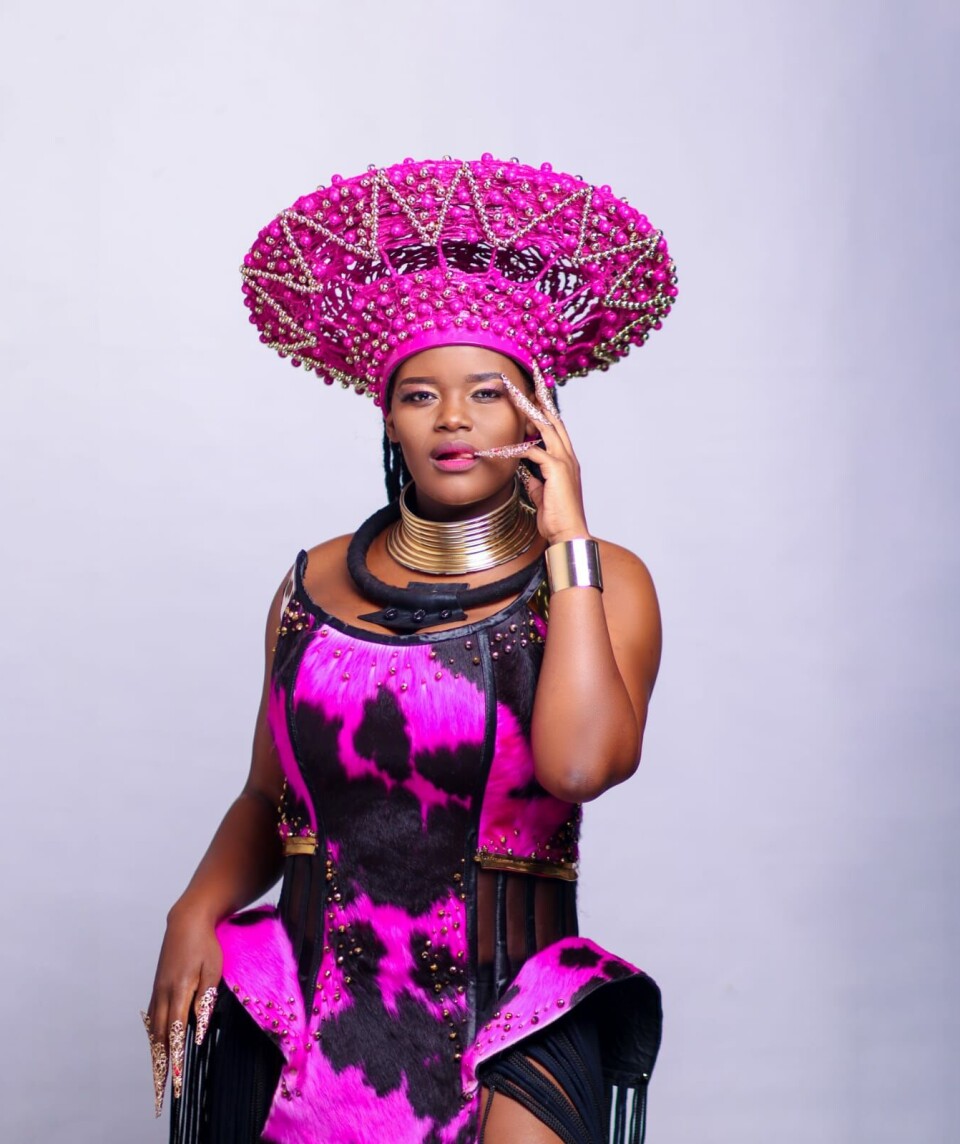
For hip-hop artist Awa Khiwe, rapping in fast-paced, click-heavy isiNdebele is both a personal choice and a commitment to cultural expression. Through her music and performances, she challenges the idea that artists must change their language to reach wider audiences.
“I chose isiNdebele because it is part of who I am and where I come from,” Awa Khiwe explains. “I wanted to show that our languages and stories belong on global stages too. Through my music, I want people to hear the beauty, strength and identity of Ndebele culture while knowing that you don’t have to change your language to be heard.”
Known as “The Village Girl,” Awa Khiwe’s artistic identity is shaped by both her rural roots in Nkayi and her upbringing in Makokoba, Bulawayo.
“Nkayi gave me my roots, my culture and a deep connection to where I come from, while Makokoba shaped me through the realities of urban life,” she says. “I rap about village life, city life, the struggles, the dreams and everything in between.”
For Awa Khiwe, her work continues a tradition established by earlier Matabeleland musicians like Lovemore Majaivana.
“Artists like Lovemore Majaivana showed us that our language, culture and stories are powerful enough to stand on any stage,” she says. “I’m continuing that legacy in my own way through hip-hop, using isiNdebele to tell our stories, preserve our identity and make sure our culture is heard by the next generation.”
Like Mangena and Brown, Awakhiwe sees Bulawayo’s diversity as its creative strength.
“I don’t think there is a single sound that can define Bulawayo because the city is incredibly diverse,” she says. “Bulawayo’s strength is we sit at an intersection of different cultures, languages and musical influences, so as creatives we naturally absorb a bit of everything.”
“For me, that diversity is our power. We use it to tell the world who we are without losing ourselves in the process.”
Mzoe7: No limits to the fusion
For 35-year-old award-winning performer Mzobanzi Mlauzi, professionally known as Mzoe7, Bulawayo’s strategic geography and cultural makeup naturally catalyze genre blending.
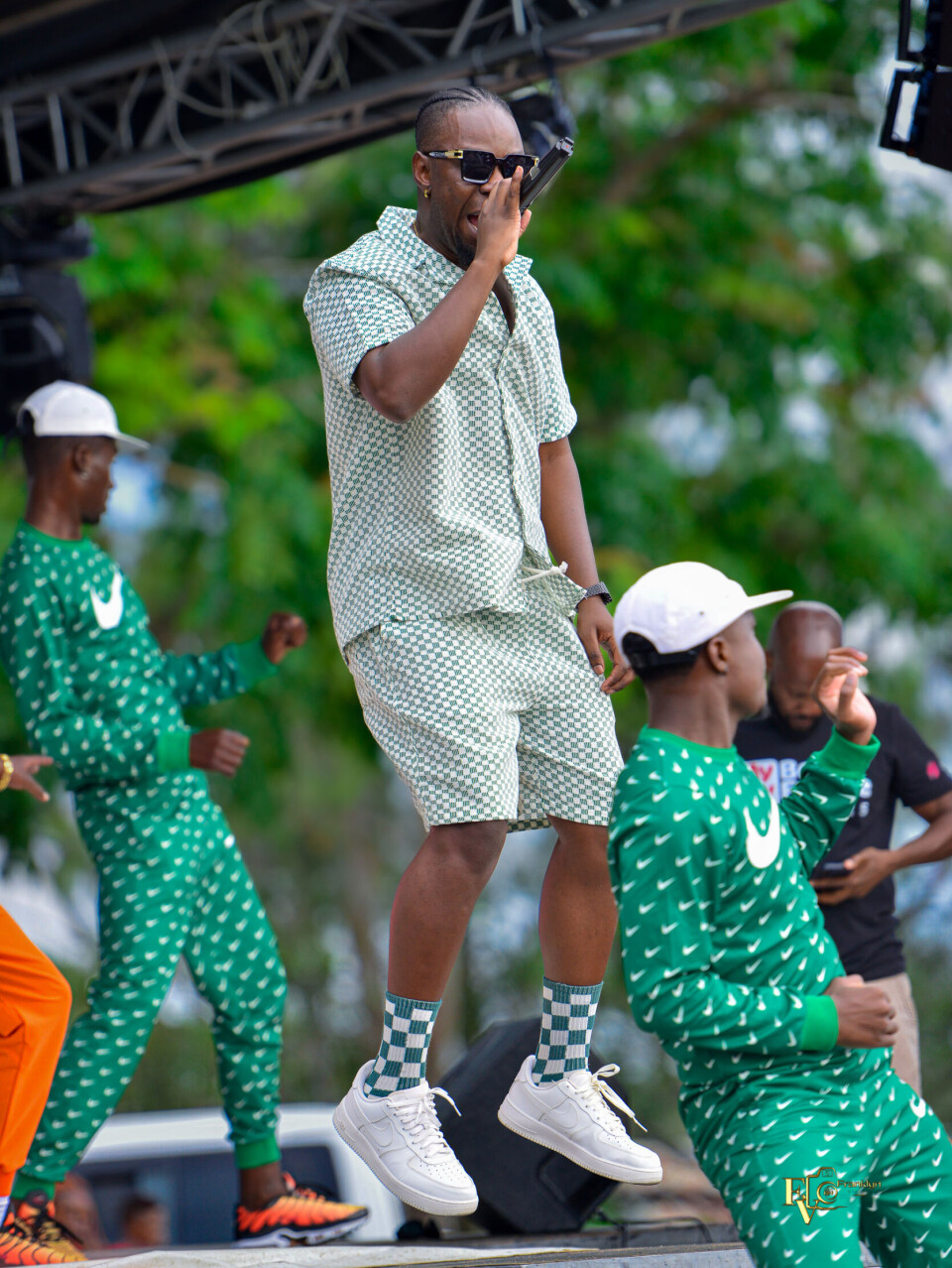
“Bulawayo has many different ethnic groups, which makes it culturally layered,” Mzoe7 says. “We share some genres with South Africa, Victoria Falls, which adds the Zambian flavor, and Harare, and that makes Bulawayo properly centered.”
While the city has given rise to homegrown movements such as Maskandi, Tshibilika and local Dance music, artists continue to draw from rhythms across the region.
“I’m someone who fuses genres, from Afrobeat to Highlife, to Amapiano,” Mzoe7 explains. “South Africa has an influence on it, as we share so much heritage and language. Even our township culture is similar. ”
His perspective reinforces that Bulawayo’s creative force lies not in adhering to a single style, but in its ability to connect sounds across borders.
Bulawayo’s current musical movement is neither a product of regional division nor a simple imitation of neighboring countries. It is a self-assured expansion of what Zimbabwean music sounds like.
By stepping away from the pressure to define a single, uniform genre, artists like Calvin Mangena, Vuyo Brown, Awa Khiwe and Mzoe7 are turning their city’s multilingual reality into an asset. They show that cultural authenticity doesn’t require artistic confinement, and that Zimbabwean identity in music is broad and adaptable.
Credit: Source link