

In photos: Lesotho’s only UNESCO World Heritage Site
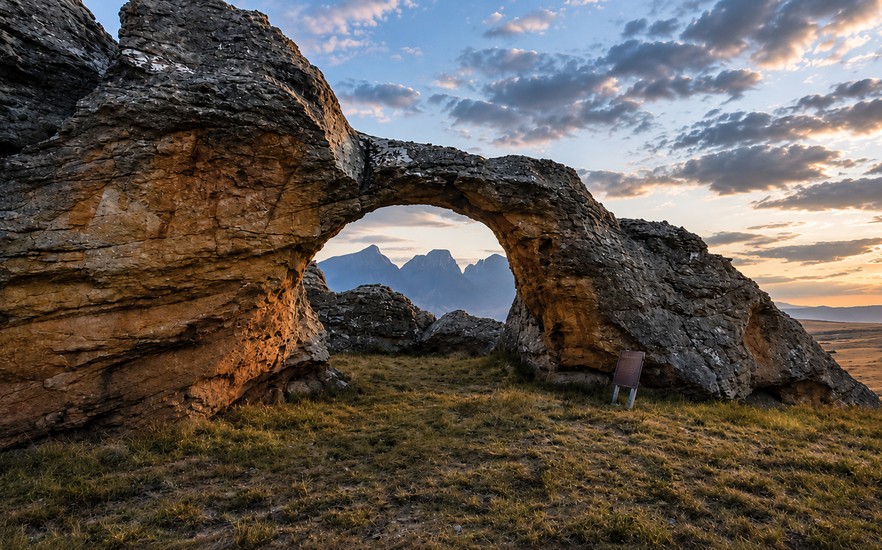
A sandstone arch in the Sehlabathebe National Park frames South Africa’s Devil’s Knuckles (seen in the distance) across the Lesotho–KwaZulu-Natal border. The park is part of Lesotho’s only UNESCO World Heritage Site. Photos: Sechaba Mokhethi
For decades, reaching the Sehlabathebe National Park from Qacha’s Nek meant a bone-rattling journey of up to four hours along rough mountain tracks.
The 91-kilometre Mpiti–Sehlabathebe road, completed in 2024, now connects 12 remote villages with the rest of Qacha’s Nek district, creating easier access to Lesotho’s only UNESCO World Heritage Site.
The southeastern corner of Qacha’s Nek stretches out like a narrow finger into South Africa. At the tip lies the Sehlabathebe National Park with rolling grasslands, sandstone formations, wetlands and rivers beneath the towering uKhahlamba-Drakensberg escarpment.
But beyond where the tar road ends, life still continues at the pace of walking feet and donkeys.

Villagers around Sehlabathebe have to carry their goods over long distances. They fish in icy streams, harvest thatching grass, and build their homes using skills passed down through the generations.
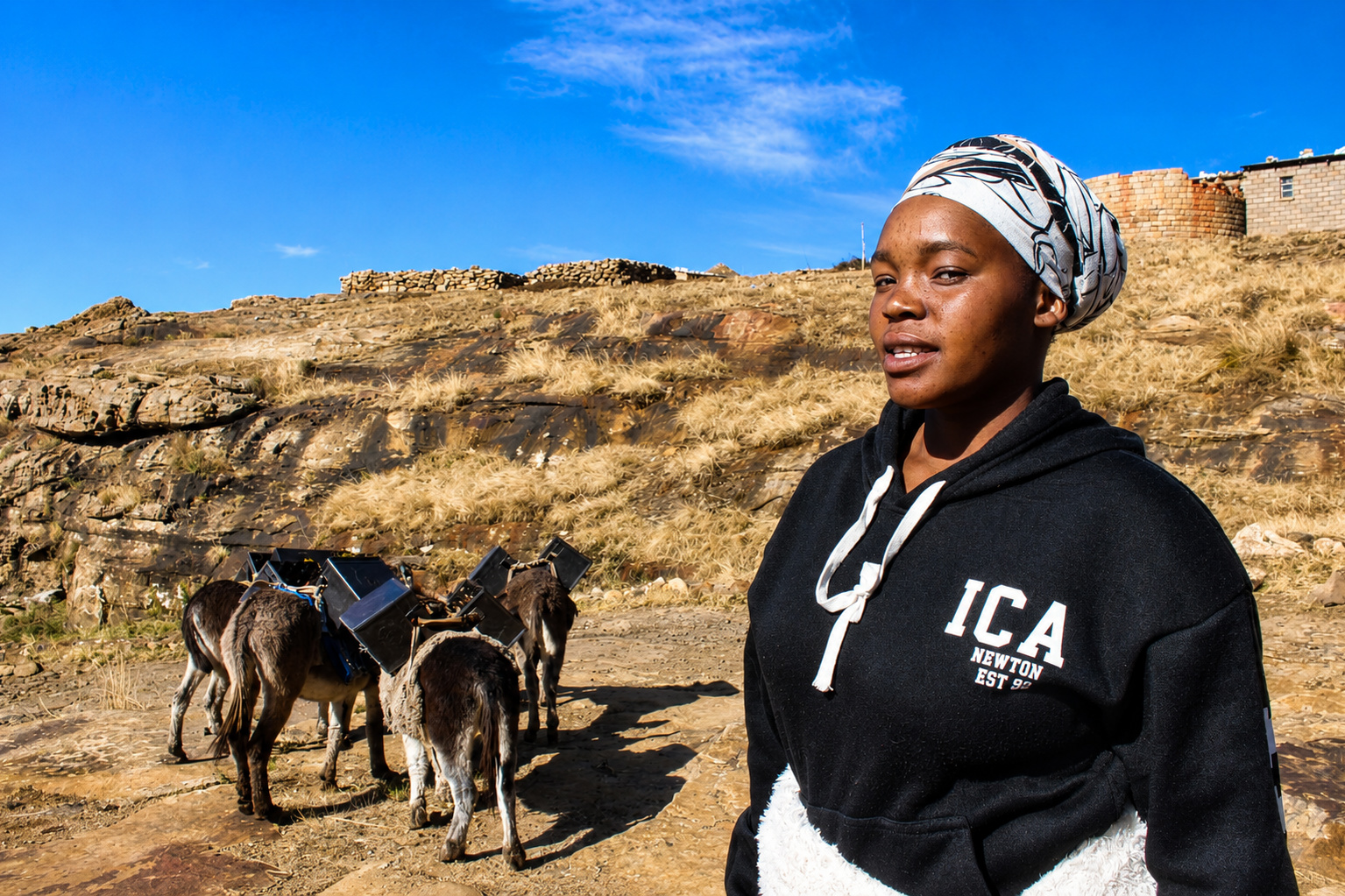
Nosphesande Mqolokha from Ha Edward village in Sehlabathebe makes a living by selling beer from her home. She uses donkeys to cart her goods more than an hour’s walk each week.
Nosphesande Mqolokha, who lives at Ha Edward village, earns a living selling beer from her home, but every week she must travel more than an hour on foot to Semenyane to restock.
We found Mqolokha sitting on rocks next to the gravel road with two young men and a few donkeys. They had been waiting two hours for a shop owner from Mpharane village to arrive with their order.
There are no wholesalers nearby. “We ordered twelve cases,” she says. Each case costs M310 (M1=R1). Individual bottles sell for between M27 and M30, depending on the brand.
“I don’t have children, but selling beer allows me to provide the basics for my family.”
Once the delivery arrives, she loads the goods in crates on the backs of donkeys before making the long journey home.
Even with a modern highway reaching the park, donkeys remain a means of transport for many households.
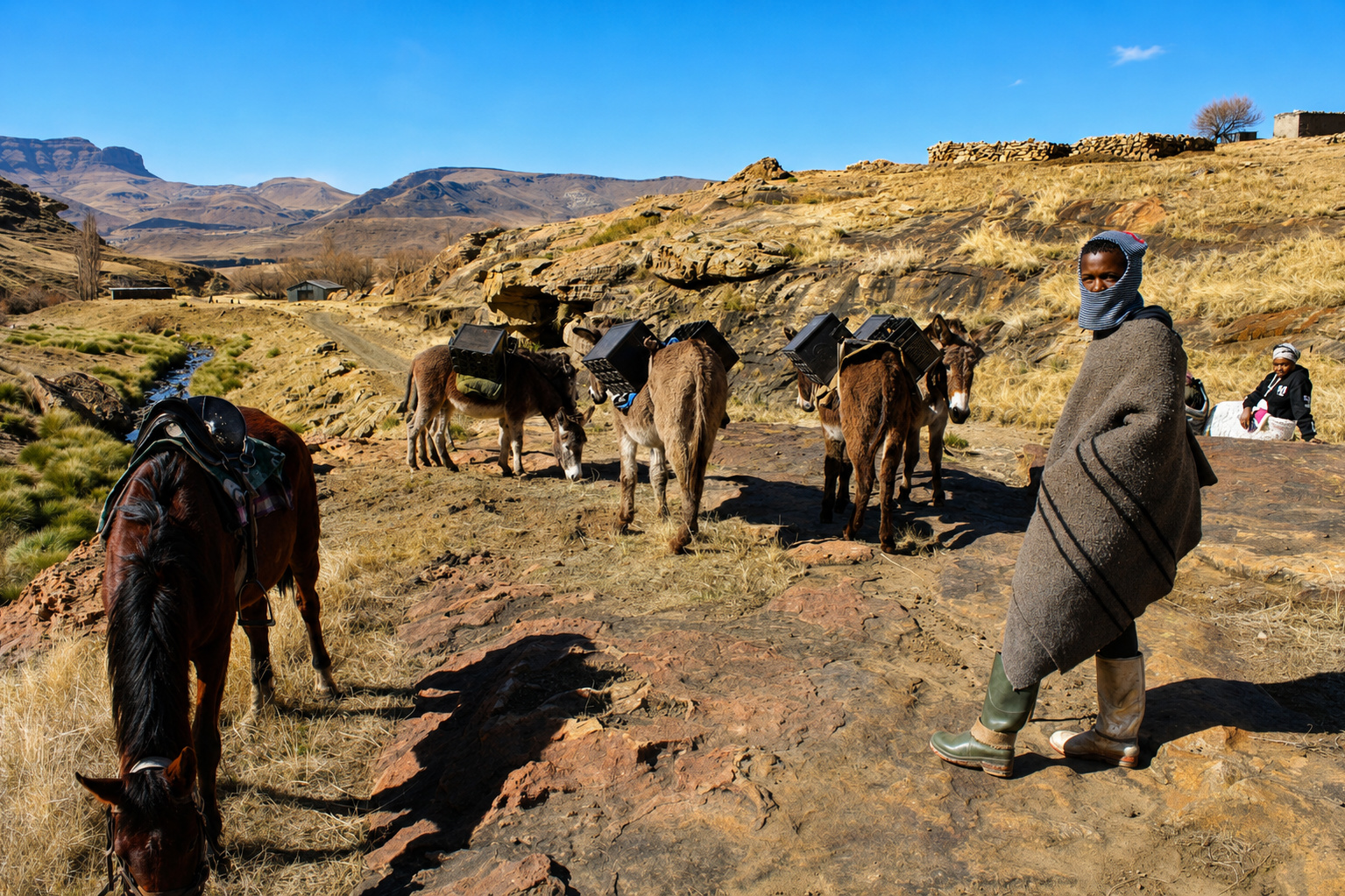
Phakamane Lamane waits by the roadside with donkeys carrying empty beer crates.
Also in Ha Edward, brothers Timello Monama and Tšimako Monama are returning home with bundles of freshly cut thatch grass piled high on their donkeys. The grass will become the roofs of traditional rondavels, continuing a building tradition that has shaped the mountain villages for generations.
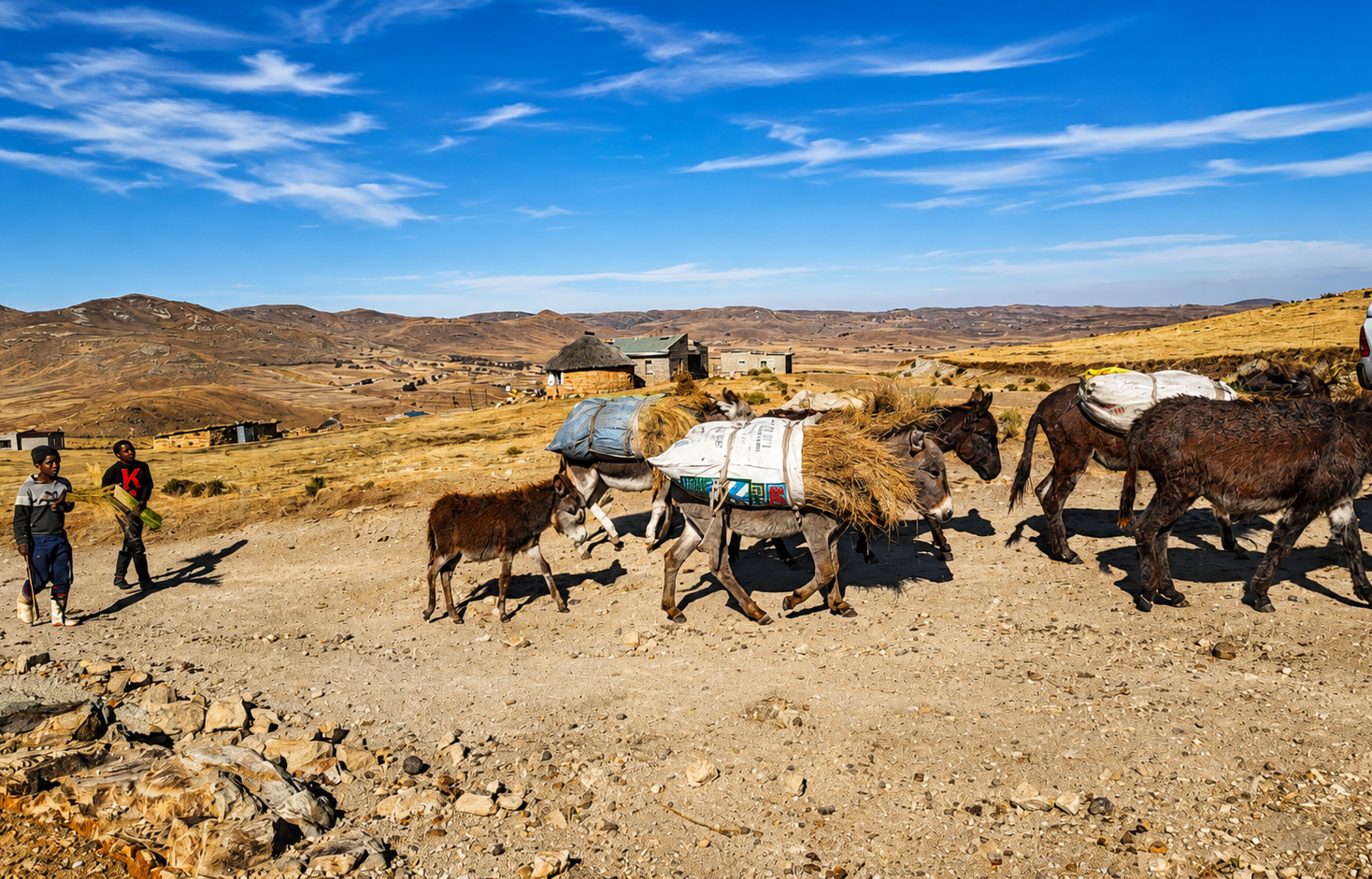
Timello Monama (left) and his younger brother Tšimako return home with freshly cut grass loaded on their donkeys.
Winter school holidays mean something different for boys in nearby Semenyane village. At noon, Senyane Tau, Kamohelo Tau and Retšepile Motšoane leave home with simple fishing gear to the Leqooa River. More than three hours later they return with seven small fish.
“We clean them, wash them and hang them out to dry,” says Senyane.
“When they have dried, we roast them and eat them with pap. If you hang them in the morning, they are usually dry by the evening,” adds Retšepile.
The boys attend Leqooa Primary School and spend much of their winter break fishing in the river below their village.
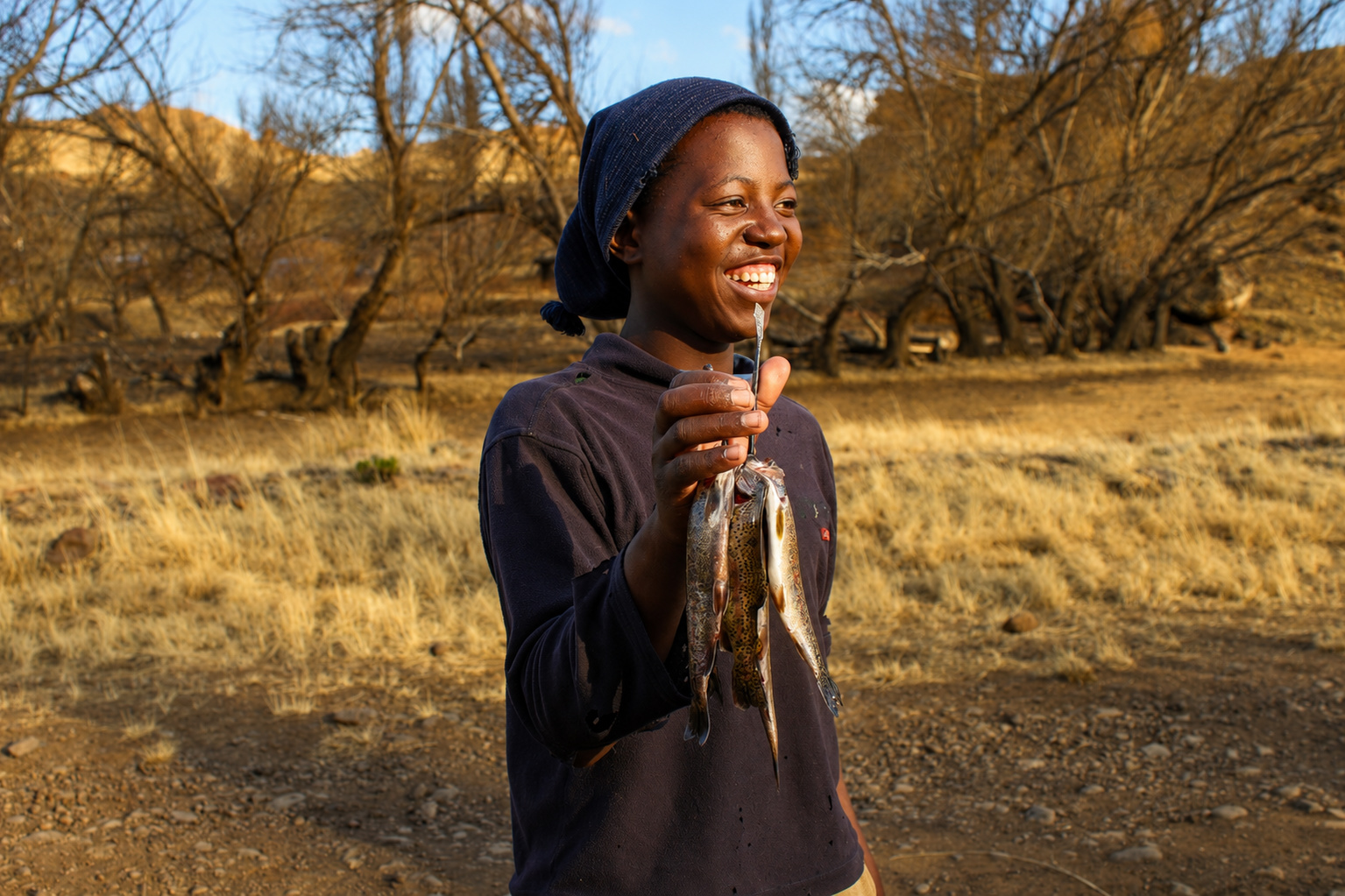
Senyane Tau returns from fishing in the Leqooa River during the winter school holidays.
A short distance away stands the homestead of Nolungile Jeyi, where old and new ways of life coexist. Jeyi, whose husband died in the 1990s, built much of the homestead herself. Today, she lives there with her six children.
The homestead consists of three buildings: two traditional rondavels and a rectangular stone house. Nearby stands a kraal built from stacked stones, a cooking fireplace, a water tap and a chicken house for indigenous chickens.
Behind the fireplace are two mounds of dried cow dung used as cooking fuel. Four keyhole gardens with layered compost provide nutrients for the family’s vegetable gardens.
A wooden electricity pole stands behind the house even though the family has never been connected to the national grid.
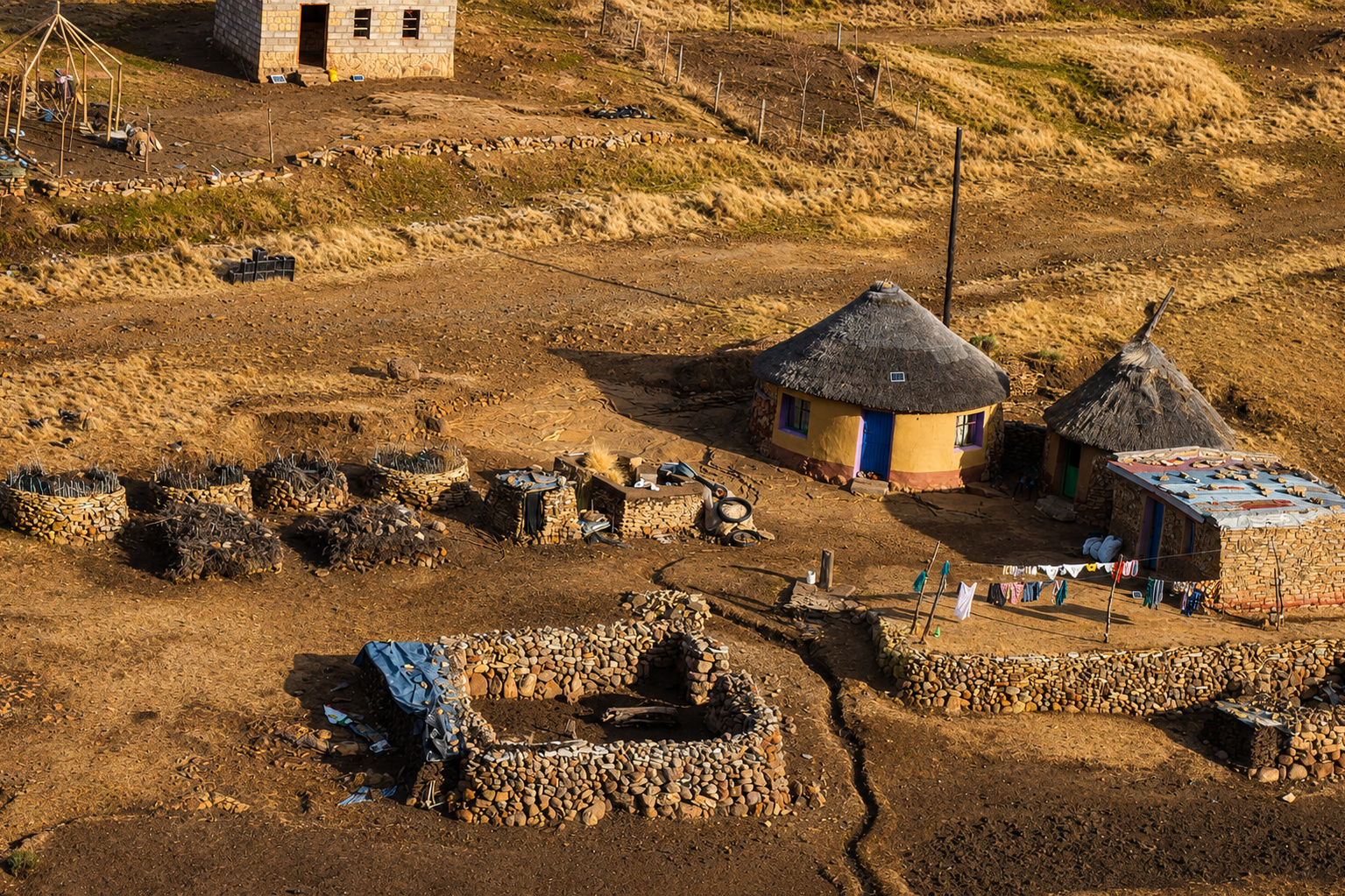
Nolungile Jeyi’s traditional homestead at Ha Semenyane.
Semenyane councillor Bolelane Eleck said they installed a pole after renewable energy company OnePower built a solar mini-grid near Ha Mavuka. They still hope electricity will eventually reach homes in the village. For now, a small rooftop solar panel provides power to charge cellphones during the day and lights the house at night.
Beyond the villages, the landscape opens into one of southern Africa’s most remarkable mountain environments.
Towering sandstone cliffs
Heritage practitioner Lethula Raboko says the landscape of the Sehlabathebe National Park tells a story stretching back thousands of years.
“Sehlabathebe was declared a nature reserve in 1970 because researchers recognised its exceptional terrain, rock formations and biodiversity,” he says.
“It became a national park in 2001 and a UNESCO World Heritage Site in 2013 together with South Africa’s uKhahlamba-Drakensberg World Heritage Site.”
Long before conservation boundaries were drawn, the area was home to San hunter-gatherers.
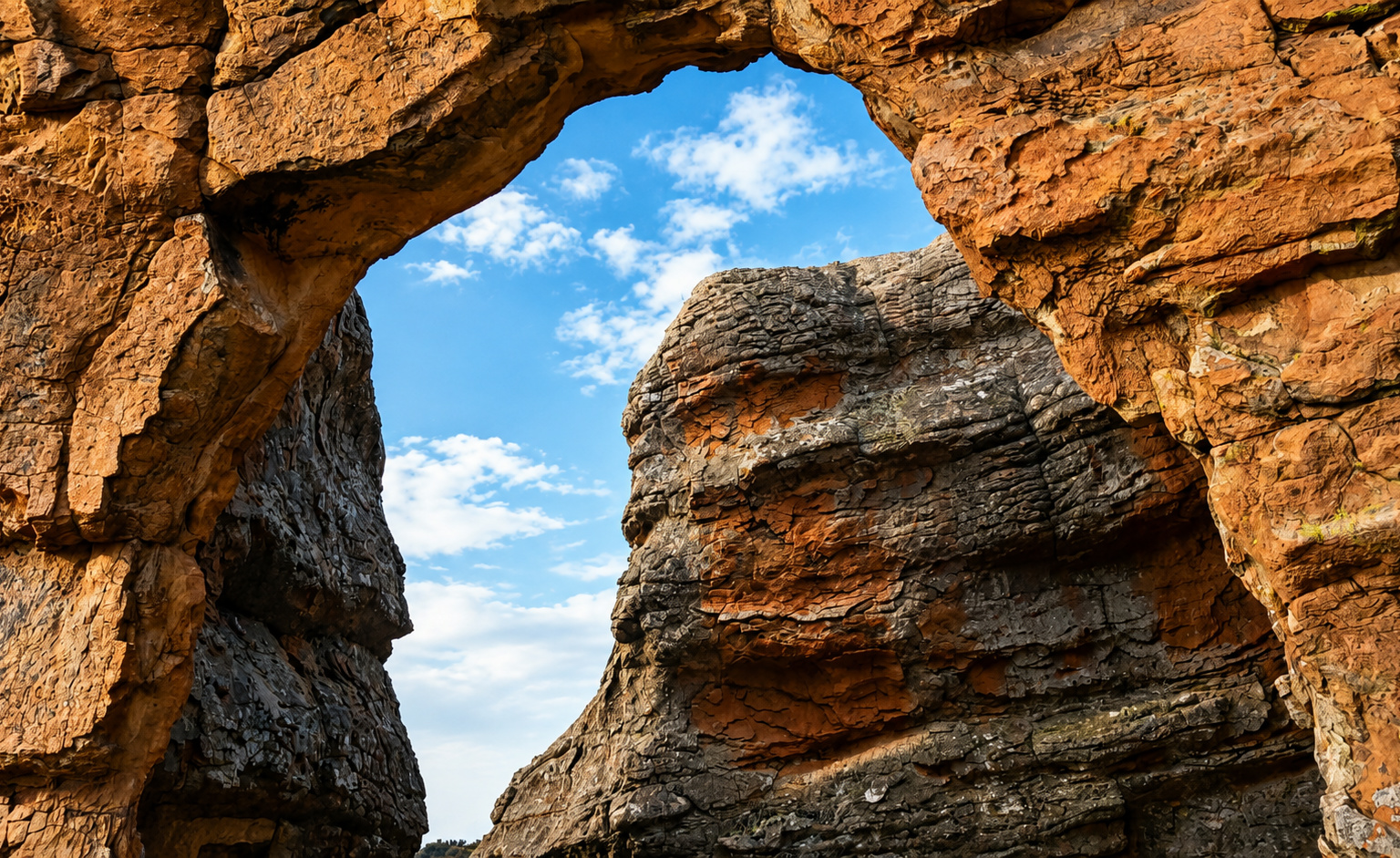
“Africa Rock” is a formation that locals say resembles the map of Africa.
Raboko says Sehlabathebe has 65 documented rocks, with San rock paintings forming part of a larger cultural landscape of the 90 rock formations combined with those across the border in South Africa.
Some of the rock formations have acquired names over the years.
One resemble the African continent; others have been named after Mpho and Mphonyane Mathibela, South African conjoined twins born in 1986.
“When Basotho pastoralists later settled here, they displaced the San,” says Raboko.
“Most of the animals painted are antelope because they were abundant here,” he says.
The park also protects rare indigenous plants and aquatic species. Among them is the Sehlabathebe lily, which only grows in this landscape.
Although wildlife has declined, the park remains a home to baboons, jackals, eagles, vultures and antelopes, and rare high-altitude wetlands.
Each winter, Raboko says, rangers burn firebreaks to protect the park from fires often started outside its boundaries.
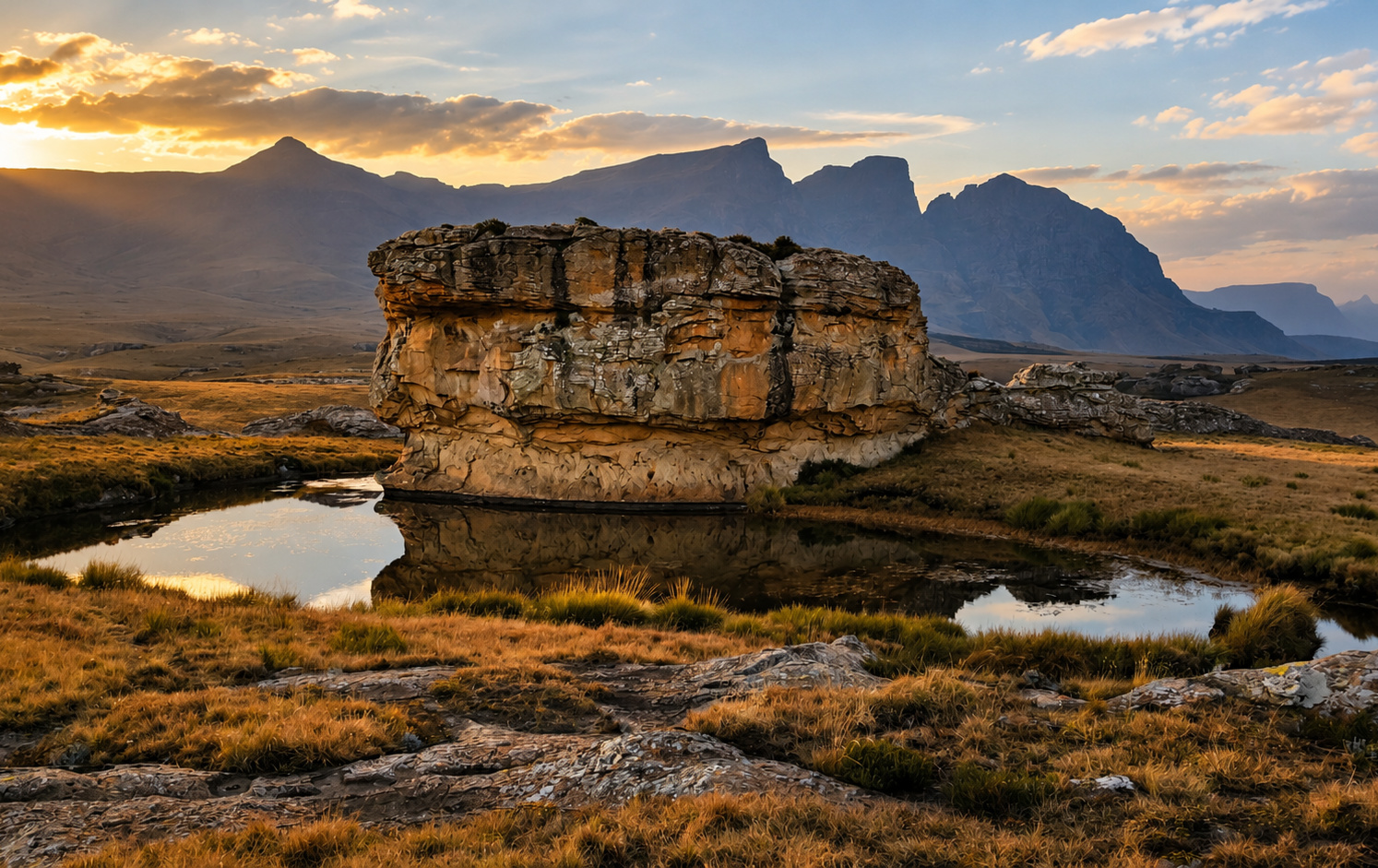
A sandstone outcrop overlooks a wetland, with South Africa’s Devil’s Knuckles in the background.
Credit: Source link