

IGAD Foreign Ministers Hold Special Meeting with Djibouti President on Regional Crises
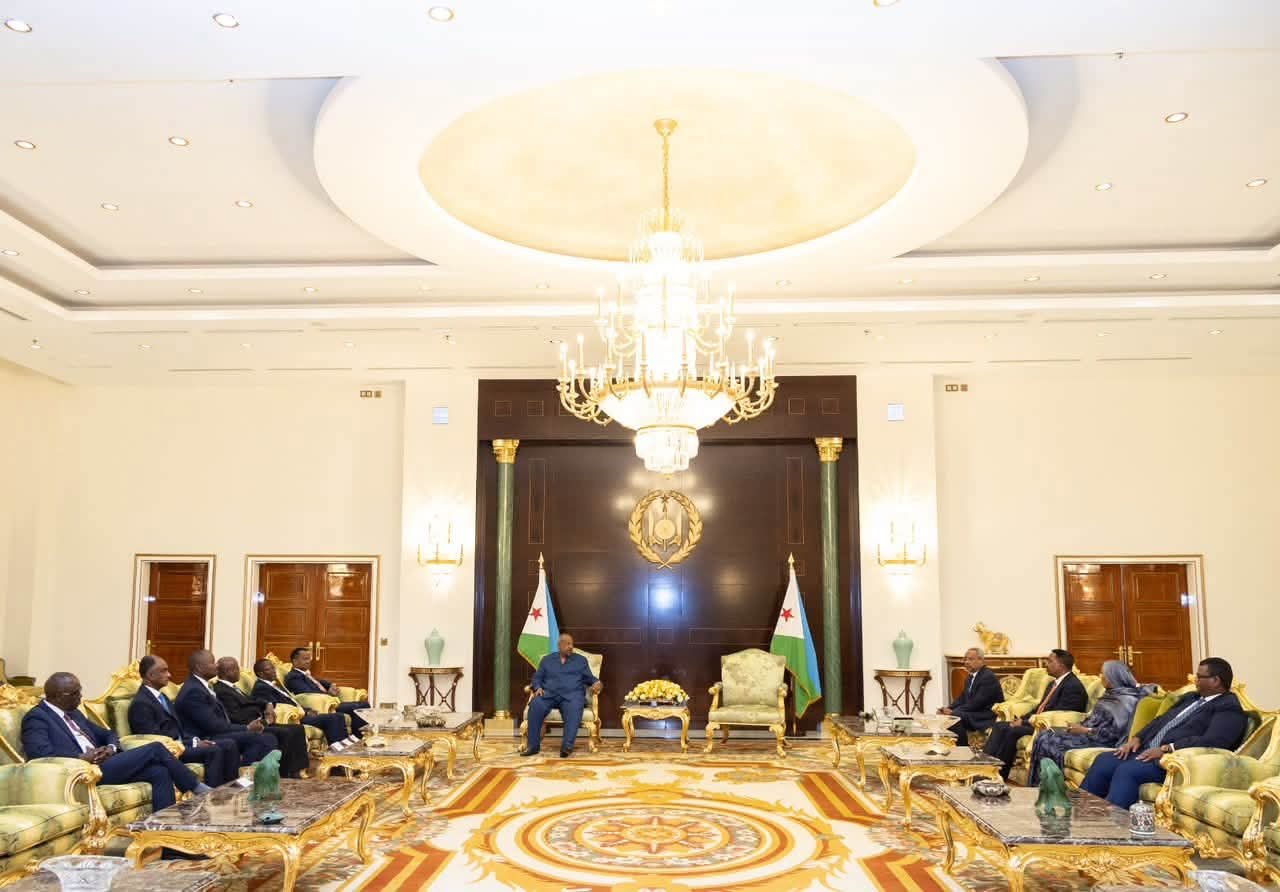
DJIBOUTI — Foreign ministers from IGAD member states held a courtesy meeting with Djibouti President Ismail Omar Guelleh in Djibouti on Tuesday, as part of the proceedings of the 74th Extraordinary Session of the IGAD Council of Ministers.
Somalia’s Minister of Foreign Affairs and International Cooperation, Abdisalan Abdi Ali, was among the ministers who attended the meeting, leading the Somali delegation participating in the IGAD meetings in the Djiboutian capital.
The meeting provided an opportunity for regional leaders and ministers to discuss matters related to strengthening regional cooperation, peace and security, at a time when the Horn of Africa and its surroundings face political, security and humanitarian challenges.
The 74th session of the IGAD Council of Ministers is focusing specifically on regional issues and on how member states can strengthen cooperation and joint responses to the challenges facing the region.
Somalia’s Ministry of Foreign Affairs said the Somali government remains committed to strengthening regional cooperation, advancing peace and maintaining security through collaboration and regional mechanisms.
A Region Facing Multiple Crises
The Djibouti meeting comes as Horn of Africa countries face several challenges requiring cooperation, including regional security, conflicts, humanitarian situations, migration and economic integration.
The ministerial session comes amid multiple crises in the region, including the ongoing war in Sudan, the fragile peace process in South Sudan, and tensions over Somalia’s federal member state elections. The session also follows Eritrea’s withdrawal from the bloc and Somalia’s ratification of the revised IGAD Treaty in January 2026, which reached the two-thirds threshold required to operationalize the updated framework.
The revised treaty replaced the 1996 founding document with an updated legal structure for regional cooperation on peace, security, climate resilience, infrastructure, health, trade, and social development. IGAD Executive Secretary Workneh Gebeyehu described Somalia’s ratification as demonstrating “decisive leadership” and reinforcing the bloc’s efforts to deepen regional integration.
IGAD has previously expressed readiness to collaborate with Somalis in the diaspora to develop their country, with Fathia Alwan, Director of IGAD’s Health and Social Development department, addressing the 10th International Conference of the Somali Diaspora on the potential of diaspora engagement.
The presence of IGAD foreign ministers in Djibouti also reinforces the country’s role in regional diplomacy and the work of the organization.
President Guelleh hosted the leaders and ministers attending the meeting, with Djibouti serving as the venue for this important session.
Critical Note
The meeting between IGAD foreign ministers and President Guelleh reflects the continued engagement of regional leaders with the organization’s agenda, even as IGAD navigates significant institutional and political challenges. Djibouti’s role as host underscores its position as a diplomatic hub in the Horn of Africa and its interest in maintaining IGAD’s relevance.
However, the effectiveness of IGAD as a regional body remains constrained by internal divisions and limited capacity. The withdrawal of Eritrea, the persistent conflicts in Sudan and South Sudan, and the divergent interests of member states make consensus difficult to achieve. Somalia’s participation is significant, particularly given its ratification of the revised treaty, but Mogadishu’s ability to shape the regional agenda is limited by its own internal political challenges and security dependencies.
The Somali government’s stated commitment to regional cooperation through IGAD and other mechanisms is a necessary posture, but it must be matched by concrete actions that demonstrate Somalia’s willingness to engage constructively with its neighbors. The coming months will test whether IGAD can move beyond communiqués and deliver tangible results on peace, security, and economic integration. For Somalia, the value of IGAD lies primarily in its potential to coordinate regional responses to shared threats, particularly Al-Shabaab and the resurgence of piracy. Whether that potential is realized depends on the political will of all member states, not just Mogadishu.
Recommended Reading On ftlsomalia.com
Credit: Source link