

Hundreds of health, nutrition facilities closed as Somalia’s child crisis deepens, warns UNICEF
Burak Bir
21 August 2026•Update: 21 August 2026
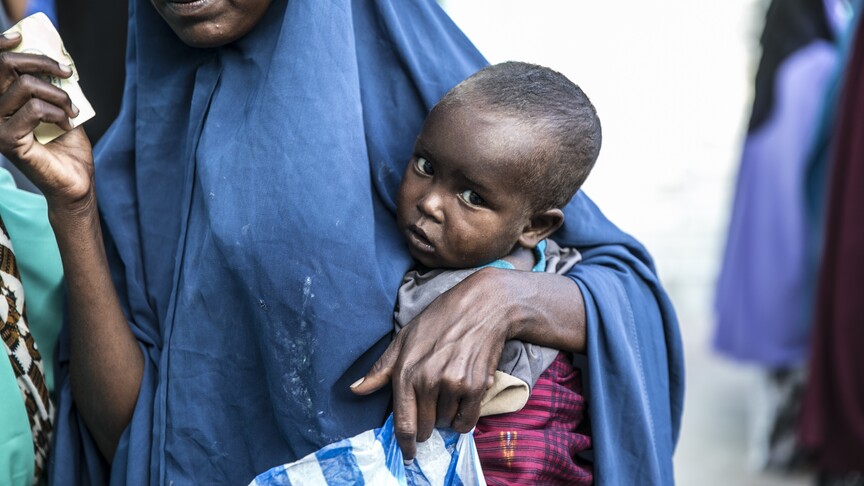
Aid cuts are closing doors to healthcare, shutting down nutrition services, and pushing water, education and protection further out of reach in Somalia, and, as ever, children are paying the price, the spokesperson for UNICEF said Friday.
“On the back of unprecedented cuts in humanitarian aid, 205 health and nutrition facilities have already closed,” James Elder said during a press briefing at the Palais des Nations in Geneva.
He warned that the impact on children has been immediate, adding that in the first six months of this year, Somalia has seen a 32% increase from the same period last year in children being admitted to stabilization centers with severe acute malnutrition and complications.
“Fewer facilities mean longer journeys for mums and their babies; longer journeys mean later treatment; later treatment means more severe illness and a greater risk of preventable death.”
He said that Somalia is confronting a worsening climate crisis, severe drought in parts of the north, conflict and displacement, and, on the back of the war in Iran, rising costs for fuel and fertiliser.
“It is a brutal contradiction: the resources to protect vulnerable children are being cut at precisely the moment when the pressures pushing Somalia’s children into crisis are intensifying – even as the need for generous donor support grows,” added Elder.
The UNICEF spokesperson noted that funding cuts have already contributed to a 30% reduction in health and nutrition service coverage, while nearly one million children under five, adolescent girls and women risk losing access to nutrition services in Somalia.
“This year nearly 1.9 million children are projected to be affected by malnutrition, including almost half a million with severe acute malnutrition, the deadliest form,” he added.
Elder recalled that the current drought is being deeply exacerbated by aid cuts as more than 1.6 million people need access to safe water, while more than 800,000 risk losing essential hygiene supplies.
Credit: Source link