

How Yemen Has Developed Rules of Engagement That Are Disrupting the Houthis
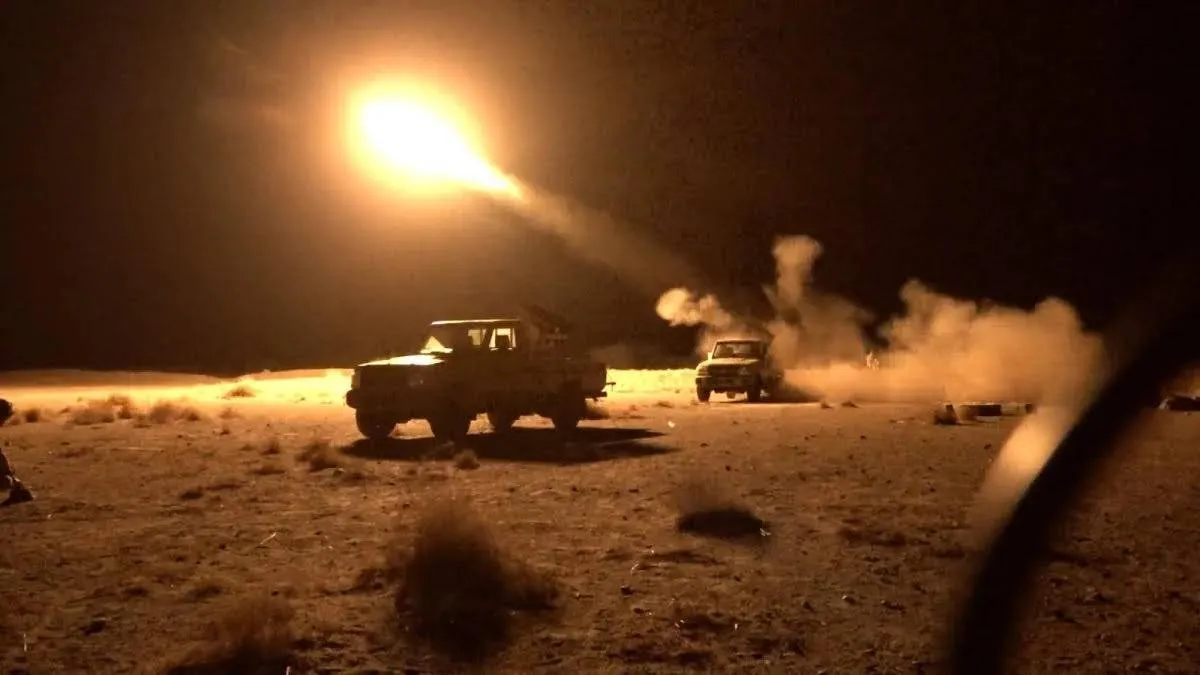
The confrontation between Yemen’s internationally recognized government and the Iran-backed Houthi group is no longer unfolding according to the military equation that had prevailed along the front lines since 2022. The latest escalation, initiated by the group, has revealed a notable shift in the performance of government forces, which have begun developing new rules of engagement that have unsettled the militias. They are moving from a position of defense and containment toward a phase of preemptive strikes, making use of drones and improved precision-targeting capabilities.
The pace of attacks over the past six weeks reveals an escalating trajectory, with the strikes coinciding with Houthi use of ballistic missiles and drones to target military positions, facilities, and maritime routes.
According to information from military sources and monitoring centers, the Houthis carried out more than 75 attacks during this period using ballistic missiles and explosive-laden drones. These included missile barrages against the port of Mokha and the city of Al Khawkhah, as well as attacks on military camps in Marib and Al Abr, and others targeting commercial vessels that killed at least four sailors.
On the other side, field reports indicate that the Yemeni armed forces, the National Resistance formations, and the Giants Brigades carried out more than 500 combat, defensive, and offensive operations, focused on Houthi concentrations and command-and-control centers along the fronts in Hodeidah, Marib, Taiz, Al Dhale, and Al Bayda.
The significance of the current development lies not only in the scale of the strikes, but also in the nature of the means the government forces have begun using. The introduction of drones into offensive operations opens a new avenue for anti-Houthi forces to strike high-value targets without having to conduct large-scale ground operations.
Informed Yemeni sources indicate that two specialized drone aviation brigades have been formed within the Yemeni armed forces, marking a shift in the role of these aircraft from reconnaissance and surveillance to direct combat use.
In recent days, drones have been used to strike Houthi barracks, concentrations, supply vehicles, and trenches. These operations have been documented by drone cameras across various fronts, particularly in Marib, Al Jawf, Al Bayda, the western coast, and Al Dhale, as well as in areas of Hajjah governorate in the northwest of the country that have been retaken.
This shift is particularly significant along the western coast, where the ground confrontation intersects with the maritime threat. The downing of Houthi reconnaissance drones that, according to the available information, were preparing the way for maritime attacks using explosive-laden boats reflects an attempt by the government to deprive the group of one of its most important tools for monitoring the waters and preparing attacks on maritime traffic.
Here, drones are moving beyond their traditional military function to become part of a broader deterrence system aimed at preventing the Houthis from creating a new reality along Yemen’s coasts and the Bab al-Mandab Strait.
Testing the Unification of Forces
But possessing more advanced military tools does not necessarily mean possessing the ability to wage an all-out war. The most complex challenge facing the Yemeni government remains the existence of multiple centers of military power and disparities in command-and-control structures.
Over the past two years, Yemen’s Presidential Leadership Council has worked to address part of this fragmentation, with signs emerging of a more interconnected military structure, although it remains composed of multiple elements.
This structure includes the regular forces commanded by Lieutenant General Sagheer bin Aziz; the forces deployed along the western coast and in Mokha, commanded by Presidential Leadership Council member Tareq Saleh; the Emergency Forces and Nation’s Shield formations, which are directly commanded by Presidential Leadership Council Chairman Rashad Al Alimi; the forces operating along the Taiz fronts under the Fourth Military Region, headquartered in Aden; as well as the Giants Brigades and other southern formations deployed along the fronts in Lahj, Al Dhale, and Shabwa, commanded by Presidential Leadership Council member Abdul Rahman Al Mahrami.
According to military assessments, these formations give the Yemeni government the ability to distribute military pressure across more than one front. At the same time, however, they place the joint operations room before a difficult test: Can it turn these multiple capabilities into a unified battle plan if the limited confrontation develops into an open war?
This question becomes increasingly important as the level of Houthi escalation rises, because moving from localized strikes to large-scale ground operations requires a higher level of coordination and political and military decision-making, as well as substantial logistical and economic capacity.
The Priority of Calculated Deterrence
In the current calculations of Yemen’s legitimate government, a full-scale ground war appears less likely than continued calibrated escalation. The government does not appear willing to be drawn into the battle that the Houthis may be seeking to impose.
This is where the scenario of measured escalation repeatedly referenced by Al Alimi comes into focus. It is based on targeting sources of threat with missiles, artillery, and drones, ensuring that Houthi attacks do not go unanswered while avoiding large-scale ground operations to seize new territory.
This strategy allows the Yemeni government to raise the cost of Houthi attacks without opening a front that could later prove difficult to contain. It also gives the government room to maneuver between military retaliation and political and diplomatic options.
But continued Houthi attacks on maritime traffic and vital facilities could change the calculations. If maritime pressure develops into a sustained threat to shipping in the southern Red Sea, and attacks on ports and facilities continue, the western coast, particularly Hodeidah, could become the focus of a larger battle. This is what was understood from Tareq Saleh’s recent statements.
The government could then find itself facing the option of launching a military operation aimed at ending the group’s ability to use the coast as a platform for maritime threats, a choice that would carry significant military, humanitarian, and economic consequences.
The recent attacks on the port of Mokha reveal the scale of the economic risks associated with this course. According to the available information, the shelling brought the port’s strategic activity to a halt and caused extensive damage to its infrastructure, with preliminary estimates putting the losses at billions of Yemeni riyals.
The consequences do not stop at civilian facilities. Yemen, which is facing a deep humanitarian and economic crisis, has little room to maneuver, given that the United Nations humanitarian response plan continues to face a funding gap of more than 80 percent, while the limited escalation of recent weeks has led to new waves of displacement in Marib and along the western coast.
If a full-scale confrontation erupts, the closure of vital roads and corridors and damage to ports and commercial facilities could multiply the cost of the war for the population and place additional pressure on the fragile economy of the governorates held by the government.
Between Houthi escalation and the government’s calibrated deterrence, the coming days and weeks will determine whether the drones and precision strikes used by Yemeni government forces succeed in establishing a new balance with the Houthis, or whether they prove to be the prelude to the broadest military round since the 2022 truce and the fragile de-escalation that followed.