

How to Stop Infantino — Two Ways FIFA’s World Cup Plans Can Be Thwarted
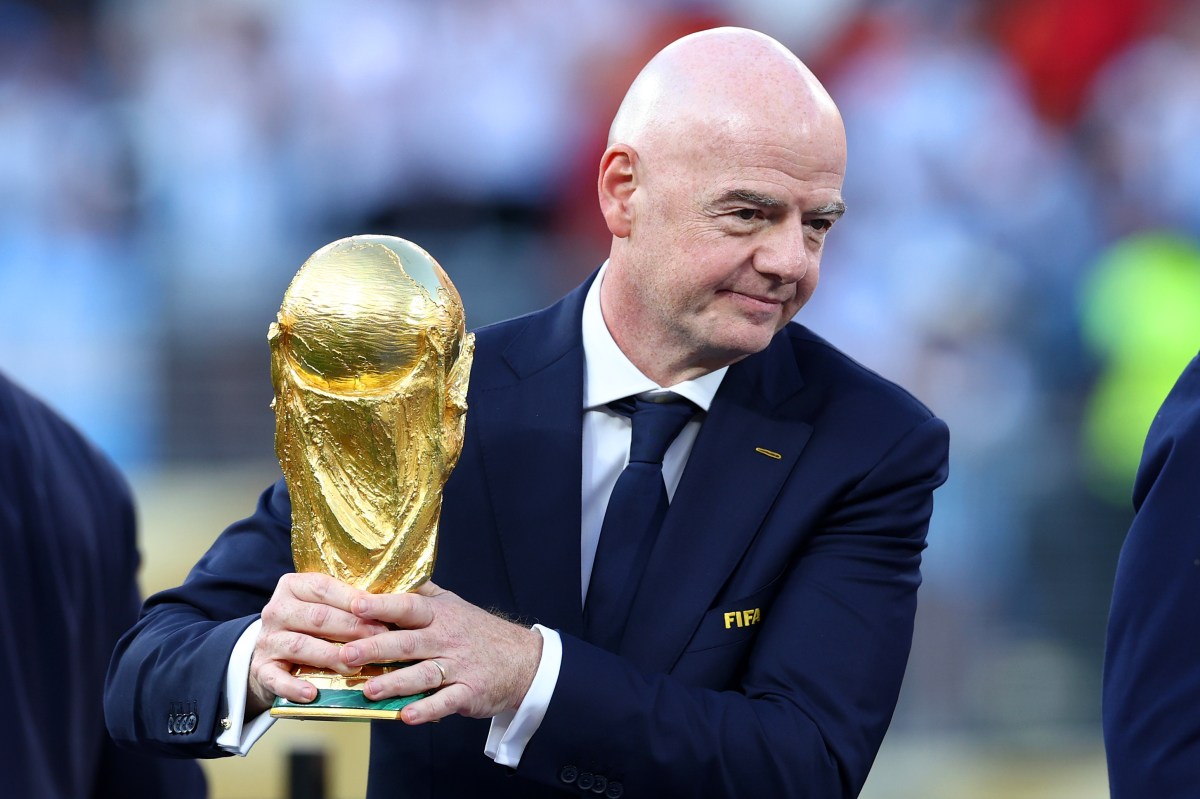
FIFA President Gianni Infantino’s plan to sell a stake in the World Cup to private investors has triggered the broadest revolt of his decade in charge of world soccer.
The proposal, first leaked to the press before being formally unveiled on July 28, would spin off FIFA’s commercial operations, including rights tied to the men’s and women’s World Cups and the Club World Cup, into a new subsidiary called FIFA Forward Enterprise. Developed with JPMorgan and valued at roughly $20 billion, it calls for selling a minority stake of up to $4.2 billion to outside investors, led by Thrive Eternal, while FIFA keeps majority control.
Infantino has framed the plan as a way to increase investment across global soccer. He gave FIFA’s 211 member associations until September 19 to approve it, offering payments that could nearly double to as much as $24 million per association during the 2035-39 cycle. Critics argue those incentives mask a larger strategic shift: an expanded tournament calendar that could eventually lead to a World Cup staged more often than every four years.
That concern has fueled the most significant challenge Infantino has faced since taking over FIFA in 2016. UEFA’s 55 member associations voted Thursday to boycott all FIFA competitions for as long as the plan remains active. CONCACAF rejected it the same day. The Asian Football Confederation, whose 46 members have long been considered an Infantino stronghold, followed Friday, saying FIFA needs “an urgent review of its governance and decision-making framework.”
The backlash has reached inside FIFA itself. Carlos Cordeiro, Infantino’s senior adviser and FIFA’s representative on the White House Task Force for the World Cup, resigned Friday in protest, calling the plan “a bad deal for football.” FIFA Chief Operating Officer Kevin Lamour told The Associated Press that staff had been “deceived” by the secrecy surrounding the project, describing it as “the project of one person.”
“Not only must this project not go ahead … but the time has now come for football political leaders to ask themselves the right questions and make the right decisions,” Lamour said.
When Newsweek reached out to FIFA and UEFA, both organizations referred Newsweek to their statements.
FIFA has responded with three statements in two days, insisting that “nobody is selling football” and blaming “incorrect media reports” for disrupting its consultation process.
The fight comes at a politically sensitive moment for Infantino, who had appeared set to win an unopposed fourth term next March; FIFA has set a November 18 deadline for challengers to enter that race. Infantino said more than 200 member associations had already pledged support for his 2027 reelection bid, but the recent developments added pressure on a man whose image has been heavily impacted after the 2026 World Cup.
Still, people familiar with FIFA’s internal politics say only two forces could stop the plan: UEFA, if it is willing to pursue a full breakaway, and the handful of elite clubs that employ the players FIFA needs for its tournaments.
UEFA Draws a Red Line
UEFA’s Thursday statement left little ambiguity. “The World Cup is not for sale,” the confederation said, adding that no UEFA national team will play in a FIFA competition “for so long as these proposals remain alive.”
Mark Pieth, who headed FIFA’s Independent Governance Committee from 2011 to 2013 and has been one of Infantino’s longest-standing critics, told Newsweek the vote marks a turning point regardless of what happens next.
“This is the first time a substantial group of associations is defining a red line,” Pieth said. “If they pull it through, it amounts to what I had suggested all along: Europe should leave FIFA and do their own contests, inviting guests from other continents. It would resemble the situation we have in boxing.”
Pieth said he could not yet judge whether UEFA is prepared to follow through. “I do not know how decided they are. We will see,” he said.
The boxing comparison points to a possible precedent. CONMEBOL’s Copa America has repeatedly invited guest teams, including the United States, Mexico and Qatar, to fill out its field. A UEFA tournament featuring Brazil, Argentina, Morocco, the United States and Japan would effectively create a rival World Cup without FIFA’s involvement.
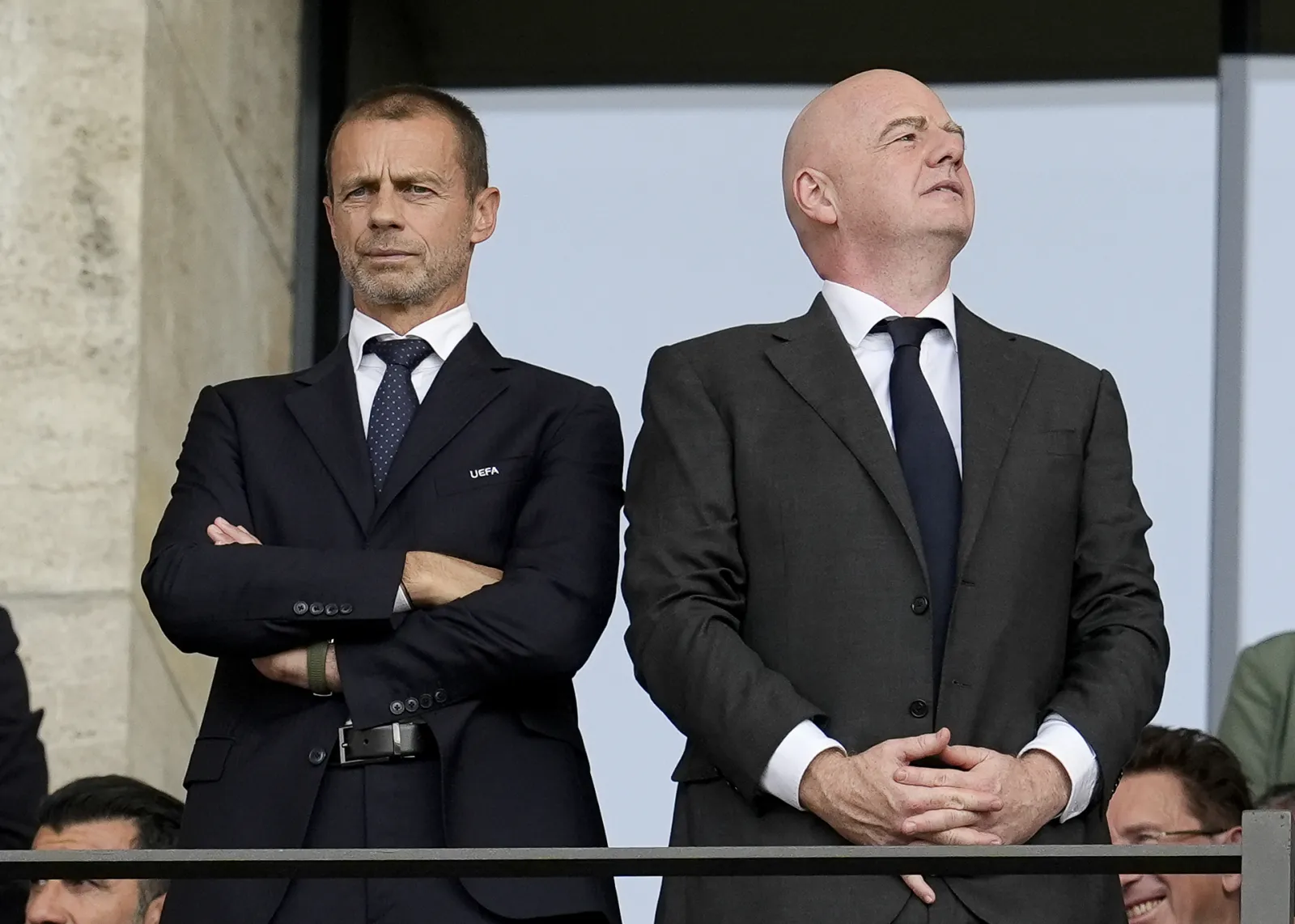
Simon Chadwick, a professor who studies the geopolitics of sport, told Newsweek the bigger question is whether UEFA has the votes and the willingness to sustain a confrontation. FIFA’s presidency isn’t won in Europe. It’s won across the federation’s global membership, particularly in Africa, where FIFA Forward funding matters most and where Infantino has spent a decade building support.
“UEFA alone is only 55 member associations,” Chadwick said. “In the great scheme of things, that’s about one-fifth of the globally available votes within FIFA. The big political powerhouse in terms of being reelected is, and always has been, Africa.”
Chadwick cautioned against viewing UEFA’s opposition as purely principled. UEFA’s Champions League is itself a multibillion-dollar commercial operation, he said, and its biggest television markets, including Saudi Arabia, India and China, overlap with the territories Infantino is trying to expand into. “UEFA is not some great moral organization,” Chadwick said.
He described the standoff as “two bulls” protecting competing global commercial models, warning that a full boycott could risk “seriously undermining” UEFA’s own revenue. He expects the dispute to end in negotiation rather than an outright win for either side.
Much of Infantino’s tenure has involved trying to build new revenue streams for FIFA in areas where UEFA has long dominated. His push to stage the World Cup every two years in 2021 was rejected by UEFA and the European Club Association, which argued it would further congest the soccer calendar. FIFA then expanded the Club World Cup to 32 teams, creating a tournament that competes directly with the Champions League for attention, money and influence.
Elite Clubs Hold the Other Lever
The second source of leverage belongs to the clubs that employ the world’s best players. The Premier League’s biggest teams, along with Real Madrid, Barcelona, Bayern Munich and other Champions League regulars, could refuse to release players for tournaments they consider excessive.
That threat isn’t hypothetical. European Leagues and FIFPRO Europe both condemned the FIFA Forward Enterprise plan this week, arguing it would accelerate a calendar expansion that has already prompted a legal complaint over player welfare. FIFPRO Europe said the proposal risks turning FIFA competitions into “investable assets for private capital.”
The European Club Association, chaired by Paris Saint-Germain president Nasser al-Khelaifi, has a more complicated relationship with FIFA than UEFA does. Al-Khelaifi helped defeat the breakaway European Super League in 2021 and has since worked with Infantino on the expanded 32-team Club World Cup, even as clubs privately complained about the challenges of organizing it. He has also been mentioned as a potential challenger to Infantino next year, though he has said publicly he isn’t interested.
Chadwick said that history is part of why a club-led rebellion is harder to predict than a UEFA boycott. Al-Khelaifi sits within what Chadwick calls Infantino’s “meso power,” a network of relationships built on trust, shared interests and years of business dealings that has helped keep many of soccer’s most influential figures from publicly breaking with the FIFA president.
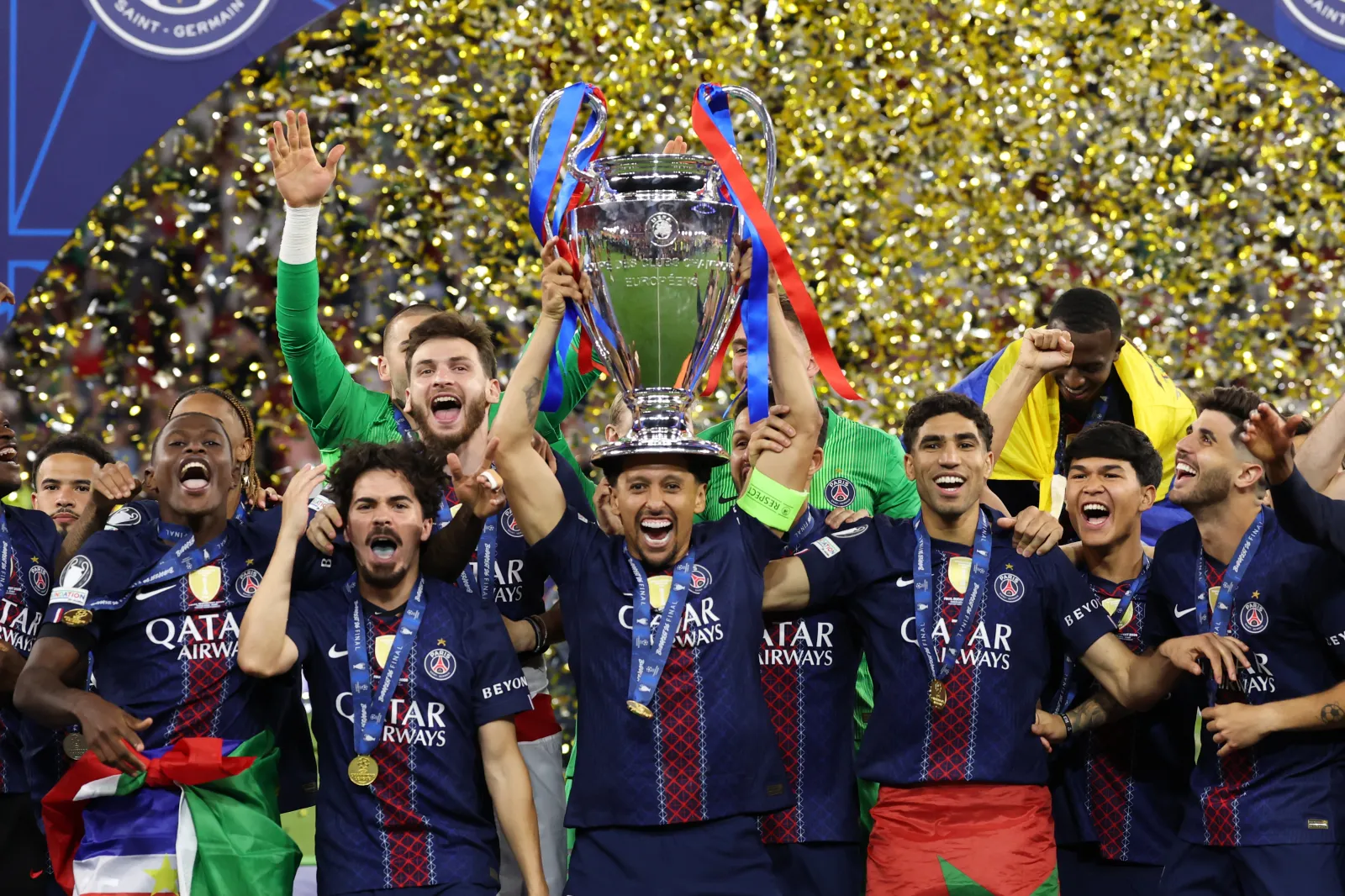
“It’s not coercion, nor is it attractiveness,” Chadwick said. “Meso power is essentially based around networks and connections, people you know, people you trust, people with whom you’ve done business before.”
The Super League episode, an attempted breakaway tournament launched by Europe’s biggest clubs in 2021, showed both the power and the limits of those networks. The project collapsed within days amid backlash from fans, governments, UEFA and FIFA, but it also pushed UEFA toward a revamped Champions League format that expanded revenue for Europe’s biggest clubs.
Whether that network holds through September, when federations are due to vote, could determine whether FIFA Forward Enterprise becomes the vehicle for a more frequent, privately financed World Cup, or another Infantino initiative that stalls under the weight of soccer’s competing power centers.
“It’s going to be really interesting to see which of these two bulls is strong enough to be able to prevail and assert itself,” Chadwick said.
Despite Criticism, Infantino Still Has the Votes
The idea for FIFA Forward Enterprise emerged last year during private talks between Infantino and Joshua Kushner, according to Bloomberg. Kushner founded Thrive Capital, the venture firm behind Thrive Eternal, the anchor investor FIFA selected for the new subsidiary.
For Chadwick, the significance goes beyond the investor itself; it’s the chain of relationships that has raised concerns among critics. “Your Infantino speaks to Trump, Trump speaks to Kushner,” he said. “And then what you have is you therefore have a brand new private equity investment entity with which FIFA can do business.” He said those connections “raise a whole series of issues around nepotism and around conflict of interest,” adding that Infantino has “laid himself open to all kinds of claims” that he’s relying on his relationship with Trump rather than FIFA’s own procedures.
A person close to Thrive Capital told CBS News that Kushner has no formal role in the Trump administration, no record of donating to it, and that Trump had no involvement in the proposal. FIFA has not explained why it selected Thrive Eternal to lead the investor group.
The controversy also underscores how Infantino has built power inside FIFA. Each of the federation’s 211 member associations gets one vote regardless of size, wealth or footballing influence, meaning a federation like Anguilla carries the same formal weight as Brazil. That arithmetic, Chadwick said, not Europe’s opinion, is what ultimately determines who leads the organization.
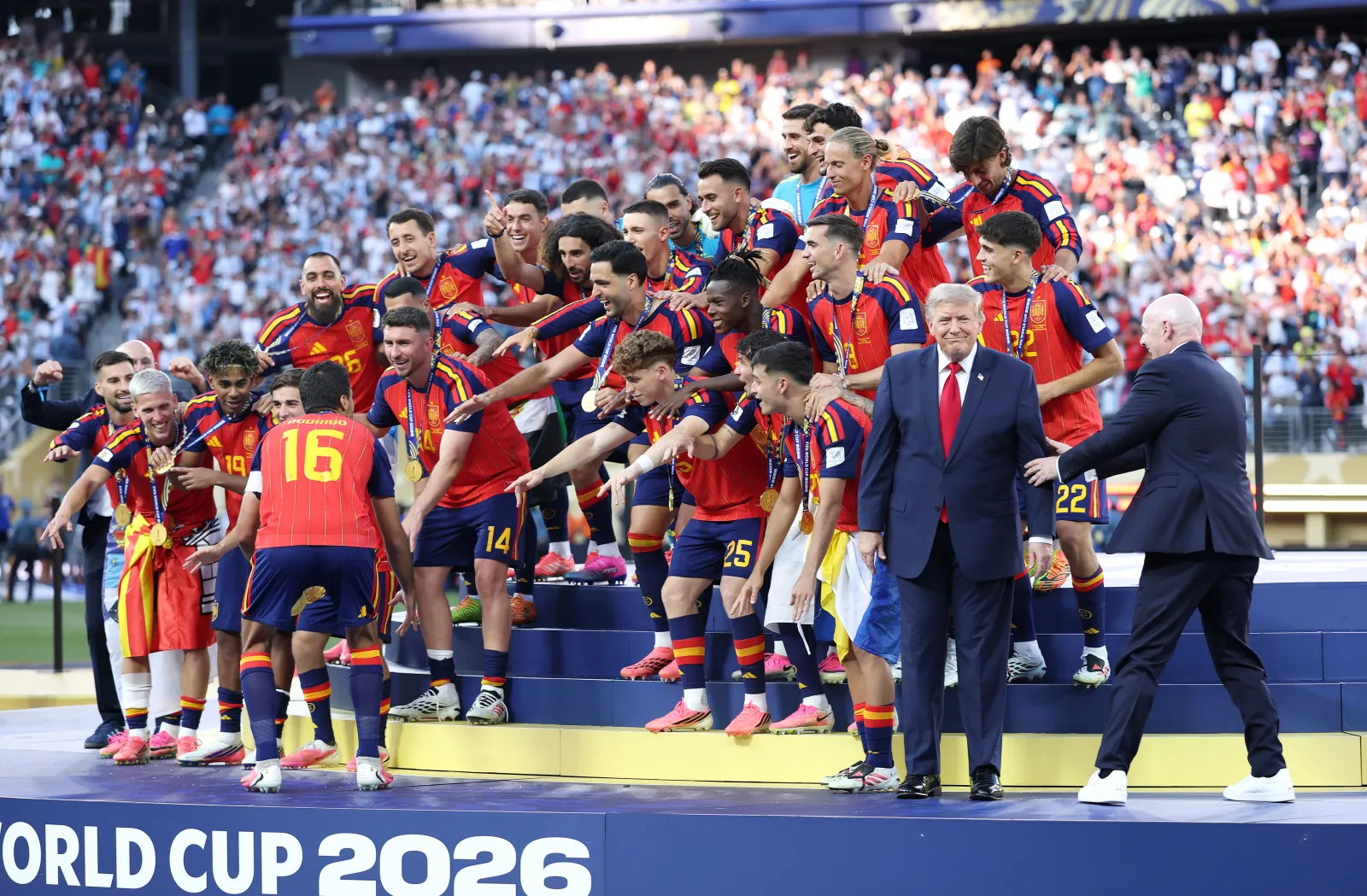
“His basic electoral manifesto from 2016 right up until now is that you secure victory by making everybody richer,” Chadwick said of Infantino. “So if you can win over Africa, and we saw this with Blatter… if you’re going to cement your position in power as the president of FIFA, you’ve got to appeal to Africa.”
Chadwick said the FFE proposal follows the same logic: by promising to roughly double FIFA Forward payments, Infantino is offering federations that depend heavily on FIFA funding a direct financial incentive to support the plan, despite concerns over how it was developed. CAF, the African confederation seen as central to Infantino’s political base, said it would review the proposal at a meeting the following week.
Cordeiro’s resignation came amid broader criticism of Infantino’s conduct during and after the World Cup, including his decision to award a peace prize to President Trump, defend record-high ticket prices, intervene in a red-card dispute involving U.S. forward Folarin Balogun, and maintain a close relationship with Trump throughout the tournament. Critics also pointed to FIFA’s handling of Iranian players’ visa issues.
FIFA’s finances, however, tell a different story. The federation is projecting roughly $13 billion in revenue for the four-year cycle that includes the 2026 World Cup, up from about $7.5 billion during the Qatar cycle, the most FIFA has ever generated from a World Cup period.
Contact Newsweek editors on this story: Jason Lemon and Gray R. Thomas
Crédito: Link de origem