

How the village of Kasibo in Zimbabwe reinvented itself
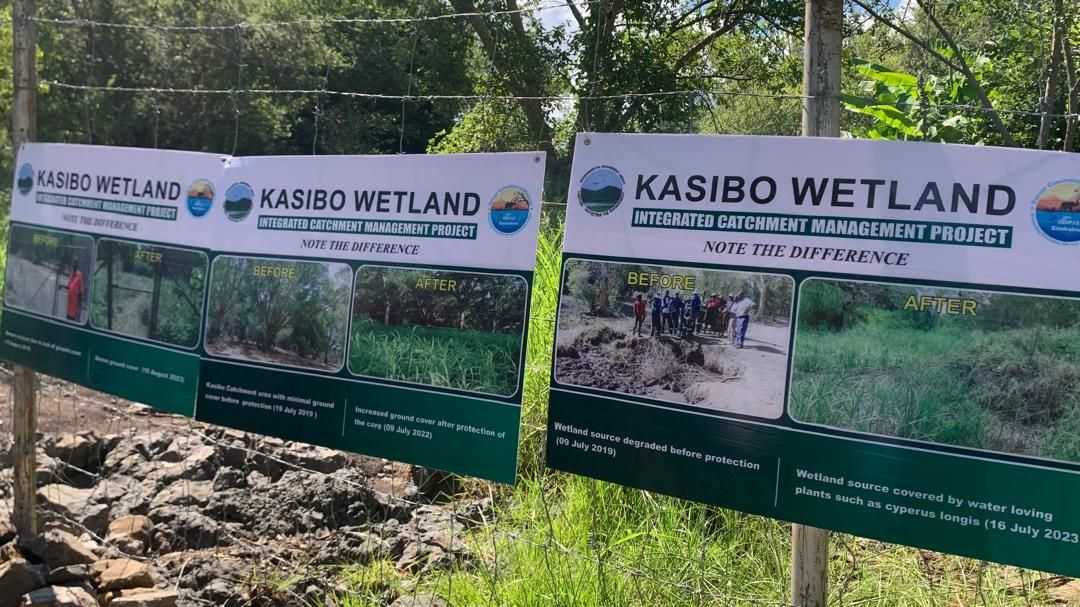
While some community members were weighing the risks of emigrating to South Africa due to the droughts, others recalled that a wetland had once provided the area with sufficient water. But then the population grew, and people started keeping more and more livestock. Water demand rose and the cattle encroached on sensitive areas of the wetland, which was not well managed and degraded over time.
“Our children did not know about this wetland because it was wholly destroyed,” says Nomsa Ncube, Gertrude Moyo’s neighbour. “As for us, we were among the people who had destroyed it and could see nothing wrong – until the effects of climate change were worsening.”
From degradation to targeted management
The community decided to restore the wetland. A group of 31 women and nine men from the community launched the Kasibo Wetland Project in 2017. With the help of government agencies and other supporters, they succeeded in significantly improving the management of the area. Among other measures, a core area was fenced off and steps were taken to better protect the springs. “We tried and it is working,” says Nomsa Ncube.
Supporters of the project include Zimbabwean authorities such as the Environmental Management Authority, the Agricultural Rural Advisory Services and the Hwange Rural District Council. Further support came from the UN World Food Programme, the civil society organisation World Vision and the Zimbabwe Parks And Wildlife Management Authority.
At the heart of the project is a farm covering two hectares of land. The community grows vegetables, mangoes and oranges, and it also keeps bees. The fruit and vegetables are shared amongst the members, some of whom sell them in the nearby city of Hwange. Some members are planning to tap into other lucrative markets, such as the nearby town of Victoria Falls, situated near the world-famous waterfalls of the same name.
Credit: Source link