

How curiosity took Victoria Abiodun from anatomy to crypto

Growing up in a household steeped in healthcare, Victoria Abiodun’s path seemed predetermined: finish her anatomy degree at the University of Ilorin, Kwara State, northcentral Nigeria, head abroad for medical school, and never look back. As for cryptocurrency? She wanted nothing to do with it, convinced it belonged firmly in the realm of internet scams. But when an ASUU strike collided with the 2020 lockdowns, a persistent anatomy coursemate challenged her prejudice. To make sense of the dense, jargon-laden whitepapers, she began writing her own explanations from scratch. That curiosity set off an unexpected chain reaction: from ghost-writing technical primers as an undergraduate to co-founding a gaming startup, spearheading marketing for a European decentralised identity protocol, and bootstrapping a 100-strong Solana developer chapter in Ilorin. Today, while reading for an MBA at USC and researching high-density energy demand, she is writing the open-access, plain-English blockchain book she wishes she had read on day one. In this week’s My Life in Tech, JOHN ADOYI sits down with Abiodun to trace her accidental journey from anatomy labs to Web3 education.
Victoria Abiodun, a Web3 educator, is writing a book that explains distributed technology in plain language. Only a few years ago, she wanted nothing to do with it.
As an undergraduate at the University of Ilorin in north-central Nigeria, she viewed cryptocurrency as indistinguishable from fraud; the people who evangelised it seemed either to be perpetrating scams or falling victim to them.
One person challenged that conviction: a trusted friend from her anatomy class who spoke incessantly about blockchain. She struggled to reconcile his enthusiasm with the prejudice she held.
“In all honesty, the first thing that piqued my curiosity was the money he was making,” she says. “I was like, ‘What? This is crazy.’”
Yet financial curiosity was merely the entry point. Coming from a pure science background, she struggled to grasp the underlying technical concepts, prompting her to write about them to break them down.
“The goal was simply to teach myself the core concepts,” she says.
That curiosity soon propelled Abiodun beyond writing. She went on to advise blockchain companies, co-found a gaming startup, and establish Superteam Ilorin—a regional community supporting developers and founders deploying on the Solana network. Through those stints, she zeroed in on a question that transcended technical mechanics: how could builders harness the technology to solve acute, real-world problems?
Her forthcoming book is one prong of that mission. Across grassroots community building, technical writing, and her podcast, Abiodun is demystifying an ecosystem she once dismissed.
A medical household
Before encountering Web3, Abiodun had envisioned a healthcare career. Her mother was a nurse, and her elder sister pursued medicine. As a child, she briefly flirted with law because an uncle was an attorney and she thought it looked “pretty cool”, but in a home steeped in clinical practice, medicine exerted the stronger pull.
“I assumed I wanted to be a doctor as well,” she says, “and I simply followed that momentum.”
She enrolled at the University of Ilorin to read anatomy, intending to travel abroad after graduation for medical school or postgraduate training in public health. Technology did not feature in the plan.
“I never imagined I would go into tech,” she says, “nor did I think I was particularly interested in it.”
Yet an entrepreneurial streak was already evident. From her first year on campus, she launched small ventures across different sectors. Some gained traction, others collapsed, but the collective experience sharpened her commercial instincts.
Then the COVID-19 pandemic struck in 2020. With lockdowns compounded by a prolonged academic staff strike that shuttered Nigerian universities, her studies ground to a halt.
Rather than idling, she published an e-book on physical wellness, formed an online fitness community, and explored digital side projects.
Cryptocurrency was still off her radar. Her anatomy classmate, however, continued to evangelise the sector. Because he was already active in technology, regular conversations with him steadily dismantled her scepticism.
“During the lockdown, I immersed myself in reading and research,” she says, “and that was the turning point.”
A family ordeal crystallised the technology’s utility: her elder sister was studying medicine in Ukraine when conflict erupted in 2014, leaving their parents in Nigeria unable to wire tuition or living expenses through severed international banking corridors.
When Abiodun recounted the ordeal, her friend explained how peer-to-peer blockchain settlement could have bypassed legacy banking infrastructure to move capital instantly.
“Seeing the real-world gap this technology bridges made it instantly compelling,” she says.
She began writing essays to synthesise her research. When her classmate reviewed her work, he asked whether she realised that companies paid writers to produce technical blockchain content.
She did not.
Pitching agencies and niche publications, she landed an early commission to author a Q&A-style primer breaking down basic distributed ledger concepts. Between 2020 and 2021, while completing her degree, Abiodun freelanced as a content strategist across Web3 startups, corporate blogs, and trade outlets.
The gaming venture
Blockchain gaming was one of the first things that hooked Abiodun. The logic was simple when her friend explained it: players already spent real money on in-game assets, so why shouldn’t they be able to withdraw their earnings?
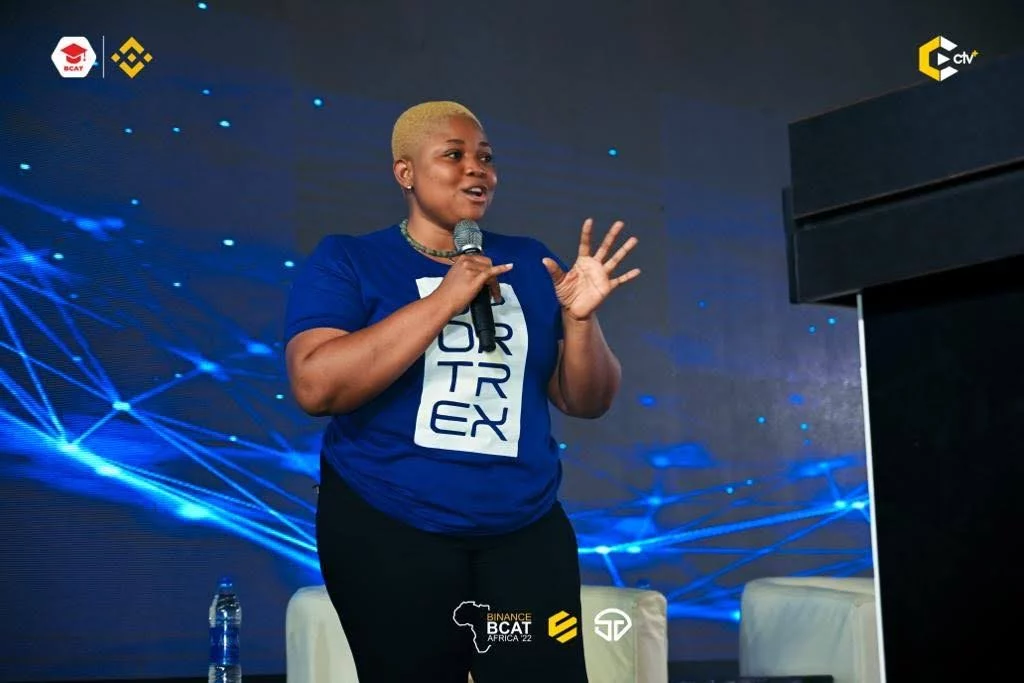
In 2021, she got the chance to build in that space. She met a co-founder who wanted to develop a blockchain game, and the idea grew into Sportrex, a gaming ecosystem built around play-to-earn.
The ambition extended beyond a single game. Sportrex was designed to let players track their winnings and rankings through a gaming wallet, while allowing other developers to bring their games onto the platform. The wider vision also included a competitive league system, virtual reality experiences, and a token for the gaming ecosystem.
But Abiodun believed that earning money alone would not keep players interested.
“Play-to-earn is nice, but if the game is not fun for people to play, nobody would want to play the game,” she says.
Blockchain gaming was among the first sub-sectors to capture her attention. The economic rationale was intuitive: if players were already spending hard currency on digital assets, they ought to own them outright and retain the ability to liquidate their earnings.
In 2021, she stepped into an operational role, partnering with a founder to establish Sportrex—a platform designed around play-to-earn dynamics.
The scope soon outgrew a standalone title. Sportrex was architected as an aggregator: players could monitor rewards and global leaderboards via a proprietary wallet, while independent developers could integrate their own games. The roadmap included esports tournaments, virtual reality modules, and a native utility token.
Yet Abiodun remained clear-eyed about the limitations of financial incentives alone.
“Play-to-earn is attractive, but if the gameplay lacks substance, retention plummets,” she says. “Nobody wants to play a game that isn’t enjoyable.”
As marketing lead, she drafted the company’s whitepapers, drove brand strategy, managed community acquisition, and negotiated strategic partnerships. She also spearheaded their presence at the Dubai Blockchain Summit, leading discussions with prospective institutional backers.
The venture crystallised her view that early-stage tech ventures must prioritise speed over flawless execution.
“I believe in putting products out early, letting them break, and iterating in public,” she says. “The industry does not wait for you.”
She stepped down from Sportrex in December 2022, carrying that bias toward rapid deployment into her next engagement.
Building a growth strategy from scratch
After leaving Sportrex, Abiodun joined Matchain, an early-stage project preparing to take its AI-driven decentralised digital identity platform to market.
“When I joined, there was no marketing team; there were just engineers and the founder in Lisbon, Portugal,” she says. “So it was just me, the COO and the founder.”
She helped define Matchain’s market position, customer acquisition strategy, and partnership plans. She also developed onboarding strategies for Match Hub, which brought other companies into the ecosystem, and wrote the company’s website content.
The role drew on skills she had developed as an entrepreneur.
“Most of the core skills that you apply to building your own businesses are skills that people employ others for,” she says.
She also had to understand how differently blockchain companies approach growth. In her experience, blockchain startups often need to build a community before a product is ready to launch.
“If you do not build a community around your product before the product is ready, you probably would not have a community that would adopt the product,” she says.
Abiodun worked with Matchain until 2023. Although she had planned to relocate to Lisbon, Portugal, visa interview availability for Nigerians prevented the move.
She says the company also wanted a team that could work more closely together; she eventually moved on.
Finding community outside Lagos
Her trajectory subsequently pivoted from corporate marketing toward grassroots capacity building. Having helped funded platforms scale, she wanted to mentor the engineers building baseline software.
In 2023, as the global Solana developer network Superteam expanded its international reach, Abiodun saw an opening to anchor a chapter in Ilorin, where she maintained a residence.
She volunteered to establish the regional presence. Though she had intended to take a sabbatical to travel and take up golf, she instead convened Ilorin’s inaugural Superteam meetup in February 2024—despite not considering herself an insider in local engineering circles.
“I was stunned by the initial turnout,” she says. “From that first session, attendance scaled into hundreds every month.”
Her execution led to her formal appointment as lead for Superteam’s Southwest Nigeria operations. Yet sheer attendance was secondary to her core objective: pushing local talent beyond tutorial exercises into shipping functional software.
“Nigeria has an exceptional concentration of technical talent,” she says. “Developers spend thousands of hours mastering complex frameworks, yet we rarely see that skill translated into solutions for local structural bottlenecks.”
Bootstrapping the community required tactical agility. When a venue billing dispute severed ties with the private coding hub hosting their initial sessions, Abiodun restructured operations—securing alternative halls, engaging campus hostels directly, and tapping alumni networks.
She also made pastoral engagement central to her leadership, tracking individual project milestones and providing personal mentorship.
“When people feel genuinely supported, enthusiasm compounds,” she notes. “Engineers kept returning with their peers because they wanted them to experience that collaborative culture.”
Though the compensation was a fraction of her previous commercial contracts, she considers it her most meaningful tenure. “It remains one of the most impactful assignments I have undertaken,” she says. “It was deeply fulfilling.”
Demystifying tech
That educational focus now centres on an introductory book aimed at non-technical founders, students, and corporate professionals.
“When I entered the space, the available literature was dense, forbidding, and cluttered with jargon,” she explains. “I wanted to write something conversational—matching the cadence of how I explain these concepts across a table.”
The manuscript covers core operational mechanics—distributed ledgers, network layering, consensus architecture, and cryptography—while exploring non-financial primitives including supply chain verification and verifiable identity credentials. She intends to publish it as an open-access resource.
Her outreach also includes Convergence, a podcast examining distributed systems, enterprise workflows, and tokenised assets. The series originated from informal discussions with professionals outside the crypto sphere looking to understand how decentralised protocols intersect with their native industries.
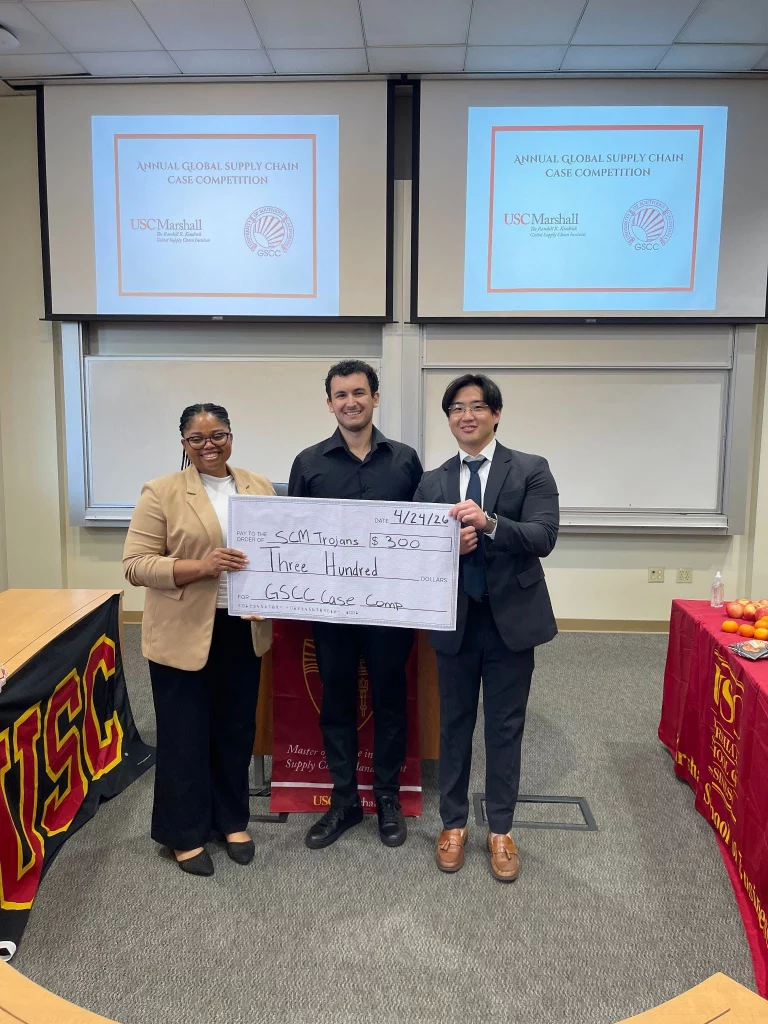
Abiodun’s horizons have since expanded toward core infrastructure. Currently reading for a Master of Business Administration (MBA) at the University of Southern California’s Marshall School of Business, she also serves as a graduate research assistant with the school’s Zage Business of Energy Initiative. Her focus on energy was prompted by the steep electrical baseload demands imposed by artificial intelligence clusters and high-density data centres.
The business curriculum has supplemented her operational background with formal training in corporate valuation, asset pricing, and financial modelling.
“Energy systems are not something I would have prioritised had I stayed solely within startup marketing,” she reflects. “Maximising the chance to interrogate these structural challenges has been an exceptional privilege.”
Whether evaluating distributed ledgers or energy transition models, Abiodun remains clear that technology is a mechanism rather than an end in itself.
“Directing my career toward solving problems that tangibly improve other people’s circumstances is what matters most,” she says. “Accolades and bull runs are fleeting; the real reward is knowing you helped clear a pathway for someone else.”
True scale demands moving beyond surface-level integrations to robust execution. We’ve filtered the noise out of Moonshot 2026, optimising the conference strictly for high-calibre connections between startup founders, global financial operators, enterprise leaders and individuals rewiring Africa’s technical frameworks. Get 20% off Early Bird tickets for a limited time.

Crédito: Link de origem