

How All Three Host Nations Survived the Group Stage
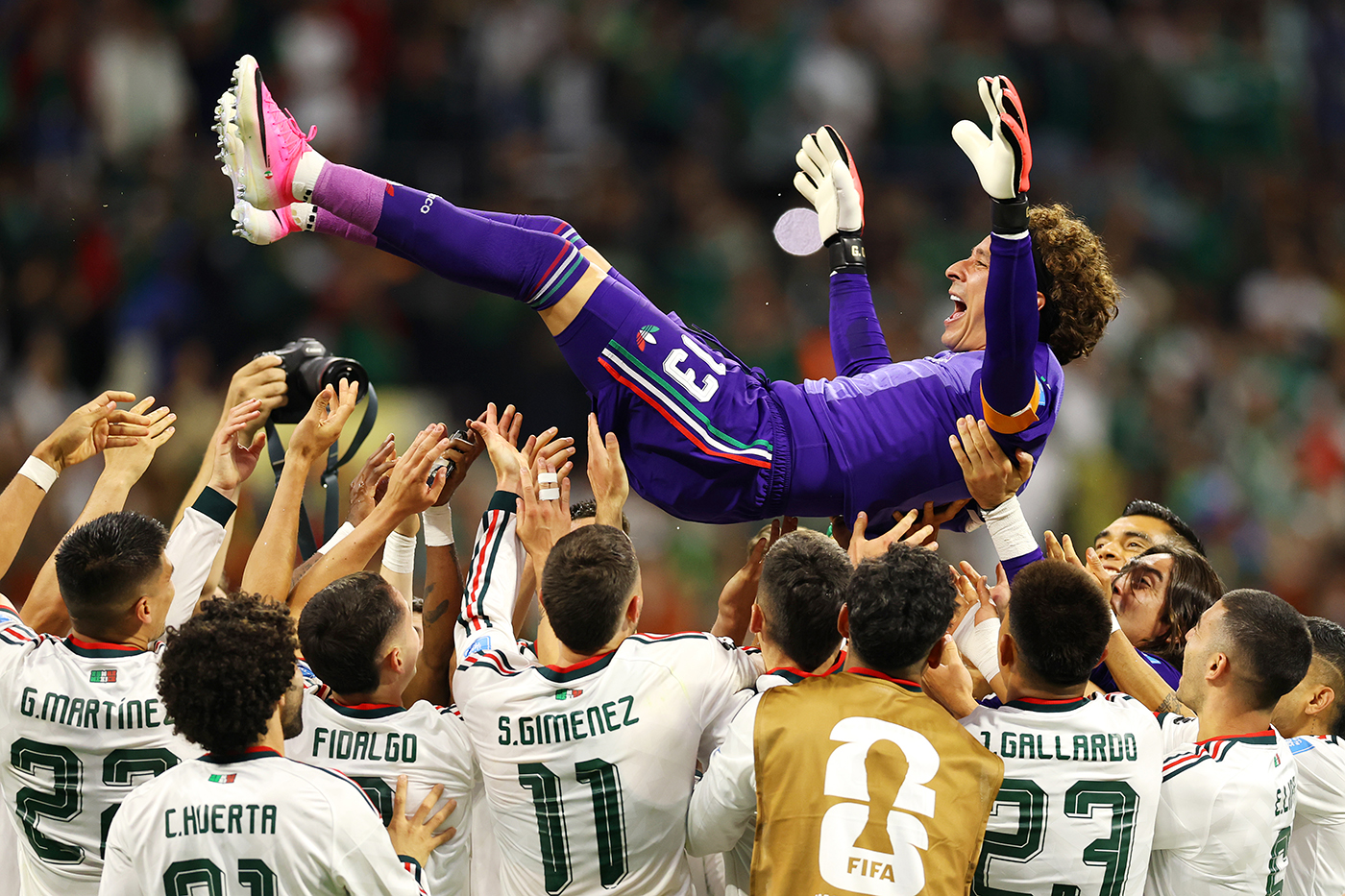
Maybe there is some truth to home field advantage after all.
The World Cup’s three host nations –the United States, Mexico and Canada – have all made it to the knockout round.
So what has led to each team’s success in the first two weeks of the tournament so far?
It’s not just about the fans.
Data from Northeastern’s NetSI Sport research group helps reveal some of the teams’ most notable and successful tactics.
U.S.
First match: defeated Paraguay, 4-1
Second match: defeated Australia, 2,0
Third match: lost to Türkiye, 3-2
Next match: versus Bosnia and Herzegovina, July 1
The United States offered up many high chance creations – high quality opportunities for scoring – in all three of its group stage matches, accumulating 1.25 of expected goals or more in the matches it won, and more than 1.75 of expected goals in its loss against Turkey.
Critical to the team’s strategy has been its ball possession through dribbling and progressive carries, when a player moves a ball up the field without being challenged by a defender. The team averaged around 10.3 dribbles per game, the fourth highest out of the teams competing this year. The leading three teams are Ivory Coast (10.7), Jordan (10.7) and Algeria (10.5).
Mexico
First match: defeated South Africa, 2-0
Second match: defeated South Korea, 1,0
Third match: defeated Czechia, 3-0
Next match: versus Ecuador, June 30
Mexico won all three of its group stage matches without conceding a single goal to its opponents. Its match up against South Korea was particularly impressive, given that the Latin American country ended the match with a total accumulation of .5 expected goals compared to South Korea’s 1.5 of expected goals. On paper, South Korea should have won, according to Northeastern’s NetSI group.
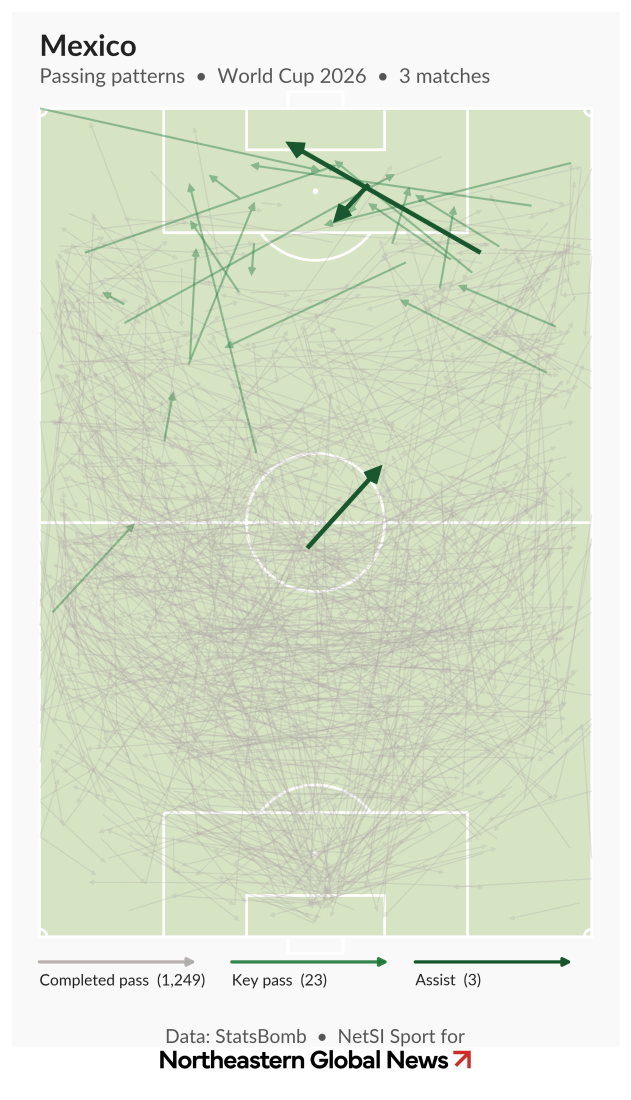
Looking at the country’s player network formation, the team’s key passes, which are shots that lead to a goal, primarily come from crossing the ball to the team’s center forwards and striking talent, including Raúl Jiménez. He scored for the country in its opening match against South Africa.
Canada
First match: tied with Bosnia and Herzegovina
Second match: defeated Qatar, 6-0
Third match: lost to Switzerland, 2-1
Next match: versus South Africa, June 28
Out of all three of host countries, Canada accumulated the highest numbers of expected goals – 6.9 xG. A huge share of that was collected in the country’s game against Qatar, a somewhat lopsided match given Qatar was down two men in the second half.
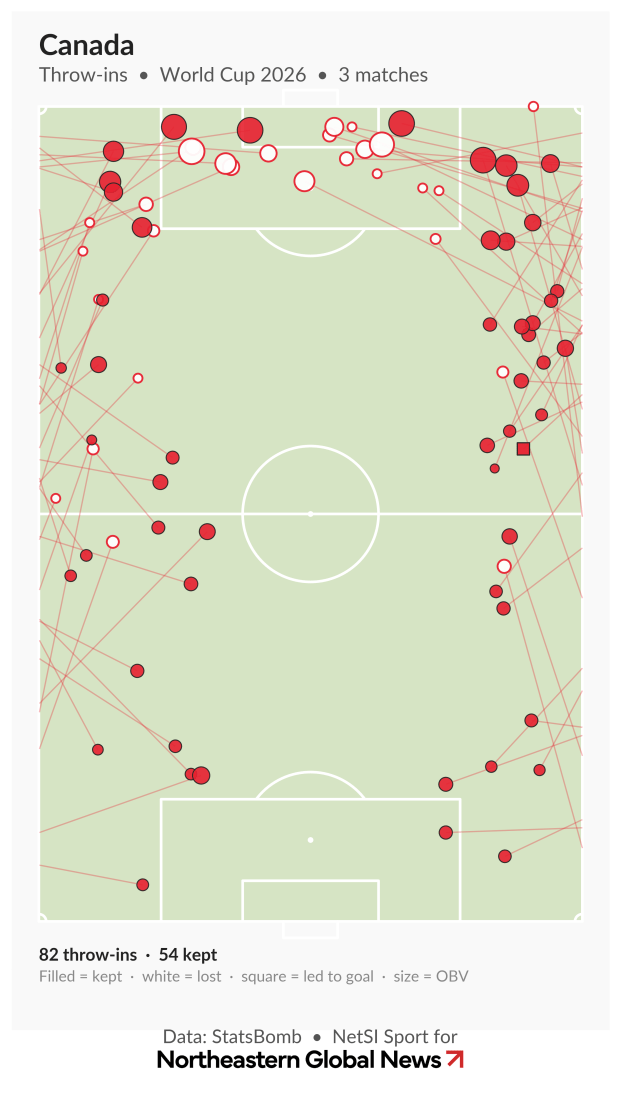
One of Canada’s most striking chance creation strategies is its reliance on long throws ins, where a ball is thrown from the sidelines into the opponent’s penalty box. Across the three games, Canada performed 82 throw-ins, which equates to 27 per match.
The average number of throw-ins across the 48 teams is 18.2.
Data analysis provided by Brennan Klein, director for Northeastern University’s NetSI Sport research group.