

Houthis Fire Six Missiles Into Marib’s Displacement Camps as Yemen War Risk Peaks
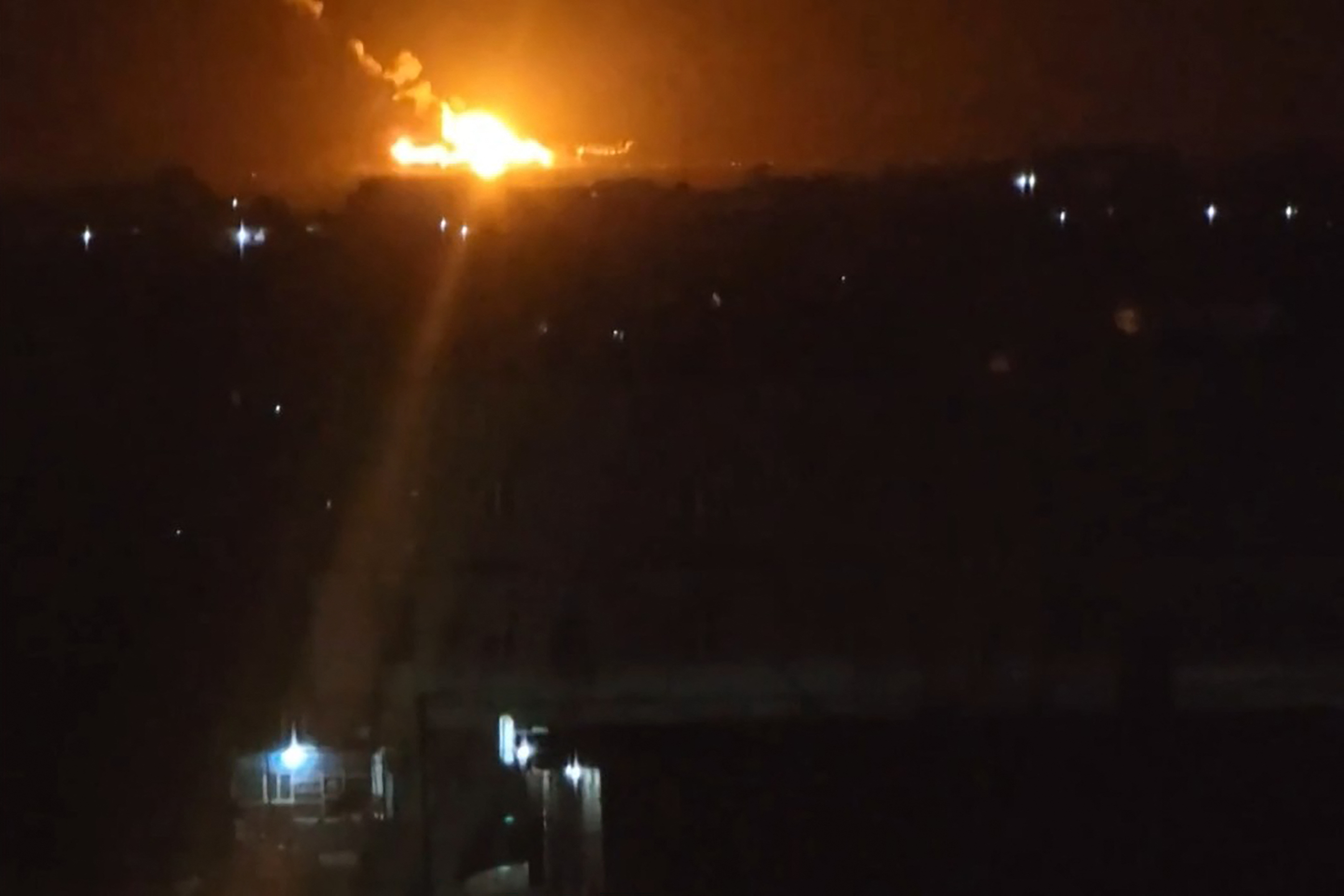
Houthi forces fired six ballistic missiles into the government-held city of Marib over the weekend, striking residential neighborhoods and displacement camps in an escalation Yemen’s Ministry of Information denounced as a dangerous threat to civilian life, as the UN’s special envoy warned Yemen faces its highest risk of returning to full-scale war since a 2022 truce quieted the conflict. Marib’s provincial authority said the group struck the city with four ballistic missiles and four drones on Saturday, causing several injuries and damaging homes, vehicles and property; a fifth missile later in the day injured another person, and a sixth was launched toward the city overnight into Sunday. Marib hosts the largest concentration of internally displaced people anywhere in Yemen, with more than two million of the roughly five million Yemenis forced from their homes over the course of the war sheltering there, making the camps a recurring target as the fighting has intensified through August.
UN Special Envoy for Yemen Hans Grundberg told the Security Council on Thursday that military activity has intensified across the country’s frozen front lines, with attacks producing military and civilian casualties on both sides, and urged all parties to exercise restraint. The Houthis and Yemen’s internationally recognized government, he said, “have more to gain from cooperation than confrontation.” Grundberg separately renewed calls for the release of 73 UN personnel arbitrarily detained by the Houthis, alongside colleagues from non-governmental organizations, civil society and diplomatic missions, saying preparations for the release of more than 1,600 conflict-related detainees under a May agreement had been moving slowly and risked being disrupted by the broader escalation. He also urged the warring parties to keep commercial vessels reaching Yemeni ports, enable a resumption of oil exports, and restart commercial flights to and from Houthi-held Sanaa airport, framing continued economic cooperation as one of the few remaining levers against a full collapse into war.
Grundberg’s briefing came the same week a Pentagon report submitted to Congress delivered the Trump administration’s first formal public admission of civilian casualties from Operation Rough Rider, the U.S. air campaign authorized in March 2025 to halt Houthi attacks on Red Sea shipping. The 12-page document, signed by deputy assistant secretary of defense Colby Jenkins, confirmed that U.S. airstrikes in Yemen last year killed 153 civilians and wounded 243 more, assessing that three specific operations “more likely than not” resulted in civilian harm while another 15 remain under review. The three confirmed incidents illustrate the scale of individual strikes: an April 17, 2025 strike on the Ras Isa fuel port on Yemen’s Red Sea coast killed 80 civilians and wounded 171, a toll independent analysts described as the deadliest single U.S. military attack on civilians in the region in years; an April 28 strike in Saada killed 68 civilians who, according to a subsequent Amnesty International investigation, were African migrants held in a detention facility with no evidence of any military target nearby; and an April 6 strike on a private residence in Sanaa killed five civilians and wounded 25. The Pentagon’s confirmed total sits below independent estimates — the Yemen Data Project found at least 238 civilians killed and 467 wounded during the same campaign, while London-based watchdog Airwars had previously estimated at least 258 deaths across more than 1,000 targets struck before the campaign ended in May 2025.
The current wave of escalation traces to early August, when coordinated Houthi missile and drone attacks on military camps in Marib and Hadramout killed at least 30 government soldiers, according to Yemeni officials, the deadliest single episode of the conflict in years; a military source told AFP the actual toll may have reached 58 government fighters killed. The strikes hit camps belonging to the Homeland Shield Forces, the Emergency Forces and Yemen’s First Military Region simultaneously, with casualties compounded because troops had gathered for a morning training exercise when the attacks began. Fighting has continued on multiple fronts since. Yemeni government forces said Saturday that drone strikes killed three Houthi fighters, including field commanders, along the Maqbanah front west of Taiz, while a separate strike destroyed a Houthi military vehicle in Jabal al-Zuhayb, killing several more fighters, according to a military source cited by the Yemeni News Agency.
On the Red Sea coast, Houthi forces attacked the Yemeni commercial vessel Tihamah in the Bab el-Mandeb Strait this week, killing six people in the first confirmed deaths from Houthi attacks on Red Sea shipping in more than a year. The Egyptian-owned vessel lost four crew members and two Yemeni National Resistance Forces rescuers in combined strikes; survivors told the Washington Post a second missile struck during rescue efforts, inflicting further casualties as rescuers tried to reach those wounded in the initial hit. The group has simultaneously sustained attacks on Mokha, the major government-controlled port on Yemen’s southern Red Sea coast, where a strike on August 14 alone killed at least eight people, according to a Yemeni government military official, while the Houthis said they struck a Saudi oil installation the same day. Sustained damage to Red Sea port capacity carries direct humanitarian consequences in a country where 19.5 million people required humanitarian assistance as of 2025, according to UN figures, since Yemen imports the vast majority of its food by sea.
Analysts tracking the conflict describe a deliberate Houthi strategic decision to end what Fuad Mussed, a Yemeni researcher at Al Jazeera, called the state of “neither peace nor war” the 2022 truce produced. Ahmed Nagi, a senior analyst at the International Crisis Group, said the expansion of cross-border Houthi attacks means the threat of all-out war between the two sides is “no longer far-fetched.” The Houthis have framed their escalation as a response to what they describe as coordination between Yemen’s government and Saudi Arabia on a broader offensive, an allegation Yemeni officials have not directly confirmed. Tensions between the Houthis and Riyadh have risen sharply since the U.S.-Israeli war against Iran began in late February, given the Houthis’ status as an Iranian-backed force; the group declared a maritime blockade against Saudi Arabia in July and struck Abha Airport that month, adding an international dimension to the resumed internal fighting.
Saudi Arabia faces a difficult calculation as the fighting intensifies, weighing support for a Yemeni government counteroffensive aimed at retaking the Houthi-held Red Sea coast against a negotiated settlement pursued through Omani mediators — two tracks that are difficult to advance simultaneously. Elisabeth Kendall, a Middle East specialist and president of Girton College at Cambridge, has said the escalation carries a “looming possibility” of tipping Yemen back into full-scale war, noting that government forces are now more unified than in previous years, a shift that could work in their favor if Saudi Arabia decides to move decisively. Yemen’s war, which began in 2014 when the Houthis seized Sanaa, has already killed hundreds of thousands of people over more than a decade of fighting. With missiles now landing in Marib’s displacement camps on consecutive nights, UN detainees still uncounted for release, and the Pentagon’s own casualty admission drawing fresh scrutiny from Congress, the coming weeks stand as a decisive window in which Saudi Arabia’s choice, the government’s military capacity, and the Houthis’ willingness to absorb costs will together determine whether the 2022 truce becomes a historical footnote or a baseline to which the parties can still return.
Editors’ note: This is a developing story covering an active armed conflict and will be updated as verified information becomes available.
Originally published on HNGN