

Haiti’s Diaspora in Chile Watches Washington Repeat a Cycle Santiago Knows Too Well
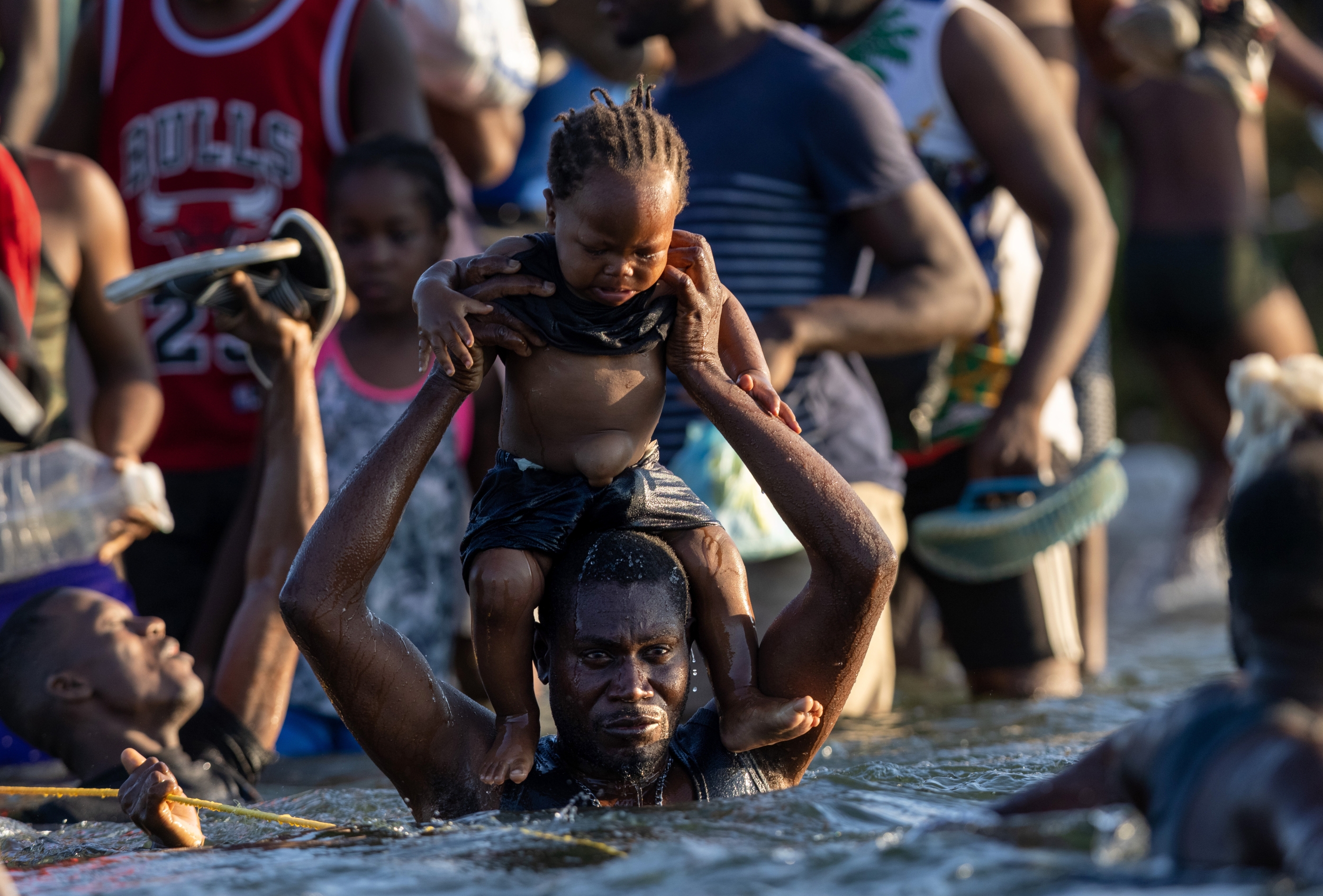
Photo by John Moore/Getty Images
Roughly 200,000 people landed back in Haiti between January and August of this year, a toll one senior United Nations official called a 10% jump over the same stretch last year. But the headline number hides a detail that matters enormously for Chile’s Haitian community: the vast majority of those returns — upward of 194,000 — originated in the Dominican Republic, not the United States, according to figures Haiti’s own repatriation-monitoring group, GARR, released this month and reported by the Haitian Times. Washington’s contribution to that same eight-month tally: just over 1,000 people.
That distinction is about to blur. Washington’s contribution to the tally, while still small next to the Dominican Republic’s, is climbing sharply, and the mechanism driving it — the unwinding of Temporary Protected Status — is the same one that scattered thousands of Chile-based Haitian families in 2021. For the Haitian community still living in Santiago and Valparaíso, that history is why the new numbers land less like breaking news and more like a rerun.
A Legal Fight That Ended in June
The current wave traces back to a Supreme Court decision. The justices ruled 6-3 on June 25 in Mullin v. Doe that courts have no authority to second-guess a Homeland Security Secretary’s call on ending a country’s TPS designation, a decision that the Marshall Project reported cleared the way for the government to strip protections from hundreds of thousands of Haitian and Syrian nationals overnight. Writing for the majority, Justice Samuel Alito held that the executive branch retains broad discretion over which countries still need the protection. Haiti’s designation was formally terminated on July 27, 2026, according to a U.S. Citizenship and Immigration Services bulletin, cutting off work permits for what different agency estimates over the past two years have placed at anywhere between roughly 330,000 and 520,000 Haitian nationals — a wide range this article flags rather than collapses into a single figure, since DHS’s own count has shifted repeatedly as people changed status or left the program.
Deportation flights followed within weeks. Haiti received its first post-ruling U.S. flight in late August, and by early September, planes were touching down in Cap-Haïtien roughly once a week, carrying deportees including, on one recent flight, a former Haitian government ombudsman detained on corruption allegations, the Associated Press reported.

Photo by MARTIN BERNETTI / AFP) (Photo by MARTIN BERNETTI/AFP via Getty Images
Chile Has Watched This Movie Before
The scenes now playing out at Cap-Haïtien’s airport echo 2021, when roughly 8,000 Haitians were expelled from Del Rio, Texas, in a matter of weeks. What made that episode distinct — and what Chile’s diaspora remembers most vividly — is that most of those deportees hadn’t lived in Haiti in years; they’d built lives in Chile or Brazil first. Giuseppe Loprete, then the International Organization for Migration’s mission chief in Haiti, put it to Voice of America in blunt terms: “They lost what little they had, and now they’re back to square one.”
The human cost of that wave fell hardest on children. Between September 2021 and February 2022, U.S. authorities returned roughly 2,300 children of Haitian parents who had been born abroad — the majority of them in Chile — according to Human Rights Watch, which at the time called on every government, not just the U.S., to halt returns to a country where deportees “lack effective access to protection or justice.” Haitian migration officials now describe a version of that same pattern resurfacing on the 2026 flights, with some passengers sent onward specifically because they had a Haitian parent, despite having spent their lives in Chile or the Dominican Republic.
Why Haitians Left Chile in the First Place
To understand why this corridor exists at all, it helps to look at what pushed people out of Chile before they ever tried for the U.S. border. Chile absorbed one of Latin America’s largest Haitian communities after the 2010 earthquake, with government counts putting the population near 180,000 to 186,000 residents by 2019. That was also the year the tide turned: national migration data cited in a Chilean government migration report show more Haitians leaving the country than arriving for the first time since the earthquake.
Researchers tie that reversal to entrenched labor and housing discrimination. University of Chile sociologist María Emilia Tijoux has described a climate in which migrants come to feel, in her words as relayed by Chile’s Jesuit Migrant Service, that “the country produces fear.” Djimy Delice, who coordinates Valparaíso’s Haitian community, was blunter still, telling BBC Mundo that Haitians are widely treated as an unwanted burden. Migrants themselves put it in similarly stark terms to the Washington Post in 2021, describing a system they called racist even as they acknowledged the risks of the route north.

Photo by Richard Pierrin / AFP) (Photo by RICHARD PIERRIN/AFP via Getty Images
Little Safety Net Waits on Either End
Those risks haven’t eased. Gangs now hold an estimated 70% or more of Port-au-Prince, down from a peak near 90% but still enough to keep the capital in what Haiti’s own national police chief has called a significantly weakened but far from resolved crisis, according to Le Nouvelliste and a separate Associated Press report tracking the decline from that 90% high. More than 16,000 people were killed in gang-related violence nationwide between January 2022 and the fall of 2025 alone, the United Nations human rights office has said, with several thousand more deaths added through 2026; roughly 1.4 million Haitians remain internally displaced, a figure the UN says has doubled in two years, per reporting on the UN’s own tally.
Chile offers no obvious refuge from any of this. Of 5,707 asylum applications filed there in 2025, only 556 were even admitted for formal review — the smallest share in six years — and of the 163 refugee statuses Chile granted that year nationwide, most went to Venezuelan, Colombian and Palestinian applicants, according to figures from Chilean migration tracker infomigra.org. It’s a pattern that predates Kast by years: research compiled by OpenGlobalRights could not identify a single Haitian who was granted refugee status in Chile anywhere across the 2010-to-2019 stretch that coincided with the community’s biggest growth in the country.
Santiago’s Own Harder Line
If anything, Chile’s posture has hardened since far-right President José Antonio Kast took office on March 11, 2026, in what wire coverage of his inauguration described as the country’s sharpest turn to the right since the return of democracy. His government resumed deportation flights to Haiti on May 9 — the first since 2024 — as part of a broader crackdown that has also included flights to Colombia and the Dominican Republic, according to Chilean legal outlet diarioconstitucional.cl. Weeks later, the government unveiled a “voluntary return” program that lets undocumented migrants leave Chile without penalty — provided they abandon any pending visa or asylum claim first, according to program details tracked by infomigra.org.

Photo by Spencer Platt/Getty Images
What Comes Next
For now, the numbers still tell two different stories: a Dominican Republic-driven wave that dwarfs anything coming from north of the equator, and a smaller but fast-accelerating U.S. pipeline that is the one Chile’s diaspora recognizes on sight. Advocacy group Human Rights First has tracked the Cap-Haïtien flights running roughly weekly since late August, each one carrying people who, in many cases, spent years building lives thousands of miles from Haiti before ever setting foot back on the tarmac. For families still navigating Santiago’s labor market and a Chilean asylum system that rarely says yes, the flights read less like a warning of what could happen than a reminder of what already did, once, not so long ago.
© {{Year}} Latin Times. All rights reserved. Do not reproduce without permission.