

Haitian women engage in local governance amid ongoing crisis – Future of Good
Why It Matters
With the support of CECI’s AGIR project, women from the Cap-Haïtien region are weaving networks, influencing policies, and redefining how communities work together.
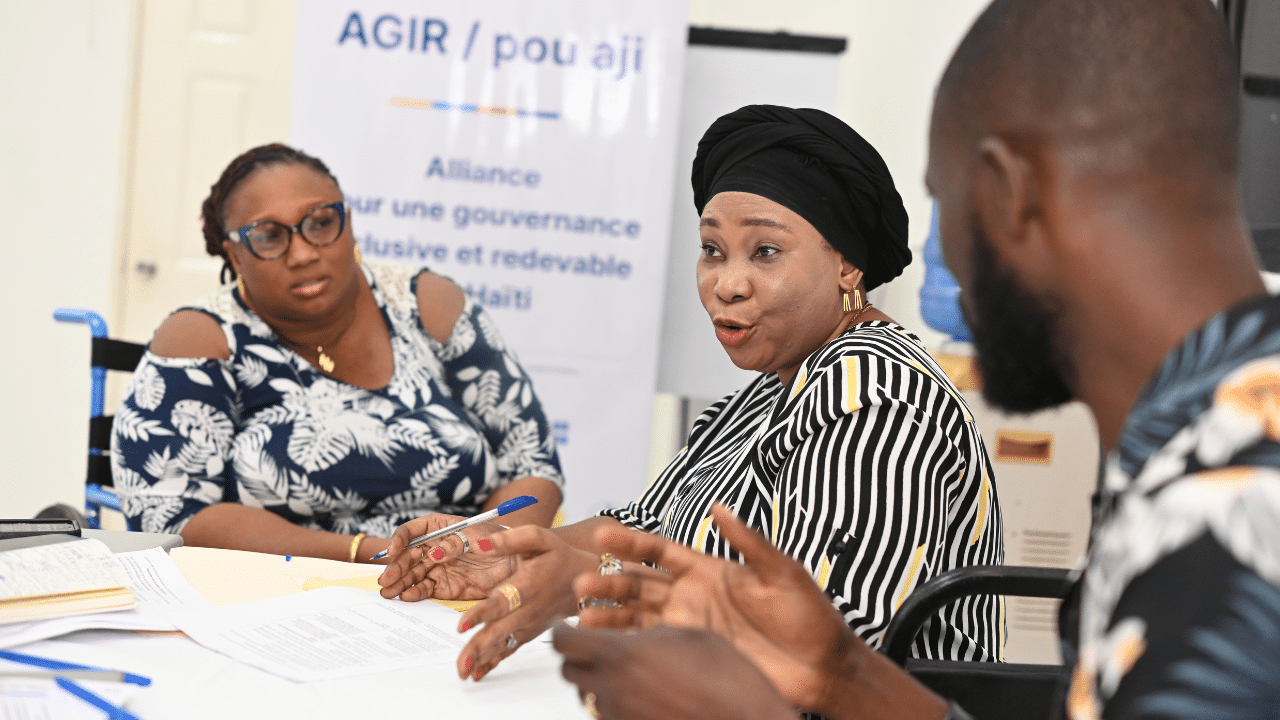
In northern Haiti, young people, women, and local authorities are joining forces to transform local governance through CECI’s Alliance for Inclusive and Accountable Governance in Haiti (AGIR) project.
The project aims to promote more participatory, inclusive, and accountable governance by ensuring a central role for women.
“It is a project that stems from an approach rooted in the vision of endogenous development, that is, which promotes building on existing local resources,” says Aline Sainsoivil, AGIR Project Officer for Haiti’s Northern Department.
The project is funded by the Government of Quebec and implemented by CECI, in collaboration with the Université du Québec à Montréal (UQAM), Maison d’Haïti, and local partners, particularly Asosyasyon Fanm Soley Dayiti (Sun Women’s Association of Haiti, AFASDA) and the Northern Haiti Destination Management Organization (OGDNH).
When Mutchi Obas speaks about Haiti’s political challenges, including insecurity, paralysed institutions, and limited access to essential services, she underscores the extraordinary potential of Haitian women and men, who are already carrying out vital work across the country.
“Haiti is facing multidimensional challenges, including political instability, insecurity, structural poverty, gender inequalities, vulnerability to natural disasters, and limited access to certain essential services. Despite these challenges, I believe that Haitian society stands out for its resilience, creativity, and strong community engagement,” says Mrs. Obas.
The project has helped harness these strengths by bringing together public, private, and civil society actors around a regional multisectoral table. A psychologist, entrepreneur, and leader of a feminist organization, Mrs. Obas took part in the AGIR project, both as a community actor and as a trainer on electoral and political issues.
She states that the project has helped develop a more coherent vision of the shared priorities of the metropolitan area of Cap-Haïtien (ZMCH) through a series of forums and debates.
“This is a major step forward for us as a society, because it is not common to witness local authorities and members of civil society organizing themselves, sitting down together at the same table, and engaging in dialogue. This is a very positive development within the project,” says Mrs. Obas.
Together, Haitian women and men from the six municipalities that make up the ZMCH have identified the most pressing priorities: organizing land-use planning and addressing unplanned urbanization; rehabilitating and upgrading infrastructure related to drinking water, energy, transport, and waste management; identifying locally appropriate responses to climate change; and developing solutions through an inter-communal approach.
Women’s networks across municipalities
Before the AGIR project, communities largely worked in isolation. Nowadays, says Mrs. Sainsoivil, “we are witnessing a kind of regional awakening. This new awareness highlights the need for sound local governance, but also for an inter-communal dynamic.”
This shift reflects CECI’s approach, which places citizens at the centre of governance and recognizes this cooperation as essential to achieving a lasting change.
“Before the project, inter-communal cooperation was virtually non-existant, or in any case it was rarely mentioned in public speeches. Nowadays, however, not only the actors involved in AGIR, but almost the entire population, are truly mobilized around major issues of general interest, and are currently talking about inter-communal cooperation.”
The project’s training sessions also introduced key principles of democratic governance.
“There have been training sessions aimed at strengthening citizen participation in governance. There has also been a strong emphasis on transparency, accountability, citizen participation, inclusiveness, and effective governance,” explains Mrs. Obas.
Women attending these training sessions can stand before local authorities in a more responsible and organized way; they learn to negotiate, defend their ideas, and exercise leadership.
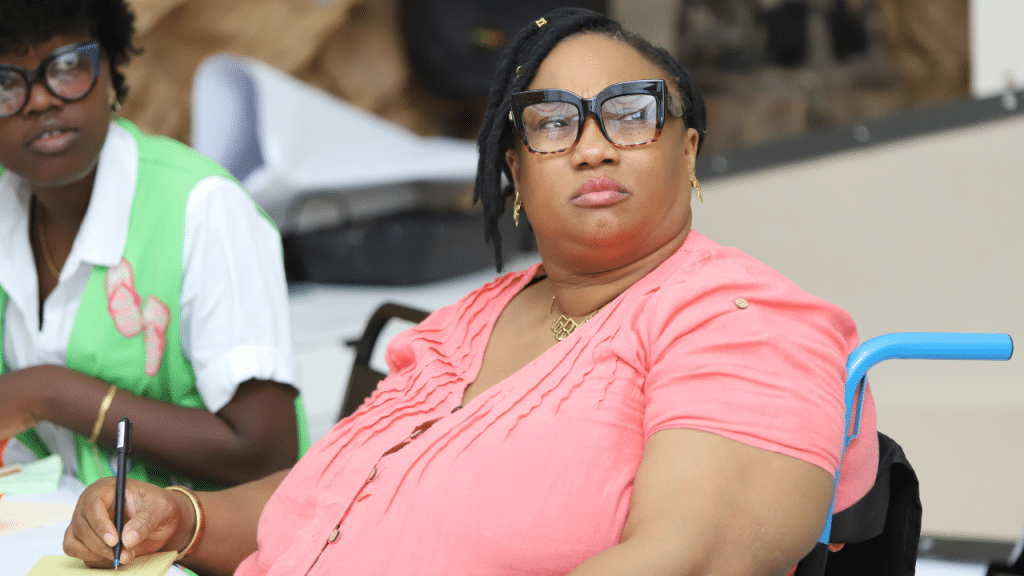
One of the workshops brought together 60 women from the six municipalities for three days. By the end of the workshop, they decided to create an inter-communal network, the first of its kind in the region.
“Through the AGIR project, they are seizing this opportunity to create a network to come together, even though they come from different backgrounds,” says Mrs. Sainsoivil. “They agree that by working together, they can achieve great things, strengthen one another, provide mutual support, and better participate, as women, in inclusive governance.”
Through gatherings, training activities and funding, the AGIR project strengthens citizens’ capacities, fosters dialogue between civil society and local authorities, and supports community-led initiatives.
“The metropolitan area of Cap-Haïtien is a region rich in potential, but it would greatly benefit from stronger local governance and greater recognition from the central government,” she adds.
These connections and learnings, which reflect CECI’s model centered on citizen participation, are generating both personal and community transformations.
Transforming their communities … as well as themselves
Régine Zéphirin Diègue, founder of the Movement for the Integration and Empowerment of Women with Disabilities (MIEFH), has been supporting women living with disabilities since 2009. Her participation in the AGIR project has transformed the way she views her own advocacy work.
“The AGIR project has enabled me to become more fully engaged in society than ever before. It has also made me much more aware of my responsibilities as a citizen,” says Mrs. Zéphirin Diègue.
“It also allows me to understand that while claiming our rights as people living with disabilities, we also have responsibilities.”
Thanks to the project, she has gained a deeper understanding of local governance and built connections with political leaders.
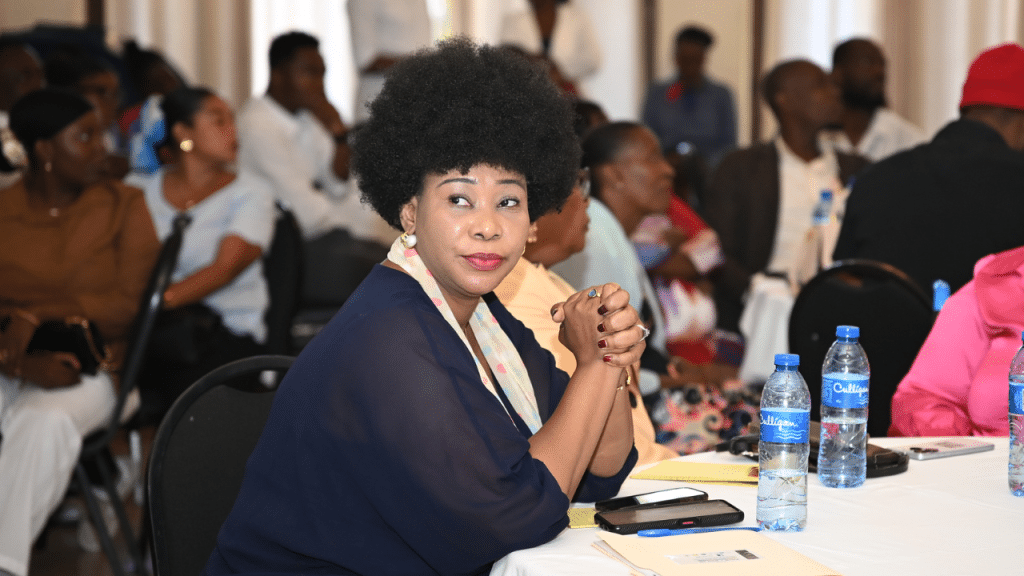
“Interacting with local elected officials, in particular the mayor, delegates, and members of the local community has allowed me to understand that our society–my society–faces many challenges and needs people who are willing to contribute,” she says.
She has also received training in mediation, which provided her with practical tools to strengthen her negotiation skills in her advocacy work.
“What the AGIR project has enabled us to do is to draft a strategic framework with claims that allow us to carry out advocacy at both the local and international levels,” says Mrs. Zéphirin Diègue.
Today, she serves on a five-member advocacy committee responsible for following up on these priorities. This responsibility has profoundly changed how she sees herself.
“Personally, I hope there will be another AGIR project, because it has brought me so much on a personal level, within my sector, and also for the entire community. The person I have become thanks to AGIR is very different from who I was before,” she says.
The potential of Haitian youth
The AGIR project will come to an end in September 2026, but the work of building more inclusive and transparent governance continues. According to Mrs. Obas, the next step is bringing citizen participation into practice.
“There are many ways to put this project into practice. For example, by regularly consulting citizens before public policies are adopted, organizing community forums and public debates, and ensuring that civil society representatives have a presence in certain decision-making bodies. Bringing this vision of participatory governance into practice requires establishing mechanisms that foster meaningful citizen participation in decision-making processes and strengthen public oversight of government action,” she explains.
Mrs. Sainsoivil believes that the project could eventually be expanded to the south of the country. In her view, however, the country’s greatest potential lies with its young people.
At a forum supported by AGIR, where more than 1500 young people, the majority of them girls, gathered, “the youth expressed strong demands, particularly for citizenship education, because they also want to participate in a real and concrete way,” says Ms. Sainsoivil.
“Young people have indeed many projects to implement, initiatives that engage them and raise awareness on issues, such as technology and the environment. They have expressed a strong interest in receiving support through the AGIR project. Unfortunately, we were unable to respond to all of these initiatives because of budget constraints. Nonetheless, those requests have been documented in our database.”
Beyond the project’s achievements, Mrs. Sainsoivil believes that the ideas raised through AGIR can inspire future CECI initiatives.
“I think that the AGIR project, in itself, has opened up new perspectives which, in my view, would be well worth exploring,” she says.
Source link