Haitian TPS recipients face deportation, danger, uncertainty
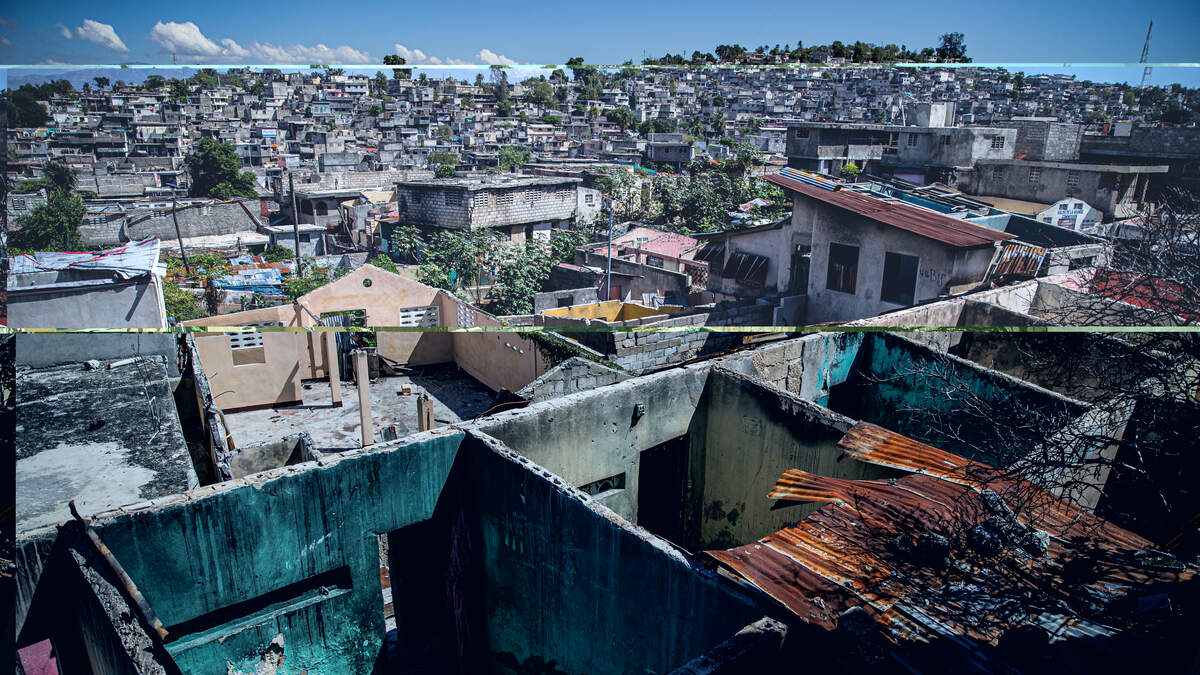
An aerial view of houses destroyed by armed gangs in 2024 in the Solino neighborhood of Port-au-Prince, Haiti, on March 3, 2026.
AFP via Getty Images
Her mom’s final words were a warning from over the phone: “No matter what, don’t come back.”
That was late last year. Casou hadn’t seen her mother since 2018, when she fled Haiti for the United States. Though she’s so far heeded her mother’s counsel, Casou might soon have no say in the matter. Like more than 300,00 Haitians across the United States — roughly half of whom reside in Florida — 34-year-old Casou is a recipient of Temporary Protected Status.
Known as TPS, the federal program provides legal status and work permits to people fleeing acutely dangerous countries — theoretically, until their home nations are safe for return. It can be renewed indefinitely. Unlike asylum or other refugee resettlement programs, TPS does not itself provide a pathway to permanent residency or citizenship.
Haiti is on the State Department’s do not travel list — owing to such hazards as crime, kidnapping, terrorism and unrest. The Trump administration announced the end of TPS for Haitians, effective Monday, all the same.
So Casou can no longer work. Whenever she’s not in her apartment, she’s on the lookout for ICE — always checking her phone for news of raids or sightings of agents around Miami, who she fears will pick her up and put her on a plane back to Haiti. For that reason, she asked to use a pseudonym and not be identified by her real name. She spoke with the Miami Herald recently through a Kreyòl translator.
Like many Haitian TPS recipients, Casou fears that life back in Haiti is a death sentence. Perhaps because it killed her mom.
READ MORE: With work permits expired, Haitians await federal judge’s order for formal end of TPS
•••
The marauders first came almost eight years ago to the day.
Casou was 26 then and living with her mother in Port-au-Prince’s Bel-Air neighborhood. Theirs was a working-class community, nestled just a few blocks west of the presidential palace, that in recent years has been overrun by gangs and subjected to extreme and indiscriminate violence.
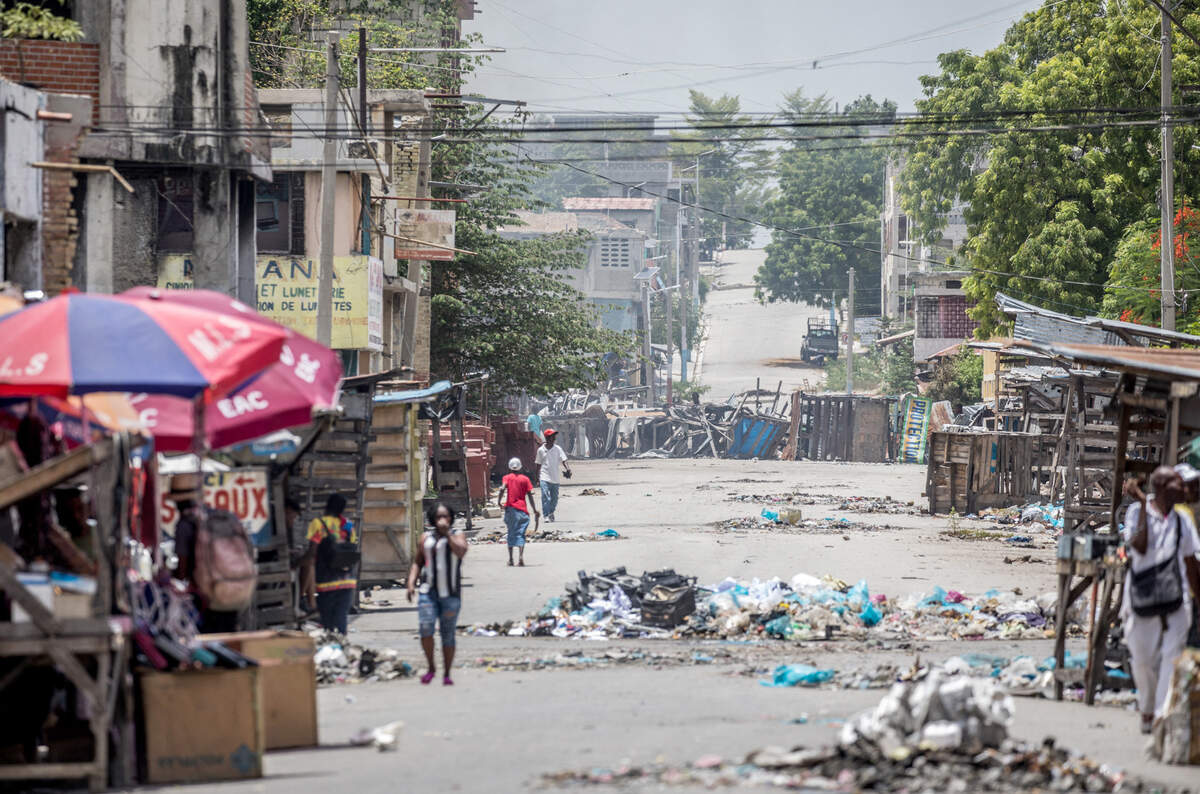
Casou worked at a health clinic as a labor and delivery nurse, helping expectant mothers through childbirth. The “bandits,” as she calls them, started trailing her one day on her way home from work. They soon became regular fixtures along her route, and they always wanted money.
Sometimes her phone would ring; the voice on the other end would demand payments. Whatever she gave was never enough. They eventually ransacked Casou’s home. Weapons brandished, they took what they wanted and destroyed whatever they didn’t. Next time, she recalls them pledging, we’re going to rape and kill you.
She fled soon after, at her mother’s insistence, to the United States. Washington was still extending TPS for Haitians then, as it had been since 2010, when a generational 7.0 magnitude earthquake devastated the country.
It was a beautiful country, Casou recalls of pre-earthquake Haiti. One of good Creole food, good Creole vibes, of family and friends, and with humble but real possibilities. Was there insecurity? Sure, at times, but she speaks of antebellum Haiti, the Haiti of her youth, with a smile and the distant eyes of someone surrendering to a memory.
This is the Haiti she wants to live in, the one she had been holding onto, the one that made fleeing so difficult.
“I wanted to live in my country,” she says. “Leaving was a last resort.”
But life in her country was becoming increasingly untenable. The government was losing control as massive protests rocked the capital. A political crisis was ripening — one that would result in the 2021 assassination of President Jovenel Moïse and precipitate Haiti’s rapid descent into gang violence, deprivation and anarchy.
•••
Casou landed alone in South Florida. Her mother stayed behind. And the men returned to make good on their promise. They beat Casou’s mom within an inch of her life. Casou heard about it from afar and could do little more than send money.
In an office at her workplace on a recent weekday afternoon, Casou pulls out her phone and scrolls until she finds what she’s looking for. It’s a picture of someone in a hospital gown, lying lateral on a gurney and facing a concrete wall. Their back is to the photographer, so they’re featureless, barring a pair of feet that poke lamely from the gown. They look lifeless.
It’s the last image Casou has of her mom, who died last year, just after Christmas. Her health had declined after the attack, Casou says. She was never the same.
Casou thinks back to her mom’s final days, to the last conversation they had.
“Do not come back to Haiti, please,” she recalls her mother begging. “No matter what, don’t come back.”
Casou had to watch the livestream of her mother’s funeral on her phone.
•••
Casou thinks about her mother every day. Her mom’s death was devastating — emotionally, of course, and also financially.
All the savings Casou had squirreled away since coming to the United States — and plenty more that she would’ve saved — went to her mother’s medical care. Roughly $50,000 in total, Casou estimates.
An $800 oxygen tank, thousands for medications, even more for her mother’s safe passage from home to the hospital. Then for her body’s trip from the hospital to rest. The gangs always got their cut. Because Casou was living in America — a fact that seemed to make its way to anyone she needed help from — she paid American prices.
The Kreyòl translator turns and says that’s quite common for members of the diaspora. “It’s extortion,” she adds flatly.
And so Casou has pretty much nothing left in the bank. She’s been living paycheck to paycheck, working during the day as a receptionist at a local services agency and studying on the side to restart her nursing career. Now she can’t do either.
Though her employer is sensitive to her situation, they say there’s not much they can do to keep her employed legally. Monday was her last day. Now she’ll have to figure out how to come up with $1,600 by Saturday so she doesn’t get evicted from her “little corner of peace,” as she calls it.
It all seems like too much. Casou prefers not to talk about it because there aren’t any good answers.
“I don’t know what to do.” She’s staring up at the ceiling, or maybe past it. “Sincerely, I don’t know.”
All she knows is that she can’t go back to Haiti. She just hopes she doesn’t wind up there on a deportation flight. In the meantime, she said she’s applied for asylum and is praying for good news on that front. The translator turns and contextualizes, solemnly, in English again: “Very few people are actually granted asylum. It’s too difficult.”
Whatever happens, Casou wants it known that, despite her mom, or perhaps because of her, she’d love to return to Haiti — a peaceful, stable Haiti. And that she’s grateful to the United States and to Americans for her safety these last eight years.
“We’re praying things improve [in Haiti],” she says. “We’d love to be able to welcome you and express the gratitude that we feel for your generosity, your welcoming, your hospitality.”
This story was produced with financial support from supporters including The Green Family Foundation Trust and Ken O’Keefe, in partnership with Journalism Funding Partners. The Miami Herald maintains full editorial control of this work.