

Haitian business owners struggle as TPS protections end
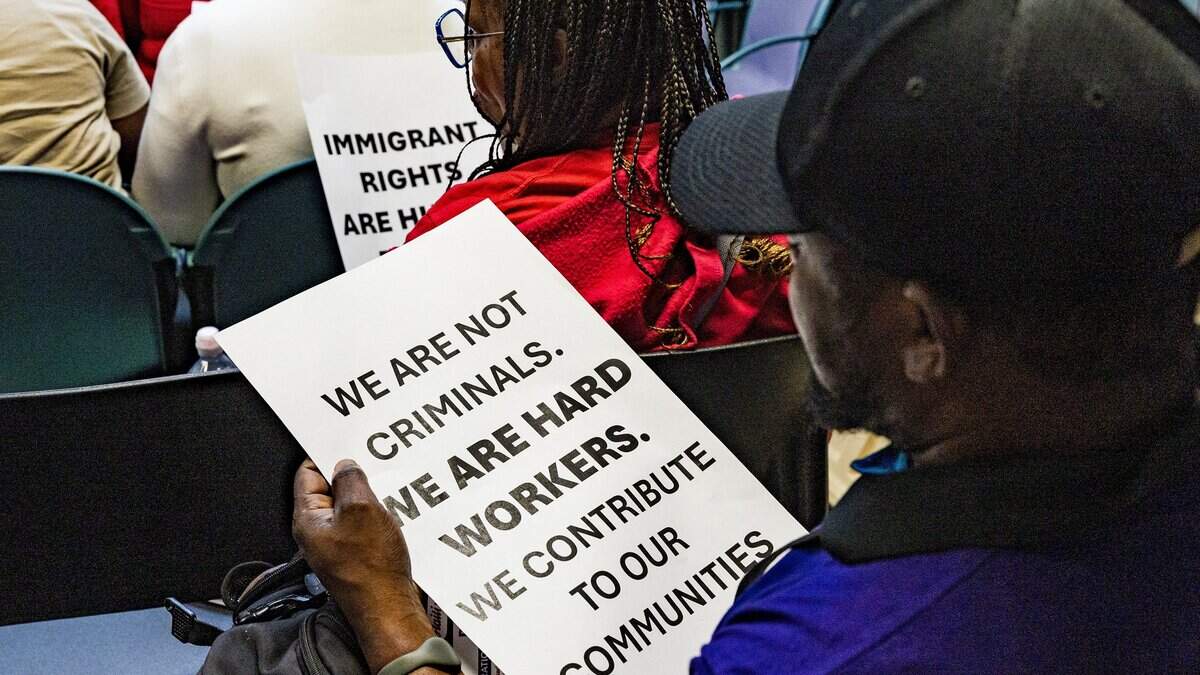
North Miami business owner Sabine Dulcio was stunned the week before Haitians on Temporary Protected Status, TPS, lost their authorization to legally work in the United States. The event planner had a wedding to set up at the Coral Gables Country Club and half her staff failed to show up.
“Never has this happened in my 20 years,” Dulcio, 43, said. “People said, ‘I can’t come to work.’ ”
When she followed up, Dulcio said her employees told her they were afraid to step out of their homes because they didn’t want to get arrested by U.S. Immigration and Customs Enforcement.
In Little Haiti, well-known Haitian-Bahamian chef and entrepreneur Wilkinson Sejour is not only feeling the effects of losing his TPS employees as of July 27, when the Trump administration ended work permits, but the false rumors of an ICE raid at one of his restaurants.
“The restaurant business is like a chain with a thousand links,” said Sejour, the owner of seven Chef Creole restaurants across South Florida, including at Miami International Airport. “If you are missing one, people start talking about the inconsistency in the food, the customer service.”
Both of Haitian descent, Sejour and Dulcio are among business owners in South Florida who are feeling the effects of the Trump administration’s immigration policy, which has placed more than 300,000 Haitians in danger of being detained and deported back to Haiti. Many of them live in South Florida, which is home to the largest Haitian community in the U.S.
“This administration is doing a really good job of implementing terror,” Sejour said.
On Sunday, Sejour’s employees at Chef Creole’s Little Haiti location on Northwest 54th Street and Second Avenue saw ICE enforcement firsthand, when agents pulled up behind a man on a scooter and put him in handcuffs. The man, wearing a white shirt, was then placed into one of two unmarked vehicles by ICE agents. As they prepared to drive off, an unidentified man under a traffic light asked, “What are we going to do with the motorcycle and the bag?”
“Yo, get out of the way,” an ICE agent screamed in reply, before driving off.
Sejour told the Miami Herald that a Hispanic man was riding a scooter when he was stopped and pulled over by ICE enforcement agents. The man later came back to get his bike and backpack, telling the employees that ICE agents were forced to release him after realizing he has legal status in the country.
“This kind of law enforcement is blatant disrespect for people who have done nothing but come over here and be part of our labor force,” Sejour said. “This is how you tell them, ‘Thank you?’”
Sejour, who opened his first Chef Creole restaurant in 1992, says he has lost eight employees because of their TPS status. Some quit even before Monday from fear of being detained by ICE. He said other employees who are legally in the U.S. or have pending asylum claims have told him they are afraid to go to work.
Dulcio said her employees are also scared about reporting to work. She understands their concerns.
Born in Haiti, she came to the U.S. as a child in 1989. Dulcio said she didn’t know she was an undocumented immigrant until she was in the 10th grade at North Miami Senior High School.

The revelation came when a school counselor wanted her to begin looking at colleges, and the topic came up in a meeting with her mother, she recalled, still emotional about the incident years later.
“The immigration office used to be on 79th Street and Biscayne Boulevard and lines would wrap around from dusk till dawn of people waiting for their immigration meetings,” she said, recalling her own legalization process. “I got my alien registration card and became a citizen in 2015.”
Dulcio prides herself on being able to hire other Haitian employees and helping build their skills.
Over the years, she’s had employees return to school or start their own businesses. Now, she is trying to figure out how she will fill the empty shift for two big events in October with 800 people each.
“When you run a business, you can’t run on hoping for the best, she said. “People are paying for a service, and you have to render that service to the highest quality and standard. It’s a bit of a challenge right now.”
This story was originally published August 5, 2026 at 5:38 AM.
%20Cropped.jpg)
Michael Butler writes about minority business and trends that affect marginalized professionals in South Florida. As a business reporter for the Miami Herald, he tells inclusive stories that reflect South Florida’s diversity. Just like Miami’s diverse population, Butler, a Temple University graduate, has both local roots and a Panamanian heritage.