

Greater Morocco & ‘authentic borders’: Why claims over Ceuta, Melilla, and the Canaries persist
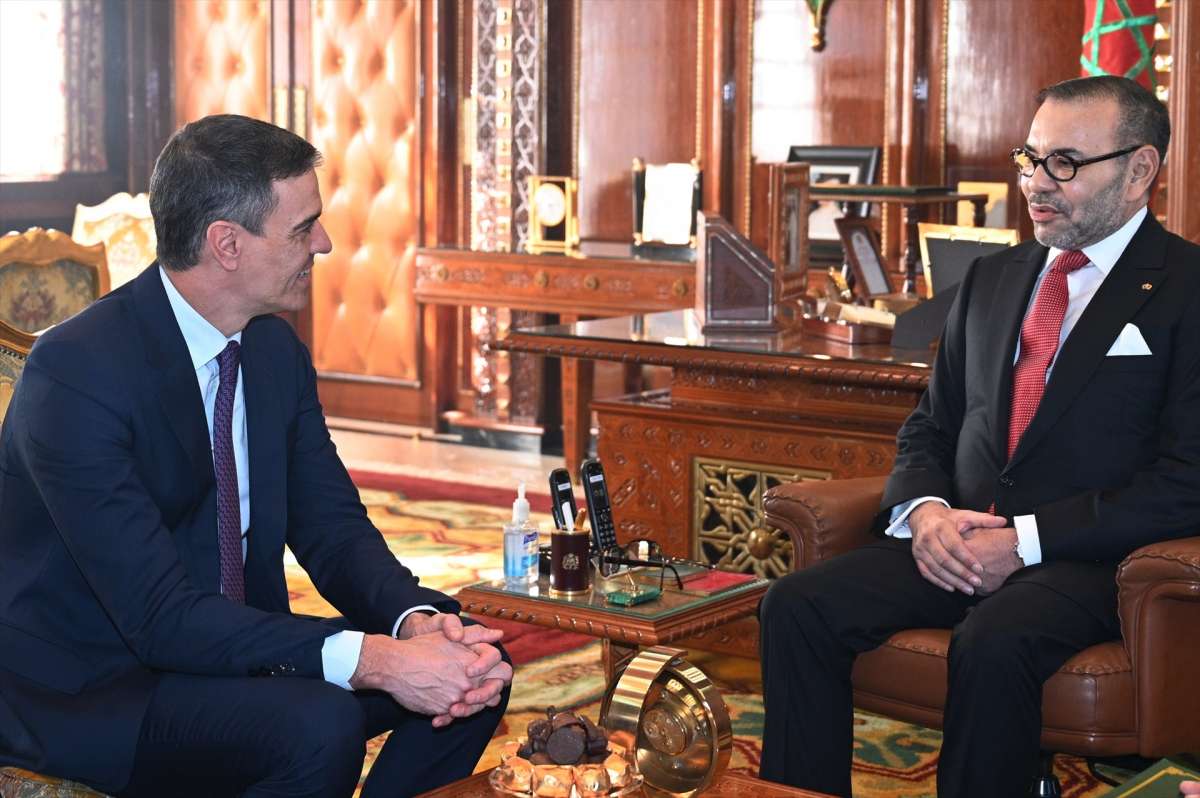
Article 42 of the 2011 Constitution of Morocco establishes the figure of the King as Head of State and defines his fundamental functions as guarantor of the unity, stability, and continuity of the country. As head of State and supreme representative, he is a symbol of the nation’s unity and a guarantor of the continuity and permanence of the State.
He acts as the supreme arbiter between the country’s institutions, ensuring respect for the Constitution, the regular functioning of constitutional institutions, the protection of democratic choices, and the rights and freedoms of citizens and communities.
Independence and territorial integrity
The King is the guarantor of the country’s independence and its territorial integrity within its authentic borders. The terminological nuance of “authentic” is central in Moroccan constitutional law and its foreign policy doctrine. In the official French version of the 2011 Magna Carta, the expression “ses frontières authentiques” (its authentic borders) is used, a formulation drafted with very deliberate legal and political precision.
It is the foundation of historical irredentism. The expression is not neutral: it refers to the ideological and geopolitical concept of Greater Morocco (Le Grand Maroc), articulated after independence in 1956 by the Istiqlal party and later assumed by the monarchy’s doctrine. Under this vision, the historical territory of the Kingdom over which the Sultan exercised the Bay’ah (bond of religious and political loyalty) covered a significantly larger area than the borders drawn by the colonial powers (France and Spain).
It is the constitutional embodiment of the principle of territorial integrity applied to Western Sahara. For Rabat’s legal and institutional framework, Western Sahara is not a territory to be decolonized or under provisional administration but an inalienable part of the Kingdom’s “authentic borders” that was amputated during the Spanish colonial period and recovered after the Green March in 1975.
And its projection over the Spanish sovereign plazas (Ceuta, Melilla, and islands). For Spain, this constitutional formulation is a permanent source of diplomatic caution: Morocco does not formally recognize Spanish sovereignty over Ceuta, Melilla, the Peñón de Vélez de la Gomera, the Peñón de Alhucemas, and the Chafarinas Islands, and considers them “occupied cities and territories.” By obliging the Constitution to the monarch to ensure territorial integrity “within its authentic borders,” the Magna Carta leaves open the internal legal interpretation for Rabat to maintain its historical claim over the Spanish plazas in North Africa when the political situation deems it appropriate.
Is this article a territorial threat to neighboring countries?
Article 42 of the Constitution of Morocco does not constitute a text with an explicit threat of military aggression under international law, but it does formalize an implicit sovereign reservation that generates permanent territorial friction with its neighbors, especially with Spain and Algeria. The assessment of whether it represents a threat depends on whether it is analyzed from the formal legal technique or from applied geopolitics.
Legal-formal perspective
It is not a direct threat. By the principle of constitutional sovereignty, constitutions regulate the self-organization of a State and are not, in themselves, instruments of war declaration or formal diplomatic claim to third countries. By diplomatic language, the use of broad or historical formulas to define the territory is a common resource in several States that maintain unresolved territorial disputes, without implying an imminent armed action order.
Geopolitical and security perspective
It is a latent claim pressure. The problem with the expression “authentic borders” is that it does not adhere to internationally recognized borders or those inherited from the colonial era (uti possidetis iuris), leaving the State’s delimitation subject to historical and evolutionary interpretation.
Friction with Spain (Ceuta, Melilla, and islets)
For Madrid, Spain’s territorial delimitation is non-negotiable and is protected by the 1978 Constitution and international law. However, by elevating the defense of “authentic borders” to a constitutional mandate, the Moroccan Magna Carta prevents Rabat from formally renouncing the claim over Ceuta and Melilla without modifying its own constitutional text. This makes the claim a structural and not a circumstantial element.
Tension with Algeria (land border and Western Sahara)
Algeria defends the principle of the Organization for African Unity (now the African Union) of 1964 on the inviolability of borders inherited from colonialism. Morocco’s doctrine of “authentic borders” clashes head-on with the Algerian-Moroccan border (historical disputes such as the Sand War of 1963) and the status of Western Sahara.
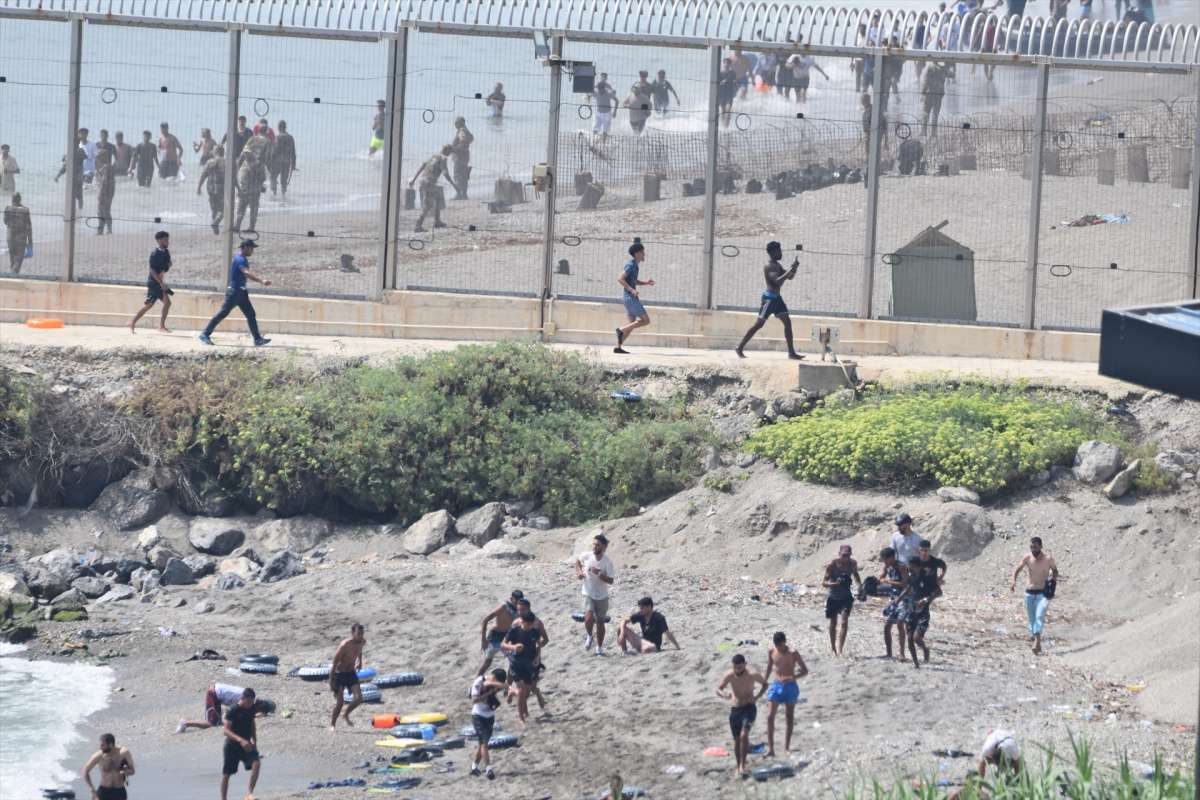
Article 42 should not be understood as an imminent military threat but as a geopolitical reservation clause. It allows the Moroccan monarchy to keep internal legitimacy open to press on its borders (whether through diplomacy, migratory pressure, or economic development in border areas) without formally breaking the legal framework of its own State.
Parallel with the annexation of Austria
There is a clear conceptual and analytical parallel between the Moroccan concept of “authentic borders” and the ideological phenomenon of territorial unification/annexation that supported the Austrian Anschluss of 1938 or German irredentism of the interwar period. However, to assess the extent to which they resemble each other, it is necessary to distinguish between doctrinal points of coincidence and fundamental differences in the current geopolitical framework.
Points of coincidence
According to the principle of the Volk or the historical community vs. legal borders, both the doctrine of German irredentism (Großdeutschland) and that of Greater Morocco reject the borders drawn by international treaties or foreign powers (Versailles in the German case; the French and Spanish protectorates in the Moroccan case) arguing that they artificially divided a people or destroyed a previous historical bond.
In both narratives, the expansion or recovery of territories is presented not as an external aggression or conquest but as an act of justice, historical restitution, and natural integration of “amputated” lands. Elevating the concept to a State dogma (or constitutional mandate) makes territorial reunification a central element of invulnerable internal legitimacy, making renouncing it seen as a national betrayal.
Differences
Despite the conceptual similarity in ideological origin, the Moroccan geopolitical dynamic differs substantially from 1930s Germany. Regarding strategy and projection of force, the Anschluss was part of a militaristic program of rapid territorial expansion (Lebensraum) that sought to modify the continental European map by military force immediately, triggering a large-scale conflict, World War II. Morocco, on the other hand, uses a strategy of gradual pressure, faits accomplis, and long-term attrition diplomacy (the so-called hybrid or gray zone war), avoiding direct military confrontation with NATO partners like Spain.
In the framework of international alliances, Nazi Germany acted by breaking the international order and challenging Western powers. Morocco operates fully integrated into the Western security architecture (main non-NATO ally of the U.S., agreements with Israel, and strategic partner of the EU in anti-terrorism and migration matters).
Regarding the nature of the regime, while the Anschluss responded to a totalitarian and ideologically disruptive project, the doctrine of “authentic borders” in Morocco is a tool for preserving the traditional monarchical regime itself and internal nationalist cohesion.
The parallel is valid in the field of ideological doctrine (both are based on irredentism, the denial of borders imposed by third parties, and the myth of the historical unity taken away). However, it is not equivalent in its geopolitical execution: while the German model sought annexation through military confrontation and total revisionism of the international map, the Moroccan stance combines the legal reservation of its Constitution with pragmatic diplomacy of pressure on the limits of the gray zone.
What the idea of Greater Morocco claims from each neighbor
The doctrine of Greater Morocco claims as part of the Kingdom’s historical territory domains from its neighboring countries.
Algeria
Morocco claims the historical annexation of vast regions of western and southwestern Algeria that were part of caravan routes and the Sharifian Empire before the French colonial delimitation. And the provinces of Tindouf and Béchar, rich in minerals (iron) and energy resources. Algeria’s refusal to cede these territories after its independence led to the Sand War (1963). Other disputed areas are Tuat and Gurara, historical Saharan oases where Morocco claims the population swore allegiance to the Sultan.
Mauritania
If there is a State for which Morocco’s doctrine of “authentic borders” represents a direct and explicit existential threat, it is Mauritania. Moroccan irredentism claims the entire country (historically called Bilad Chinguetti), considering that the space between the Senegal River and the Sahara was a natural extension of the Kingdom sharing the same religious and commercial authority.
When Mauritania gained independence from France in 1960, Morocco not only refused to recognize it but demanded the entire Mauritanian territory as an inalienable part of Greater Morocco. For the Moroccan monarchy (under King Mohamed V and the early years of Hassan II), Mauritania had been historically linked to the crown through the religious and loyalty ties of its tribes with the Sultan.
For nearly a decade (1960-1969), Morocco blocked Mauritania’s international recognition, opposing its entry into the Arab League and the United Nations (UN), considering the young republic an “artificial State” created by French colonialism to cut Morocco’s territorial continuity towards sub-Saharan Africa. It was not until 1969 that Hassan II finally accepted Mauritania’s sovereignty and independence, signing a Treaty of Friendship in 1970.
However, this reconciliation responded to a tactical and geopolitical need: Morocco needed Mauritania as an ally to divide Spanish Sahara in anticipation of Spain’s imminent withdrawal, which was consummated in the 1975 Madrid Tripartite Agreements (where the Sahara was provisionally divided between Morocco and Mauritania until the latter withdrew in 1979 overwhelmed by the war with the Polisario Front).
Although there are formal diplomatic relations between Rabat and Nouakchott today, Mauritania’s suspicion of Moroccan irredentism remains very much alive. For Mauritania, absolute and definitive Moroccan control over Western Sahara leaves Nouakchott sharing an immense border with a demographically, economically, and militarily superior neighbor, eliminating any “buffer zone.”
To ensure its own survival and geopolitical independence, Mauritania has historically maintained a strict neutrality stance regarding the Western Sahara conflict, while cultivating its relations with Algeria to avoid falling exclusively under Rabat’s orbit.
Every time Moroccan nationalist politicians (like those from the Istiqlal party) have publicly declared in recent decades that “Mauritania is part of Morocco’s historical territory,” more often than with Ceuta and Melilla, severe diplomatic crises have been triggered, forcing Rabat’s diplomacy to urgently apologize officially to quell the fear of an existential threat.
Unlike the limits with Spain or Algeria—where “authentic borders” question the delimitation of certain plazas, provinces, or regions—in the case of Mauritania, the Moroccan doctrine went as far as denying the legitimacy of its very existence as an independent country.
Spain
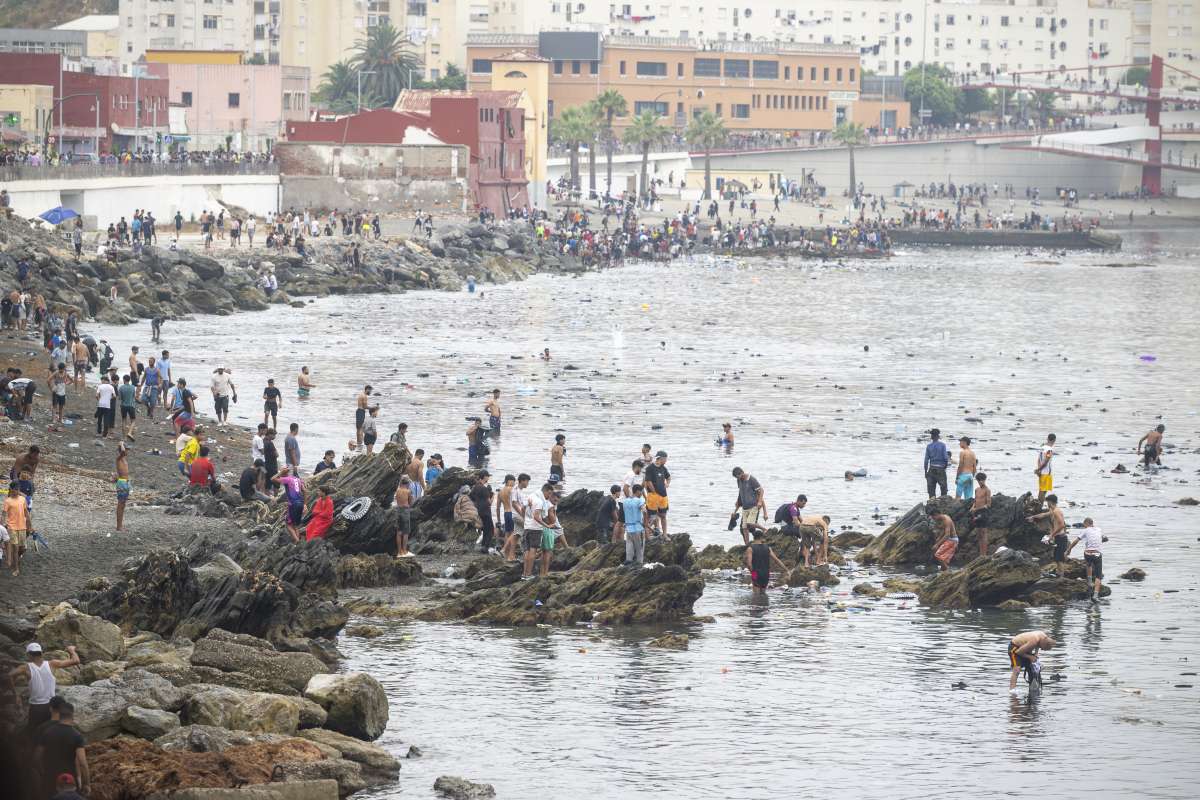
The concept of Greater Morocco encompasses all Spanish sovereignty territories located in North Africa and their adjacent maritime spaces, such as Ceuta and Melilla, considered by Rabat as “occupied cities” under the argument of geographical continuity.
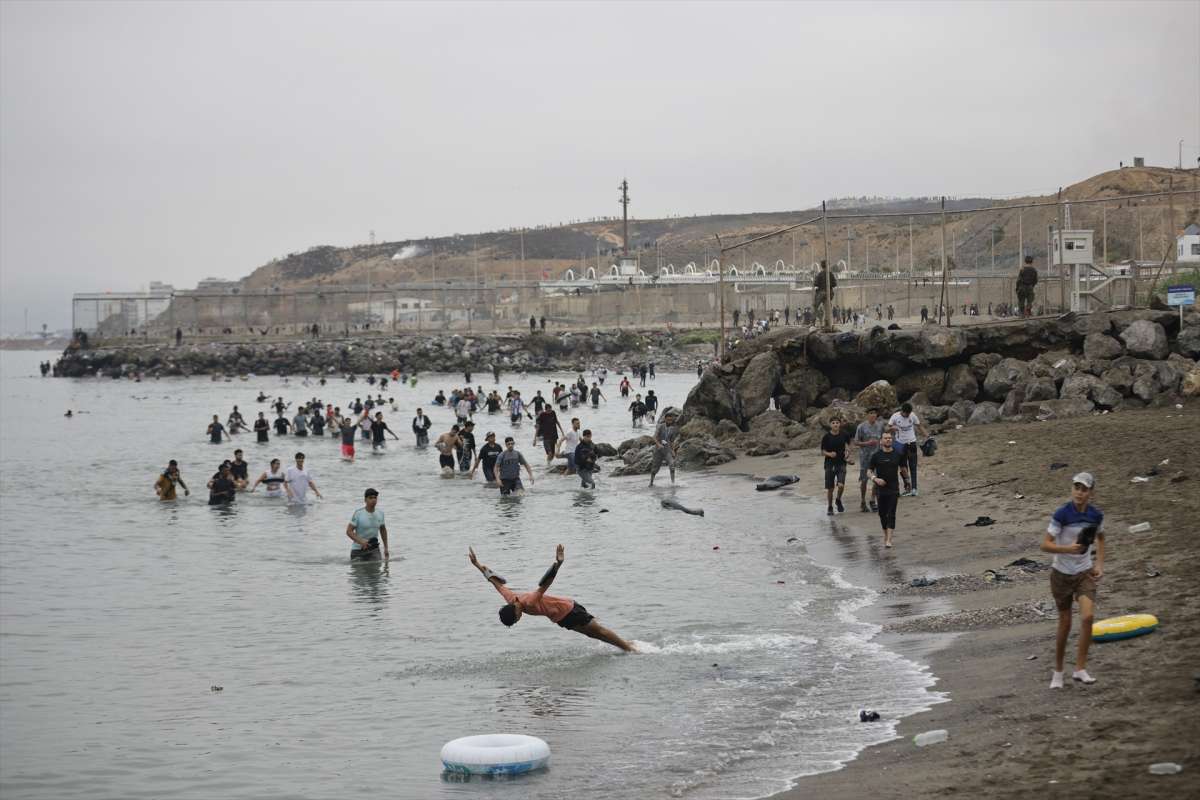
The islands and islets are another focus of conflict: the Peñón de Vélez de la Gomera, the Peñón de Alhucemas, the Chafarinas Islands, and the Isla de Perejil, and of course, the Canary Islands. Although they do not claim sovereignty over the Canary archipelago, they do request the delimitation of territorial waters and the continental shelf to the southwest of the Canaries (rich in tellurium and cobalt like the Tropic submarine mountain).
Western Sahara
Considered by Moroccan nationalism as the “southern province” stolen by Spanish colonialism and partially reincorporated after the Green March in 1975.
Mali
In the most extreme formulations of the Istiqlal party in the 1950s, territorial claims even included strips of northern present-day Mali, the Tombuctu region, recalling the expeditions of the Saadi dynasty in the 16th century.
The history
All claims are based on a pact, especially religious, similar to obedience to the Pope of Rome, the aforementioned Bay’ah, a formal oath of loyalty in Islamic political and religious tradition. In this agreement, a group of people or community representatives (Ahl al-Hall wa-l-‘Aqd) swear obedience and loyalty to a leader (caliph, sultan, or king). In return, the ruler commits to guiding the community according to the principles of Islamic law (Sharia), protecting the territory, and ensuring the people’s welfare.
Just to remember, Muhammad was born around April 20-26, 570 AD. The footprint of sovereignty or administration under Hispanic authority in Africa covers two major historical dimensions: the period of the Roman Empire (where Hispanic-Roman elites and hidalgos governed the north of the continent) and the period of modern and contemporary Spain (through the Hispanic Empire and the subsequent colonial division).
During Ancient Rome, the African continent was not administered from the Iberian Peninsula as an independent political unit, but both regions were part of the same Roman imperial structure. However, the governance and influence of the Hispanic-Roman elite in North Africa was total, from the Atlantic coast of present-day Morocco (Mauretania Tingitana) to the coasts of Tunisia and Libya (Africa Proconsularis and Tripolitania).
In the Ulpia-Aelia dynasty and later, emperors born in Baetica like Trajan and Hadrian (as well as Theodosius I, born in Cauca) exercised supreme power over the entire African Mediterranean belt. Their southernmost military limit reached garrisons deep in the desert like Fossatum Africae (Algeria) and the fort of Gheriat el-Garbia (in present-day Libya, almost 300 km south of the coast).
The dream of Greater Morocco
Perhaps Rabat aspires for all its neighbors to sign a pact of mutual border recognition and assistance in case of aggression. It should not be forgotten that in its barracks, more maps of Greater Morocco are seen than of the Morocco recognized internationally.
Article 42 of the 2011 Constitution of Morocco establishes the figure of the King as Head of State and defines his fundamental functions as guarantor of the unity, stability, and continuity of the country. As head of State and supreme representative, he is a symbol of the nation’s unity and a guarantor of the continuity and permanence of the State.
He acts as the supreme arbiter between the country’s institutions, ensuring respect for the Constitution, the regular functioning of constitutional institutions, the protection of democratic choices, and the rights and freedoms of citizens and communities.
Independence and territorial integrity
The King is the guarantor of the country’s independence and its territorial integrity within its authentic borders. The terminological nuance of “authentic” is central in Moroccan constitutional law and its foreign policy doctrine. In the official French version of the 2011 Magna Carta, the expression “ses frontières authentiques” (its authentic borders) is used, a formulation drafted with very deliberate legal and political precision.
It is the foundation of historical irredentism. The expression is not neutral: it refers to the ideological and geopolitical concept of Greater Morocco (Le Grand Maroc), articulated after independence in 1956 by the Istiqlal party and later assumed by the monarchy’s doctrine. Under this vision, the historical territory of the Kingdom over which the Sultan exercised the Bay’ah (bond of religious and political loyalty) covered a significantly larger area than the borders drawn by the colonial powers (France and Spain).
It is the constitutional embodiment of the principle of territorial integrity applied to Western Sahara. For Rabat’s legal and institutional framework, Western Sahara is not a territory to be decolonized or under provisional administration but an inalienable part of the Kingdom’s “authentic borders” that was amputated during the Spanish colonial period and recovered after the Green March in 1975.
And its projection over the Spanish sovereign plazas (Ceuta, Melilla, and islands). For Spain, this constitutional formulation is a permanent source of diplomatic caution: Morocco does not formally recognize Spanish sovereignty over Ceuta, Melilla, the Peñón de Vélez de la Gomera, the Peñón de Alhucemas, and the Chafarinas Islands, and considers them “occupied cities and territories.” By obliging the Constitution to the monarch to ensure territorial integrity “within its authentic borders,” the Magna Carta leaves open the internal legal interpretation for Rabat to maintain its historical claim over the Spanish plazas in North Africa when the political situation deems it appropriate.
Is this article a territorial threat to neighboring countries?
Article 42 of the Constitution of Morocco does not constitute a text with an explicit threat of military aggression under international law, but it does formalize an implicit sovereign reservation that generates permanent territorial friction with its neighbors, especially with Spain and Algeria. The assessment of whether it represents a threat depends on whether it is analyzed from the formal legal technique or from applied geopolitics.
Legal-formal perspective
It is not a direct threat. By the principle of constitutional sovereignty, constitutions regulate the self-organization of a State and are not, in themselves, instruments of war declaration or formal diplomatic claim to third countries. By diplomatic language, the use of broad or historical formulas to define the territory is a common resource in several States that maintain unresolved territorial disputes, without implying an imminent armed action order.
Geopolitical and security perspective
It is a latent claim pressure. The problem with the expression “authentic borders” is that it does not adhere to internationally recognized borders or those inherited from the colonial era (uti possidetis iuris), leaving the State’s delimitation subject to historical and evolutionary interpretation.
Friction with Spain (Ceuta, Melilla, and islets)
For Madrid, Spain’s territorial delimitation is non-negotiable and is protected by the 1978 Constitution and international law. However, by elevating the defense of “authentic borders” to a constitutional mandate, the Moroccan Magna Carta prevents Rabat from formally renouncing the claim over Ceuta and Melilla without modifying its own constitutional text. This makes the claim a structural and not a circumstantial element.
Tension with Algeria (land border and Western Sahara)
Algeria defends the principle of the Organization for African Unity (now the African Union) of 1964 on the inviolability of borders inherited from colonialism. Morocco’s doctrine of “authentic borders” clashes head-on with the Algerian-Moroccan border (historical disputes such as the Sand War of 1963) and the status of Western Sahara.
Article 42 should not be understood as an imminent military threat but as a geopolitical reservation clause. It allows the Moroccan monarchy to keep internal legitimacy open to press on its borders (whether through diplomacy, migratory pressure, or economic development in border areas) without formally breaking the legal framework of its own State.
Parallel with the annexation of Austria
There is a clear conceptual and analytical parallel between the Moroccan concept of “authentic borders” and the ideological phenomenon of territorial unification/annexation that supported the Austrian Anschluss of 1938 or German irredentism of the interwar period. However, to assess the extent to which they resemble each other, it is necessary to distinguish between doctrinal points of coincidence and fundamental differences in the current geopolitical framework.
Points of coincidence
According to the principle of the Volk or the historical community vs. legal borders, both the doctrine of German irredentism (Großdeutschland) and that of Greater Morocco reject the borders drawn by international treaties or foreign powers (Versailles in the German case; the French and Spanish protectorates in the Moroccan case) arguing that they artificially divided a people or destroyed a previous historical bond.
In both narratives, the expansion or recovery of territories is presented not as an external aggression or conquest but as an act of justice, historical restitution, and natural integration of “amputated” lands. Elevating the concept to a State dogma (or constitutional mandate) makes territorial reunification a central element of invulnerable internal legitimacy, making renouncing it seen as a national betrayal.
Differences
Despite the conceptual similarity in ideological origin, the Moroccan geopolitical dynamic differs substantially from 1930s Germany. Regarding strategy and projection of force, the Anschluss was part of a militaristic program of rapid territorial expansion (Lebensraum) that sought to modify the continental European map by military force immediately, triggering a large-scale conflict, World War II. Morocco, on the other hand, uses a strategy of gradual pressure, faits accomplis, and long-term attrition diplomacy (the so-called hybrid or gray zone war), avoiding direct military confrontation with NATO partners like Spain.
In the framework of international alliances, Nazi Germany acted by breaking the international order and challenging Western powers. Morocco operates fully integrated into the Western security architecture (main non-NATO ally of the U.S., agreements with Israel, and strategic partner of the EU in anti-terrorism and migration matters).
Regarding the nature of the regime, while the Anschluss responded to a totalitarian and ideologically disruptive project, the doctrine of “authentic borders” in Morocco is a tool for preserving the traditional monarchical regime itself and internal nationalist cohesion.
The parallel is valid in the field of ideological doctrine (both are based on irredentism, the denial of borders imposed by third parties, and the myth of the historical unity taken away). However, it is not equivalent in its geopolitical execution: while the German model sought annexation through military confrontation and total revisionism of the international map, the Moroccan stance combines the legal reservation of its Constitution with pragmatic diplomacy of pressure on the limits of the gray zone.
What the idea of Greater Morocco claims from each neighbor
The doctrine of Greater Morocco claims as part of the Kingdom’s historical territory domains from its neighboring countries.
Algeria
Morocco claims the historical annexation of vast regions of western and southwestern Algeria that were part of caravan routes and the Sharifian Empire before the French colonial delimitation. And the provinces of Tindouf and Béchar, rich in minerals (iron) and energy resources. Algeria’s refusal to cede these territories after its independence led to the Sand War (1963). Other disputed areas are Tuat and Gurara, historical Saharan oases where Morocco claims the population swore allegiance to the Sultan.
Mauritania
If there is a State for which Morocco’s doctrine of “authentic borders” represents a direct and explicit existential threat, it is Mauritania. Moroccan irredentism claims the entire country (historically called Bilad Chinguetti), considering that the space between the Senegal River and the Sahara was a natural extension of the Kingdom sharing the same religious and commercial authority.
When Mauritania gained independence from France in 1960, Morocco not only refused to recognize it but demanded the entire Mauritanian territory as an inalienable part of Greater Morocco. For the Moroccan monarchy (under King Mohamed V and the early years of Hassan II), Mauritania had been historically linked to the crown through the religious and loyalty ties of its tribes with the Sultan.
For nearly a decade (1960-1969), Morocco blocked Mauritania’s international recognition, opposing its entry into the Arab League and the United Nations (UN), considering the young republic an “artificial State” created by French colonialism to cut Morocco’s territorial continuity towards sub-Saharan Africa. It was not until 1969 that Hassan II finally accepted Mauritania’s sovereignty and independence, signing a Treaty of Friendship in 1970.
However, this reconciliation responded to a tactical and geopolitical need: Morocco needed Mauritania as an ally to divide Spanish Sahara in anticipation of Spain’s imminent withdrawal, which was consummated in the 1975 Madrid Tripartite Agreements (where the Sahara was provisionally divided between Morocco and Mauritania until the latter withdrew in 1979 overwhelmed by the war with the Polisario Front).
Although there are formal diplomatic relations between Rabat and Nouakchott today, Mauritania’s suspicion of Moroccan irredentism remains very much alive. For Mauritania, absolute and definitive Moroccan control over Western Sahara leaves Nouakchott sharing an immense border with a demographically, economically, and militarily superior neighbor, eliminating any “buffer zone.”
To ensure its own survival and geopolitical independence, Mauritania has historically maintained a strict neutrality stance regarding the Western Sahara conflict, while cultivating its relations with Algeria to avoid falling exclusively under Rabat’s orbit.
Every time Moroccan nationalist politicians (like those from the Istiqlal party) have publicly declared in recent decades that “Mauritania is part of Morocco’s historical territory,” more often than with Ceuta and Melilla, severe diplomatic crises have been triggered, forcing Rabat’s diplomacy to urgently apologize officially to quell the fear of an existential threat.
Unlike the limits with Spain or Algeria—where “authentic borders” question the delimitation of certain plazas, provinces, or regions—in the case of Mauritania, the Moroccan doctrine went as far as denying the legitimacy of its very existence as an independent country.
Spain
The concept of Greater Morocco encompasses all Spanish sovereignty territories located in North Africa and their adjacent maritime spaces, such as Ceuta and Melilla, considered by Rabat as “occupied cities” under the argument of geographical continuity.
The islands and islets are another focus of conflict: the Peñón de Vélez de la Gomera, the Peñón de Alhucemas, the Chafarinas Islands, and the Isla de Perejil, and of course, the Canary Islands. Although they do not claim sovereignty over the Canary archipelago, they do request the delimitation of territorial waters and the continental shelf to the southwest of the Canaries (rich in tellurium and cobalt like the Tropic submarine mountain).
Western Sahara
Considered by Moroccan nationalism as the “southern province” stolen by Spanish colonialism and partially reincorporated after the Green March in 1975.
Mali
In the most extreme formulations of the Istiqlal party in the 1950s, territorial claims even included strips of northern present-day Mali, the Tombuctu region, recalling the expeditions of the Saadi dynasty in the 16th century.
The history
All claims are based on a pact, especially religious, similar to obedience to the Pope of Rome, the aforementioned Bay’ah, a formal oath of loyalty in Islamic political and religious tradition. In this agreement, a group of people or community representatives (Ahl al-Hall wa-l-‘Aqd) swear obedience and loyalty to a leader (caliph, sultan, or king). In return, the ruler commits to guiding the community according to the principles of Islamic law (Sharia), protecting the territory, and ensuring the people’s welfare.
Just to remember, Muhammad was born around April 20-26, 570 AD. The footprint of sovereignty or administration under Hispanic authority in Africa covers two major historical dimensions: the period of the Roman Empire (where Hispanic-Roman elites and hidalgos governed the north of the continent) and the period of modern and contemporary Spain (through the Hispanic Empire and the subsequent colonial division).
During Ancient Rome, the African continent was not administered from the Iberian Peninsula as an independent political unit, but both regions were part of the same Roman imperial structure. However, the governance and influence of the Hispanic-Roman elite in North Africa was total, from the Atlantic coast of present-day Morocco (Mauretania Tingitana) to the coasts of Tunisia and Libya (Africa Proconsularis and Tripolitania).
In the Ulpia-Aelia dynasty and later, emperors born in Baetica like Trajan and Hadrian (as well as Theodosius I, born in Cauca) exercised supreme power over the entire African Mediterranean belt. Their southernmost military limit reached garrisons deep in the desert like Fossatum Africae (Algeria) and the fort of Gheriat el-Garbia (in present-day Libya, almost 300 km south of the coast).
The dream of Greater Morocco
Perhaps Rabat aspires for all its neighbors to sign a pact of mutual border recognition and assistance in case of aggression. It should not be forgotten that in its barracks, more maps of Greater Morocco are seen than of the Morocco recognized internationally.
Credit: Source link