

Gov’t Urged to Move Beyond Literacy Day Celebrations | News
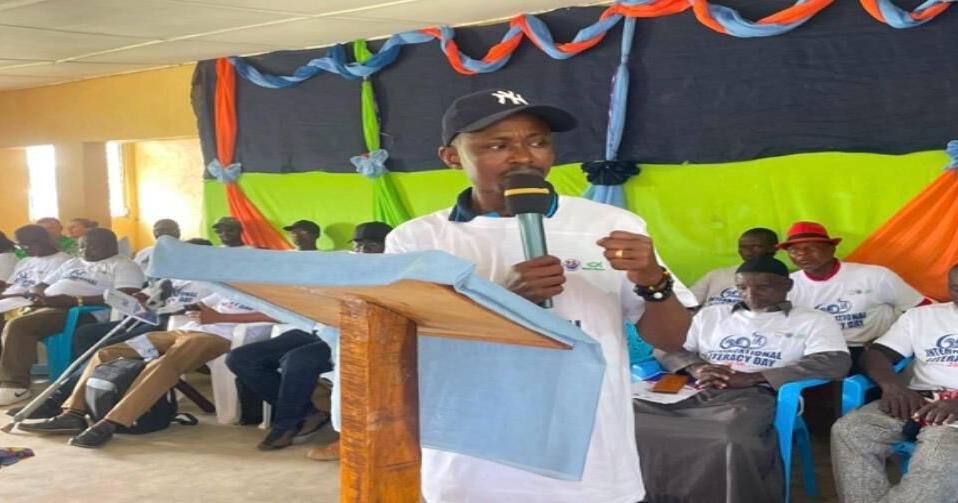
The Government of Liberia has been urged to move beyond annual celebrations of literacy and translate its commitments into sustained investment, measurable programs and community-level action.
The call was made Saturday, September 5, 2026, in Belefana Community, Zota District, Bong County, where educators, local authorities, development partners, civil society organizations and adult learners gathered to mark the 60th anniversary of International Literacy Day.
The observance was held under the global theme, “Literacy for People, the Planet and Prosperity,” and Liberia’s national theme, “Literacy for All in the Interest of Liberia’s Growth and Prosperity.”
At the center of the event was a position statement from the Consortium of Adult Education of Liberia (CAE-Liberia), read by James S. Cooper, ALP Coordinator and Head of the CAE-Liberia Secretariat.
CAE-Liberia said literacy should no longer be viewed simply as an educational issue but as a foundation for Liberia’s economic, social, democratic and sustainable development.
“Literacy is more than the ability to read and write,” the consortium said, describing it as a fundamental human right linked to dignity, empowerment, economic opportunity, peace and national development.
The organization called on the Government, development partners, civil society groups, local authorities, traditional leaders, private-sector actors and communities to make adult literacy and lifelong learning stronger national priorities.
It stressed that no Liberian should be excluded from learning because of age, poverty, gender, disability, geographical location or limited access to education.
CAE-Liberia also called for adult literacy programs to be connected to the daily economic and social realities of citizens.
For farmers, literacy can improve their ability to understand agricultural information, market prices, farm-input instructions and financial records. For small-business owners, literacy and numeracy can strengthen bookkeeping, profit calculations and engagement with formal financial institutions.
The consortium further said literacy can help parents support their children’s education and enable citizens to better access public information, health messages, government services and civic opportunities.
It therefore urged that adult education programs incorporate agriculture, livelihoods, health, financial literacy, environmental protection, peacebuilding, civic participation and digital skills.
The observance in Belefana also highlighted the challenges faced by rural learners, including distance, poverty, household responsibilities, inadequate infrastructure and limited learning materials.
For farmers, attending literacy classes can compete with agricultural work, while mothers and traders often have to balance learning with childcare, household responsibilities and income-generating activities.
CAE-Liberia consequently emphasized the importance of community-based programs that bring learning opportunities closer to adults.
Catherine N. Guanue, District Education Officer for Zota District, said Mission Alliance-supported literacy activities are being implemented in an estimated 80 to 85 percent of towns and villages in the district where schools are located.
She encouraged Liberians to view literacy as an opportunity rather than a burden and urged families to ensure children take advantage of the Government’s free and compulsory education policy at the early childhood and primary levels.
However, CAE-Liberia warned that sustainable adult literacy cannot depend indefinitely on individual projects or external support.
The consortium called for sustained investment in qualified and adequately supported facilitators, relevant learning materials, inclusive learning environments, stronger monitoring and improved coordination.
Mission Alliance Country Director Thomas Spanner recognized staff, monitors, coordinators, facilitators and Community Development Management Committees for supporting literacy activities. He also praised adult learners who continue attending classes and studying at home despite the demands of daily life.
Joseph V. Yoko, Executive Director of the National Adult Education Association of Liberia (NAEAL), and other speakers called for greater community involvement in sustaining adult education.
They said churches, mosques, traditional leaders, women’s organizations, youth groups and local authorities all have roles to play in supporting literacy initiatives.
CAE-Liberia maintained that communities should be treated not merely as beneficiaries but as partners and owners of literacy programs.
The organization also stressed the importance of reliable education data to guide national planning. Speakers referenced an estimated 1.5 million people affected by illiteracy, although the figure was presented inconsistently during the proceedings and should be verified through authoritative sources before being treated as a national statistic.
CAE-Liberia said reliable data is essential to determining who remains excluded from education, where they live, why they are excluded and which interventions are producing results.
The consortium said the real test of Liberia’s literacy efforts would come after the International Literacy Day celebrations.
It challenged authorities and partners to ensure sustained financing, adequate support for facilitators, appropriate materials for rural learners, inclusive programs and pathways for adults from basic literacy into vocational, secondary and digital education.
For Liberia, CAE-Liberia said, literacy must become more than an annual celebration. It must be treated as an investment in human capital capable of supporting agricultural productivity, financial inclusion, public health, democratic participation, peacebuilding and broader economic development.
Credit: Source link