

Gang Attacks Haiti Church, Slaughters 47 People
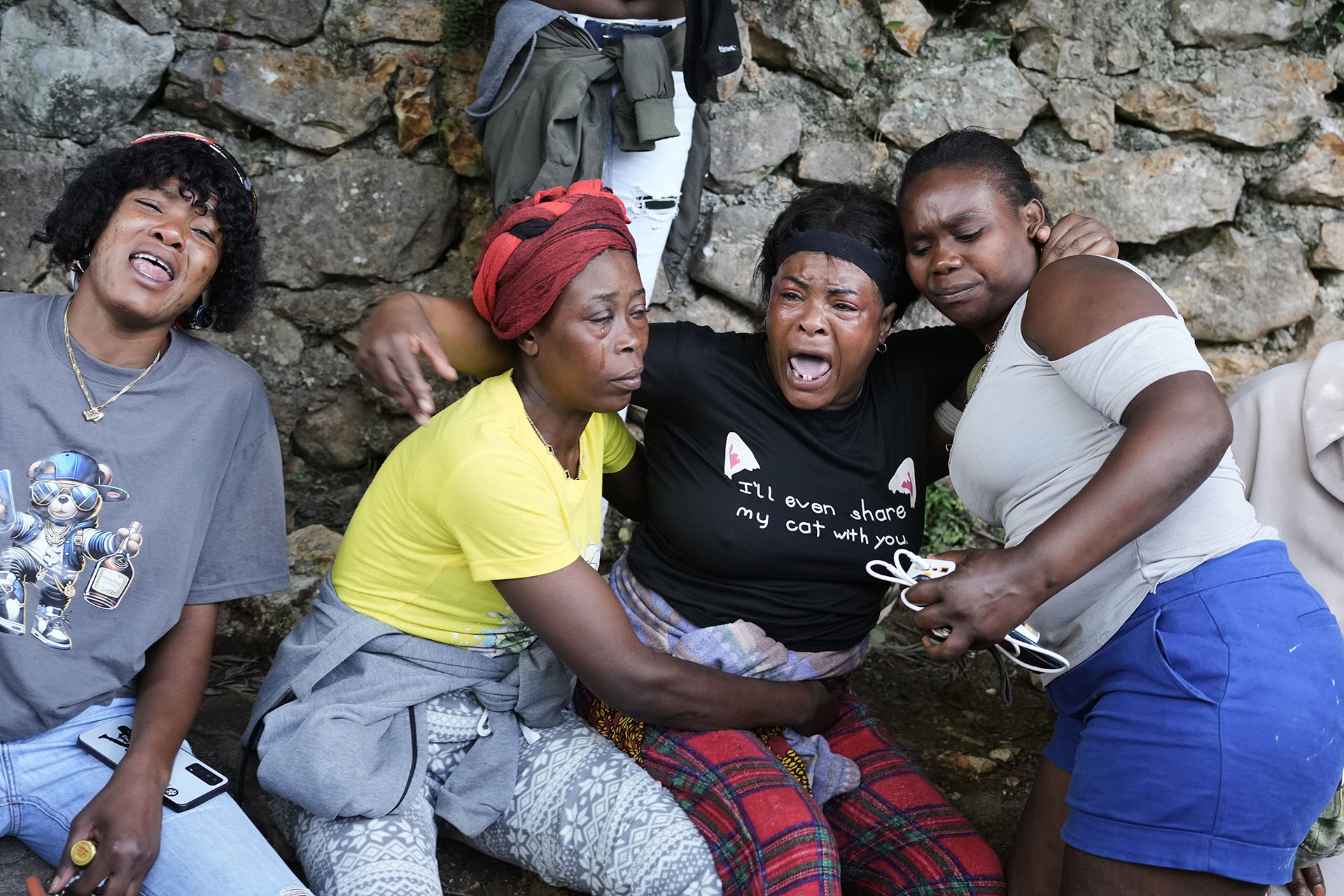
Gang members massacred at least 47 people and injured about 22 others after gunning down people inside a church in Port-au-Prince, Haiti. Dozens more were kidnapped, many of them children, the United Nations and Amnesty International reported. The incident is thought to be one of the largest mass abductions in the nation in recent years.
The church, located outside Haiti’s capital city, was offering shelter for displaced people when marauders attacked on Sunday, burning surrounding homes and slaughtering animals. Reports say that many people were murdered “execution-style.” The dead include five children. Among the torched buildings was a worship center owned by the evangelical Church of the Ark of the New Covenant.
Johnson “Izo 2” Andre, one of the nation’s most powerful gang leaders, claimed responsibility for the attack. He shared a video depicting almost 20 hostages and warned that he would kill them if law enforcement attempted to intervene.
“If any of our soldiers are hurt, I will kill all of them,” he said.
Massillon Jean, the mayor of Kenscoff, reported that the perpetrators were members of the Viv Ansanm gang coalition, an umbrella group of violent gangs that have taken control of most of the capital city. The U.S. has designated the group as a “transnational terrorist group.”
Jean called the night of the attack “a night of terror.” The violence reportedly began around 10:30 p.m. on Sunday and carried into Monday. The death toll could continue to rise as more information is gathered, the United Nations Integrated Office in Haiti (BINUH) told France 24.
The Haitian government said it sent reinforcements to local police in an effort to thwart further gang warfare.
“Let there be no mistake: this time of mourning is also a challenge. And to this challenge, the Government responds with the force of law and the legitimate exercise of state force,” officials said.
“All security forces have been placed on maximum alert. Reinforcements are being deployed. The orders are clear: protect, secure, intervene. Government authority will be restored—firmly and without delay—throughout the entire territory of Kenscoff,” the statement continued.
Romain Le Cour, the head of Haiti observatory at the Global Initiative Against Transnational Organized Crime, believes that the purpose of the attack was possibly to disperse the limited resources of Haiti police and the UN-backed gang suppression force.
“They don’t have enough personnel,” he said. “If you force them to deploy more troops, it would inevitably be at the expense of other areas,” he explained.
With general elections coming in December, Le Cour also says that it could be “a message to the government and the police that their claims of protection do not match reality. The gangs are saying: when we choose to attack, we can, and we will succeed.”
Armed gangs have expanded their control in the Kenscoff, Arcahaie, Montrouis, lower Artibonite and Mirebalais areas. Within the nation, more than 1.4 million people are internally displaced, and more than 5 million need humanitarian aid. An estimated 70% of areas in Haiti’s central region and beyond is controlled by gangs, and about 70%-90% of Port-au-Prince is under their control. Between January and June, more than 3,000 people have been killed and 1,400 injured, according to UN statistics,
A report on religious freedom in Haiti released by the U.S. Department of State says gangs often strategically target churches and religious figures for economic and opportunistic reasons. Since they perceive them to have financial recourses or foreign support, gangs often target clergy to kidnap them. Churches and religious schools are seen as large, stable structures to use as strongholds and shelters, and groups of people gathering during services are easier targets for kidnapping.
Photo: Women mourn at the site where their relatives were killed in the gang attack in the Kenscoff neighborhood of Port-au-Prince, Haiti.