

Former PM Johnson Urges Tougher Action on Russia, Cites UK Aviation Fuel Loophole
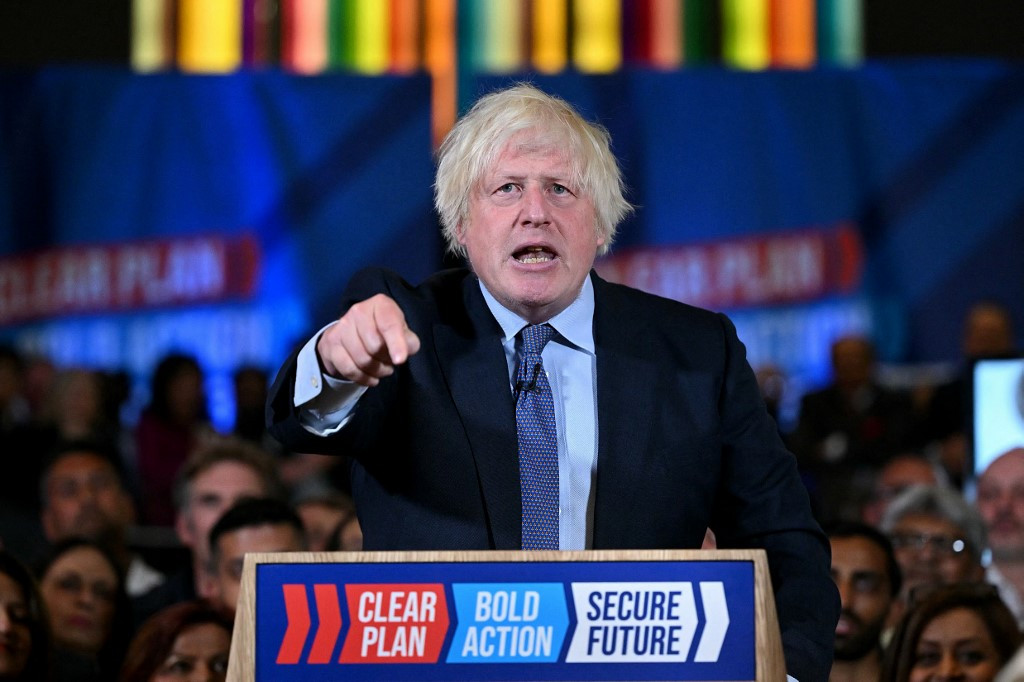
Former UK Prime Minister Boris Johnson has sharply criticized Western governments for “doing nothing” to pressure Kremlin leader Vladimir Putin.
Johnson responded to Wednesday’s overnight drone and missile barrage that killed at least 27 people and injured 91 as of the latest, saying Moscow was “murdering women and children” as the West holds back some of its most powerful economic tools.
JOIN US ON TELEGRAM
Follow our coverage of the war on the @Kyivpost_official.
“Why won’t we systematically take out the shadow fleet? Why won’t we give the Ukrainians the hundreds of billions of frozen assets? And why the hell is the UK – of all countries – now buying Russian aviation fuel, even if it has been refined in third countries, under a loophole recently opened by Keir Starmer?” Johnson said.
He continued: “The Russian president is going to lose his revolting war, which he never should have started,” but argued that Western reluctance to escalate economic pressure is slowing progress toward meaningful negotiations.
Fuel loopholes and sanctions gaps
Johnson’s remarks focused heavily on three areas where he believes Western policy is falling short – Russia’s so-called shadow fleet used to transport oil, frozen Russian state assets, and a UK loophole permitting imports of aviation fuel refined from Russian crude in third countries.
His criticism of the UK’s aviation fuel policy centers on trade licences that allow Russian-origin fuel, once refined elsewhere, to enter the British market, bypassing a ban on direct Russian oil imports from December 2022.
Other Topics of Interest
Ukraine’s Defense Minister Urges 40 Countries to Transfer Patriot Missiles
Fedorov asked 40 partners for urgent Patriot missiles after Russia’s overnight attack used 25 ballistic and hypersonic weapons against Ukraine.
According to Politico, The Centre for Research on Energy and Clean Air (CREA) estimates the UK imported £4 billion (roughly $5.34 billion) of such products from India and Turkey between 2022 and the end of 2025, including about £1.6 billion (roughly $2.14 billion) likely derived from Russian oil, prompting critics to accuse the government of “writing the Kremlin a cheque” each month.“This means British cash is helping to fund Putin’s war machine,” Johnson said, adding that “It’s a total disgrace and if Starmer wants a legacy he should end the practice now.”
By calling for the shadow fleet to be “systematically” targeted, Johnson pointed to support for more aggressive measures against tankers that help Moscow circumvent price caps and embargoes.
Frozen Russian assets
In the latest transfer in April, marking it the fourth of such transfers, the European commission received €1.4 billion ($1.6 billion) in windfall interest from Russian assets immobilized under EU sanctions.
“While the assets themselves remain immobilized, the interest on the cash balances does not belong to Russia,” the European commission statement read, noting that it has been agreed that the funding will be “used to support Ukraine.”
Under the scheme, 95% of these proceeds are routed through the Ukraine Loan Cooperation Mechanism to help Ukraine service EU and G7 loans worth €45 billion (roughly $51.5 billion), while the remaining 5% goes via the European Peace Facility to cover urgent military and defense needs.
Starmer condemns strikes, pledges continued support
Johnson’s comments came after current British Prime Minister Keir Starmer condemned the assault as “barbaric.”
According to The Independent, in a statement read by a Downing Street spokeswoman, Starmer said he was “utterly appalled” by the strikes, which lasted for 11 hours and hit residential buildings and civilian infrastructure across the city.
“These attacks are a stark reminder that while Ukraine continues to pursue peace, Putin continues to inflict suffering and violence on the Ukrainian people,” Starmer said, adding that the UK would keep working with allies “to increase pressure on Russia and support Ukraine.”
Starmer’s final push on Russia
In May, the UK imposed new sanctions on Russian financial and cryptocurrency networks, targeting the Kremlin-linked “A7 network,” crypto exchanges, and associated banks, while tightening rules on Russian uranium trade and logistics.
In June, UK forces boarded and seized a Russian shadow-fleet tanker called SMYRTOS, in a six-hour operation in the English Channel ordered by Starmer himself.
Around the same time, Starmer also unveiled a £210 million (about $282 million) export-finance package allowing Urenco to supply enriched uranium to Ukraine’s Energoatom, as well as new sanctions targeting Moscow’s shadow oil fleet and financial networks used to evade existing restrictions.
Starmer announced his resignation as UK prime minister after losing the support of Labour MPs on June 22, triggering a leadership contest in which Andy Burnham is now the frontrunner to replace him.
On Tuesday, Starmer has announced a “record” Defence Investment Plan
worth almost £300 billion ($397 billion) through 2030, including an extra £15 billion (around $20 billion), to modernise the UK’s armed forces with more drones, autonomous systems, and hybrid naval vessels amid rising threats from Russia.