

For thousands of Haitians in the U.S., end of protected status brings fear, grief and defiance : NPR
Transcript
LEILA FADEL, HOST:
For 16 years, many Haitians in the U.S. have had temporary protected status. That meant they could live and work legally, safe from the violence and natural disasters in Haiti. But now they’re facing deportation after the Trump administration revoked their status this summer. NPR’s Sergio Martínez-Beltrán reports from south Florida, home to one of the nation’s largest Haitian communities.
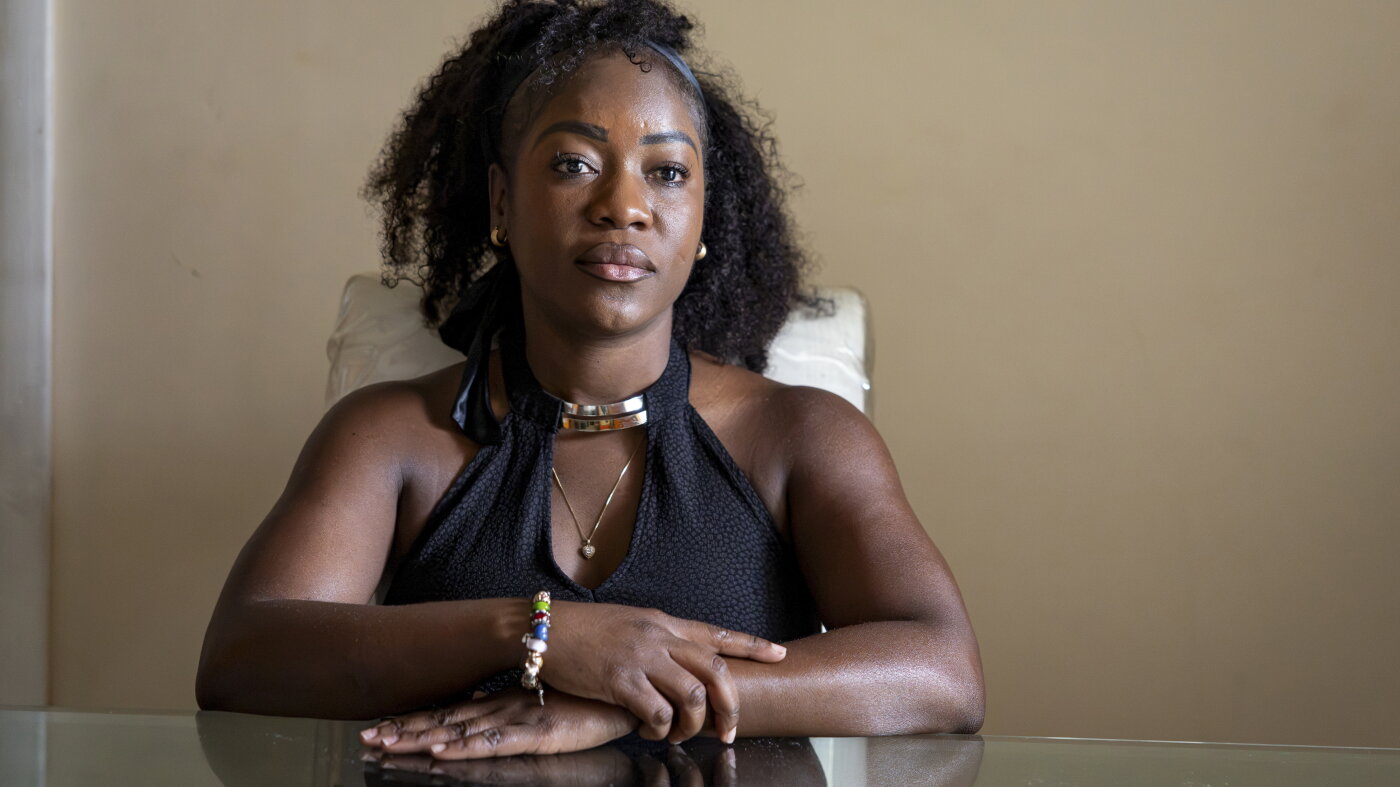
SERGIO MARTÍNEZ-BELTRÁN, BYLINE: Herlain, a registered nurse from Haiti, barely goes out these days. And when she does, she changes her route. She lost her TPS in July, so that’s why she asked NPR to only use her first name.
HERLAIN: You would think I was on the run. Who am I on the run from? This is crazy.
MARTÍNEZ-BELTRÁN: Her anxiety over her future in the U.S. is messing with her most deeply held values. Take one example. On a recent super hot and humid Miami day, a salesman knocked on her door and asked for some water. Herlain said no. This moment haunts her.
HERLAIN: Because that’s not me. I’m a nurse. I help people. But I couldn’t even give him some water because I didn’t trust him.
MARTÍNEZ-BELTRÁN: Herlain, along with nearly 350,000 Haitians in the U.S., have been living in anxious limbo since July, at risk of being deported since Trump ended TPS for them. The Department of Homeland Security told NPR in a statement, quote, “temporary protected status is exactly that – temporary,” adding that Congress never intended it to be permanent. On social media, DHS has been posting videos of Haitians boarding deportation planes.
REGINALD JEAN-MARY: The government knows deep down that they cannot deport 350,000 people.
MARTÍNEZ-BELTRÁN: That’s Father Reginald Jean-Mary, a priest at the Catholic Notre-Dame d’Haiti Church in Miami, where he has served his community for 25 years.
JEAN-MARY: It is evident to me it is psychological warfare.
MARTÍNEZ-BELTRÁN: Father Reggie says depression is rampant among his parishioners, who fear going back to Haiti right now. The Trump administration has claimed conditions have improved in the countries it has ended TPS. But that’s not true in Haiti. Their heavily armed gangs have taken over the capital and are rapidly expanding. Recently, dozens of people were massacred, including some sheltering in a church. Father Reggie admits all of this has tested his faith.
JEAN-MARY: Oh, it does. Oh, yes. You ask yourself, God, until when? Until when this is going to stop? When you look at what’s going on in Haiti, and you say, God, where are you?
MARTÍNEZ-BELTRÁN: Just one day before we arrived in Miami, Pierre Damas Bel, a 20-year-old Haitian man in Ohio, died by apparent suicide after losing his TPS and being outfitted with an ankle monitor.
JEAN-MARY: We look like the forsaken people.
UNIDENTIFIED PERSON: (Singing) They shall anoint the Lord.
MARTÍNEZ-BELTRÁN: Inside the church, a few dozen worshippers gather to sing prayers around a statue of St. Michel. Some hold photos of Damas Bel. Father Reggie says prayer service attendance has plummeted. He knows of 14 parishioners who have been detained. The church adult learning school started the year with 231 students.
JEAN-MARY: And yesterday, I went to the school. It’s only 17. This is a community being deconstructed completely.
MARTÍNEZ-BELTRÁN: Walking past the community center in Little Haiti and its main business corridor, it’s almost hard to imagine that this area was bustling just months ago.
And I was expecting people out and about, shopping, getting some food, talking to each other. And instead, the businesses are closed. Their shutters are down. The laundromat is empty. It’s just nobody. A little bit of a ghost town over here.
A popular restaurant in the area had most of its staff picked up by ICE. A nearby barber shop closed after the owner got detained. People are so afraid to go out that a food bank has opened at the church. But Farah Larreux is not hiding. She says she does not have any other option but to speak up.
FARAH LARREUX: Because I don’t want to give up. I want to look at Trump in his eyes and tell him, like, how evil he is.
MARTÍNEZ-BELTRÁN: The former broadcaster came to the U.S. from Haiti after being openly critical about political corruption there. She says going back to Haiti now would be a death sentence.
LARREUX: It’s temporary protected status. So you forget the second word, protect.
MARTÍNEZ-BELTRÁN: The State Department has told U.S. citizens to not travel to Haiti because it’s too dangerous.
LARREUX: So what is the message, that my life has no value? Or my life has less value than the life of an American citizen?
MARTÍNEZ-BELTRÁN: She hopes another legal pathway opens up for immigrants. But under Trump, few legal options now remain for Haitians who want to continue to build a life in the U.S.
Sergio Martínez-Beltrán, NPR News, Miami.
Copyright © 2026 NPR. All rights reserved. Visit our website terms of use and permissions pages at www.npr.org for further information.
Accuracy and availability of NPR transcripts may vary. Transcript text may be revised to correct errors or match updates to audio. Audio on npr.org may be edited after its original broadcast or publication. The authoritative record of NPR’s programming is the audio record.