

Fidel Castro’s centenary and Cuba’s kleptocratic legacy
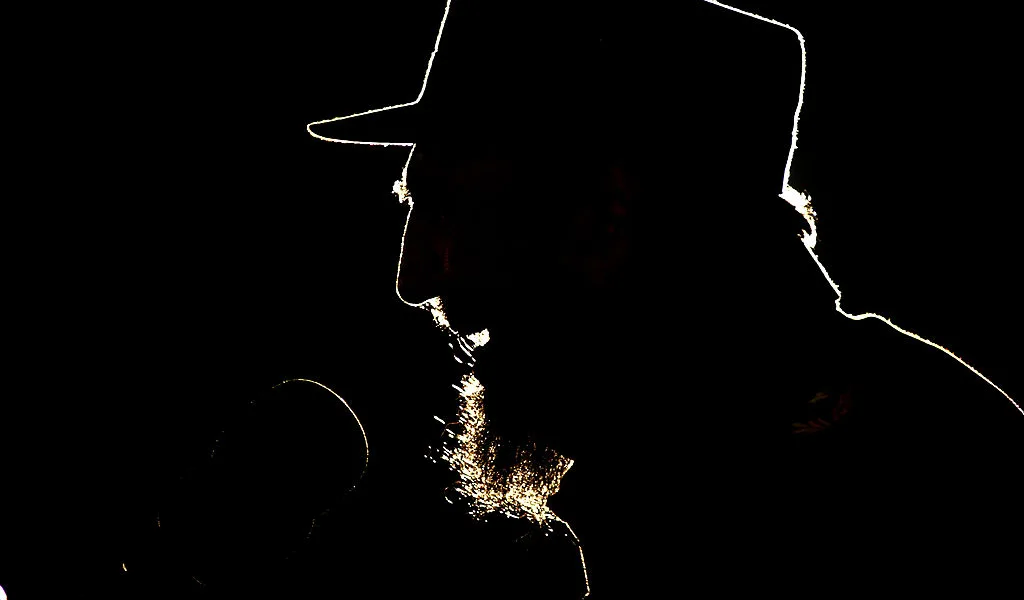
Havana has been gearing up for the centenary of Fidel Castro’s birth on August 13, 2026. Fidel Castro died in 2016 after handing power over to his brother Raúl in 2006. Communists the world over claim him as one of their own, and international visitors are being hosted by the dictatorship to celebrate this anniversary. In 2006, Forbes magazine reported that Fidel Castro’s net worth was $900 million (€780 million). One of his bodyguards, Juan Reinaldo Sánchez, who defected, wrote a tell-all book, The Double Life of Fidel Castro: My 17 Years as Personal Bodyguard to El Lider Maximo, detailing Fidel’s 29 luxury homes, four yachts and private island (Cayo Piedra), not to mention other luxuries. This in a country where 89 per cent of the population lives in extreme poverty.
This was not always the case. Prior to the 1959 revolution that ushered the Castro brothers into absolute power for the next 67 years and counting, Cuba had a sizeable middle class and strong labour unions that protected Cuban workers’ rights. Even under the Batista dictatorship, an independent judiciary survived, and Cuban lawyers represented their clients, not the dictatorship.
All of this ended in the months after 1959 and has yet to return. This did not result in the working class taking power, but in a new class of elites seizing and hanging onto power. It is the Castro family, military elites and their inner circle who sit on cash reserves of $18 billion (€15.6 billion), living lives of opulent wealth in Cuba, Europe and the United States, while millions go hungry in Cuba and die of easily treatable diseases.
The Castro regime has not invested in Cuba’s infrastructure, preferring instead to build luxury hotels across the island, each with their own generators. At the same time, Cuba’s power grid has become increasingly dilapidated over the decades.
The first sustained nationwide power outage was in 2022, although partial and regional blackouts had existed for decades.
The collapsing energy grid and fuel shortages in 2023 led the Cuban government to cancel its May Day celebrations that year to conserve energy. It is an interesting data point that 2023 was the last year Cuba did not experience a nationwide power blackout. This was at a time when Cuba was receiving 2.3 million barrels of oil per month.
The flow of oil dropped to 1.2 million barrels per month in 2025, and following the Trump administration’s capture of Nicolás Maduro on January 3, 2026 and an executive order of January 29, 2026 issuing a tariff threat to other countries that would deliver oil to Cuba, it dropped to 300,000 barrels of oil per month.
Despite the reduction in electrical output and fuel imports, the Cuban dictatorship did not suspend or cancel its May Day celebrations after 2023. Instead, it expended energy busing in hundreds of thousands of Cubans to mandatory pro-government protests outside the US Embassy in Havana in subsequent years.
In 2026, when the grid was collapsing repeatedly and fuel shortages were far greater than in 2023, the dictatorship carried out energy-intensive activities. It burned fuel to fly in hundreds of international supporters in March 2026, housed them in luxury hotels (with generators), and conducted a multimedia campaign with live streaming, while hospitals went without and, according to regime officials, children died.
They bused in hundreds of thousands for May Day celebrations in 2026 in Havana, which were shown in official broadcasts.
Regime officials used large amounts of electricity to project large multimedia extravaganzas on the 73rd anniversary of the Moncada attacks in Pinar del Río on July 26, and today to celebrate the centenary of Fidel Castro’s birth.
This at a time when official media claims that the survival rate for children with cancer fell to 65 per cent from 85 per cent before the energy restrictions began in January 2026. Officials also cited delayed surgeries (tens of thousands waiting, including thousands of children), disrupted maternal and neonatal care, vaccine delays, and impacts on chronic treatments due to energy shortages.
Nationwide power outages and blackouts have been increasing since 2023. Yet Havana, under the pretext of blaming Washington, is not curtailing official activities to maximise energy for the health sector (as was done in 2023). Instead, it is carrying out propaganda campaigns that use scarce fuel and electricity to promote the legacy of Fidel Castro.
Unlike Fidel Castro, new regime elites are not as cautious about displaying their conspicuous wealth. Cuban President Miguel Díaz-Canel Bermúdez’s stepson was photographed by paparazzi in Madrid holding hands with and kissing Hollywood A-lister Ana de Armas in December 2024. This was the same year Cuba experienced at least three major multi-day nationwide collapses of the energy grid, plunging the nation into darkness.
In an illustration of Cuba’s inequality, Raúl Guillermo Rodríguez Castro—”El Cangrejo”, grandson of Raúl Castro—appeared for his June 2026 USA Today interview clad in light-blue skinny jeans (suggested retail $100), a black Hugo Boss T-shirt ($70), Hermès trainers ($1,500), a stainless-steel Rolex Submariner ($10,000), a thick gold Cuban-link chain with custom FCR/RCR medallion ($8,000+) and carrying a Salvatore Ferragamo leather briefcase ($2,000). The combined suggested retail value easily exceeded $20,000 (€17,300). This single ensemble alone dwarfs the island’s 2026 median annual salary of roughly $180 (€156).
This is especially grotesque when one considers that working-class European taxpayers—particularly Spaniards—are having their hard-earned taxes siphoned off to subsidize the Cuban regime elite’s luxurious lifestyles.
According to the July 2026 Madrid-based Instituto Juan de Mariana report El precio de sostener el castrismo, Spain has delivered €4.994 billion in financial support to the Castro regime via debt restructuring and forgiveness since 2016, while the EU has more than doubled its funding to €125 million for 2021-2027 (from roughly €50 million previously, with over €300 million since 1988).
These transfers prop up the dictatorship’s State apparatus and elites despite intensified repression, even as ordinary Cubans live in squalor—89 per cent in extreme poverty, unable to meet basic needs, and seven in 10 Cubans skipping a daily meal amid chronic shortages.
There is an abyss between revolutionary egalitarian rhetoric and the Castro family’s lived reality of imported opulence versus mass austerity under a kleptocratic dictatorship. This is Fidel Castro’s legacy, and it is nothing to celebrate.